When you’re searching for the best parrillada argentina near me, you’re not just ordering grilled meat. You’re stepping into a centuries-old Argentine tradition that approaches fire, meat, and community in ways most Western barbecue never touches.
The difference between a casual steakhouse and a true parrillada changes everything about how you experience beef. Once you’ve tasted authentic Argentine parrillada, cooked by someone who understands the craft, standard grilling starts to feel incomplete.
Table of Contents
ToggleUnderstanding Parrillada: More Than Just Barbecue
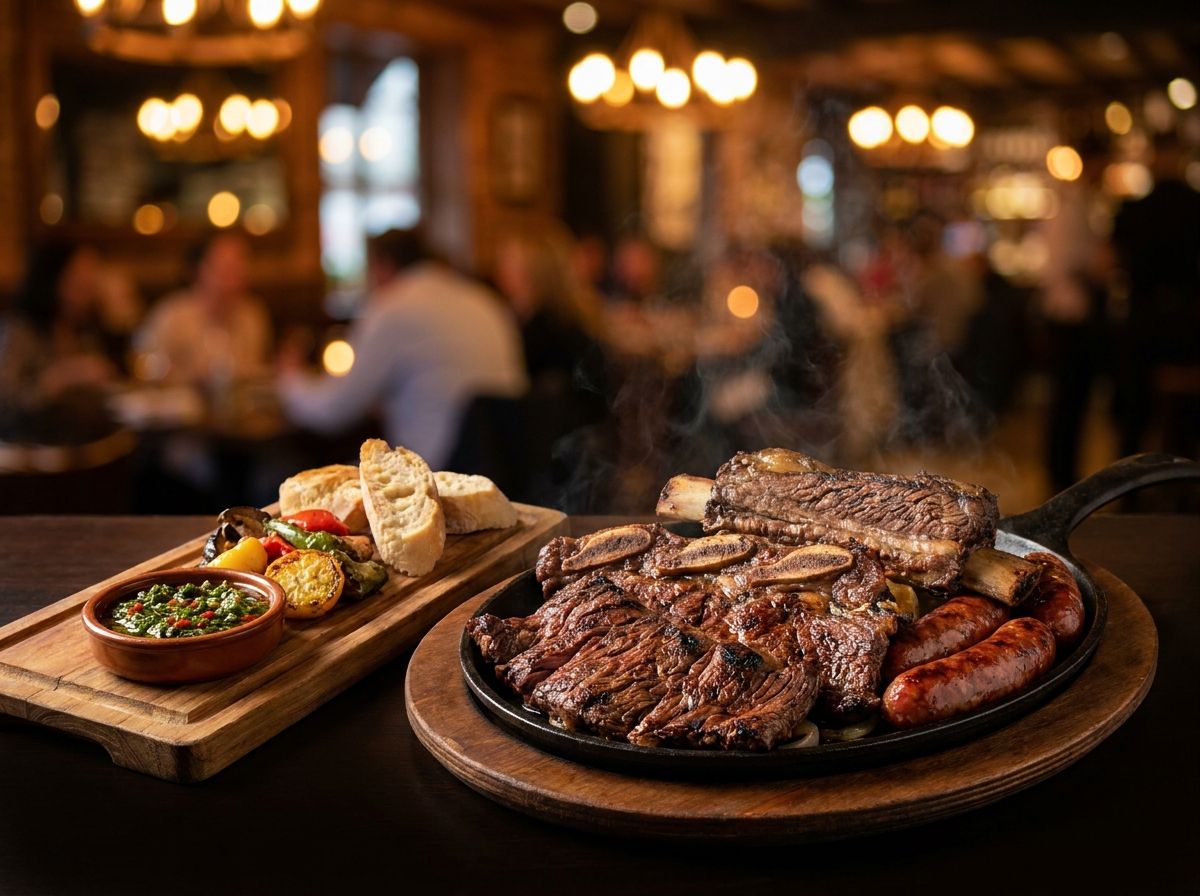
Parrillada translates to barbecue in Spanish, but in Argentina it means something far more specific and intentional. It’s a shared platter loaded with multiple meat cuts, all cooked together on a traditional grill, then brought to the table for communal dining.
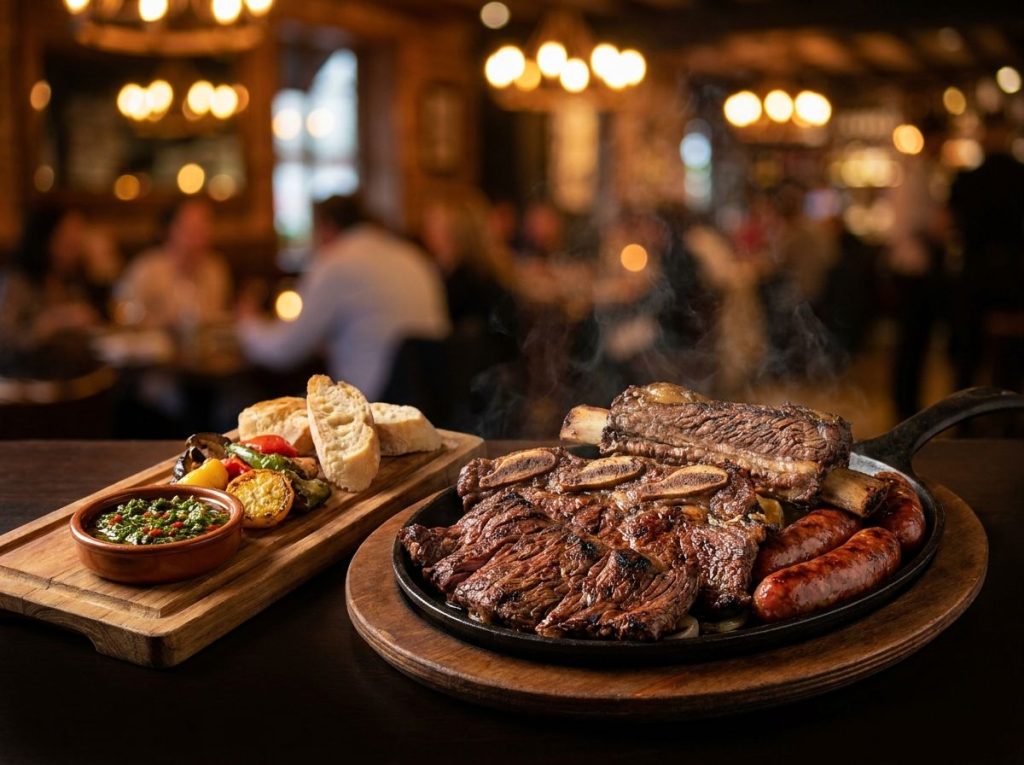
A proper parrillada arrives sizzling on either a wooden platter or cast iron, stacked high with different beef cuts. You’ll see skirt steak alongside strip loin, short ribs paired with beef ribs, fresh chorizo, and often offal like sweetbreads. Each cut cooks separately based on its thickness and fat content, requiring a grill master who knows exactly when each piece reaches its peak.
The parrillero, or grill master, orchestrates this carefully choreographed cooking. Different meats don’t all finish at the same time, and that’s by design. As one cut reaches perfection, another is rotating into a hotter zone.
Chimichurri arrives alongside the meat. This herbaceous green sauce built on garlic, oregano, and parsley fundamentally changes the eating experience. Fresh salsa criolla and warm bread round out the meal.
Why Argentine Beef Tastes Different
Argentine cattle spend their entire lives grazing on the Pampas, feeding naturally on grass rather than grain in industrial feedlots. This creates beef that’s naturally well-marbled, exceptionally tender, and rich in flavor that requires no apology.
The Argentine government maintains strict beef quality standards through meat promotion institutes. This isn’t casual backyard grilling meat. This is beef raised with precision, bred specifically for flavor, and protected by national pride and regulation.
When you find quality parrillada argentina, you’re tasting the direct result of this commitment to excellence. The meat needs minimal seasoning because its natural flavor carries the entire experience. Salt, fire, and time are all that’s required.
What Separates Parrilla from Regular Steakhouses
An authentic parrilla restaurant operates differently from a conventional steakhouse in several fundamental ways.
The Grilling Method
Authentic parrilla restaurants use charcoal or wood fire exclusively. This isn’t flexible. When hunting for genuine parrillada argentina, look for restaurants that discuss their grilling equipment openly. Traditional Argentine parrillas often feature quebracho wood, a dense hardwood that burns long and hot, creating sustained heat that brings out meat’s natural sweetness through slow, controlled cooking.
Real parrilla grills have a specific V-shaped design with a brasero, or firebox, allowing the grill master to carefully manage heat zones. The parrillero moves cuts between temperature zones throughout cooking, building that perfect brown crust while maintaining a tender interior.
Social Dining as Central Purpose
A parrillada exists to be shared. The large format actively encourages sharing, conversation, and community gathering. Authentic parrilla restaurants understand this cultural foundation. The meal becomes an event rather than just a transaction.
The Ritual and Tradition
Asado culture in Argentina traces back centuries to gaucho traditions and family celebrations. Great parrilla restaurants bring elements of this heritage into the dining room. Most feature an open grill visible from the dining area, often with the parrillero working in full view. This transparency shows confidence in the craft.
How to Identify Authentic Parrillada Argentina
Not every restaurant using the word Argentine delivers authentic parrillada. Here’s how to separate genuine operations from those just using the name.
Ask About Their Grilling Method
Call the restaurant directly. Do they use charcoal? Wood fire? Gas? Authentic parrilla argentina stands on wood or charcoal grilling as fundamental to their identity. Defensive responses about cooking method are warning signs worth noting.
Examine Their Meat Selection
Check their menu or call ahead. Does their parrillada include varied cuts? Are they featuring different beef selections like skirt steak, short ribs, and asado de tira? Is chorizo included? Restaurants serious about parrillada argentina take obvious pride in their meat sourcing and selection.
Look for Grill Master Recognition
The parrillero is crucial to quality. Online reviews often mention the skill level of whoever operates the grill. Positive comments about perfectly cooked meat, exceptional flavor, and tender texture reveal someone who understands this craft deeply.
Check Peak Hour Activity
The Best King Kong Dulce Near Me restaurants stay busy at lunch and dinner service. Constantly moving meat keeps skills sharp and equipment properly heated. A quiet Argentine steakhouse on Friday night raises questions about consistency or quality.
Verify Complete Experience Understanding
Authentic parrilla restaurants pair their meat with Argentine wines, traditional sides, and proper chimichurri. They grasp that parrillada represents a complete experience rather than just protein on a plate.
Ordering and Enjoying Parrillada Like a Local
When you finally sit down at a quality parrilla restaurant, here’s how to approach ordering.
Start with empanadas if available. These pastry pockets filled with meat or cheese prepare your palate and set the evening’s tone. Follow with choripan, the simple chorizo sandwich that opens the appetite and begins the asado ritual properly.
Order a parrillada mixta or asado variado for sharing. This mixed grill platter is what you came for. Most restaurants offer multiple sizes, so choose based on your group’s appetite level.
Request extra chimichurri on the side. The bright, herbaceous flavor complements rich meat without overwhelming it. This sauce exists to be used generously.
Pair everything with Argentine wine. Malbec stands as the classic choice, especially with beef. The tannins cut through the fat and enhance the overall experience beautifully.
Making the Most of Your Experience
Take your time. Different meats arrive at different intervals as the parrillero manages their cooking. Embrace this pace rather than fighting it. This is ritual, not fast food.
Try every cut, even pieces you’d normally skip. Short ribs bring rich, meaty flavor. Skirt steak offers lean intensity. Sausage provides juiciness. Offal like sweetbreads introduces unique textures you won’t find elsewhere. Variety is the entire point.
Come with people you want to spend time with. Parrillada exists for sharing with friends and family. The communal nature naturally encourages conversation and connection. The food genuinely tastes better in good company.
If your restaurant has a visible parrilla or approachable grill master, ask questions. Passionate parrilleros love discussing their technique, heat management, and favorite cuts.
Why This Tradition Endures
Parrillada argentina isn’t a food trend. It’s a tradition that has survived generations because it refuses to complicate the fundamentals. Quality meat, proper technique, minimal interference, and shared community create something complete.
Food lovers increasingly value this approach. While food trends constantly shift, parrillada argentina remains confident in its excellence.
Finding Quality Parrilla in Your Area
Search online for Argentine steakhouses nearby. Check Yelp, Google Reviews, and TripAdvisor. Look for mentions in food publications and Argentine cuisine blogs. Ask in local Argentine cultural communities.
Major cities have dedicated parrilla restaurants perfecting this craft for decades. Smaller towns may have fewer options, but often have quality Argentine restaurants run by Argentines who’ve brought their traditions home.