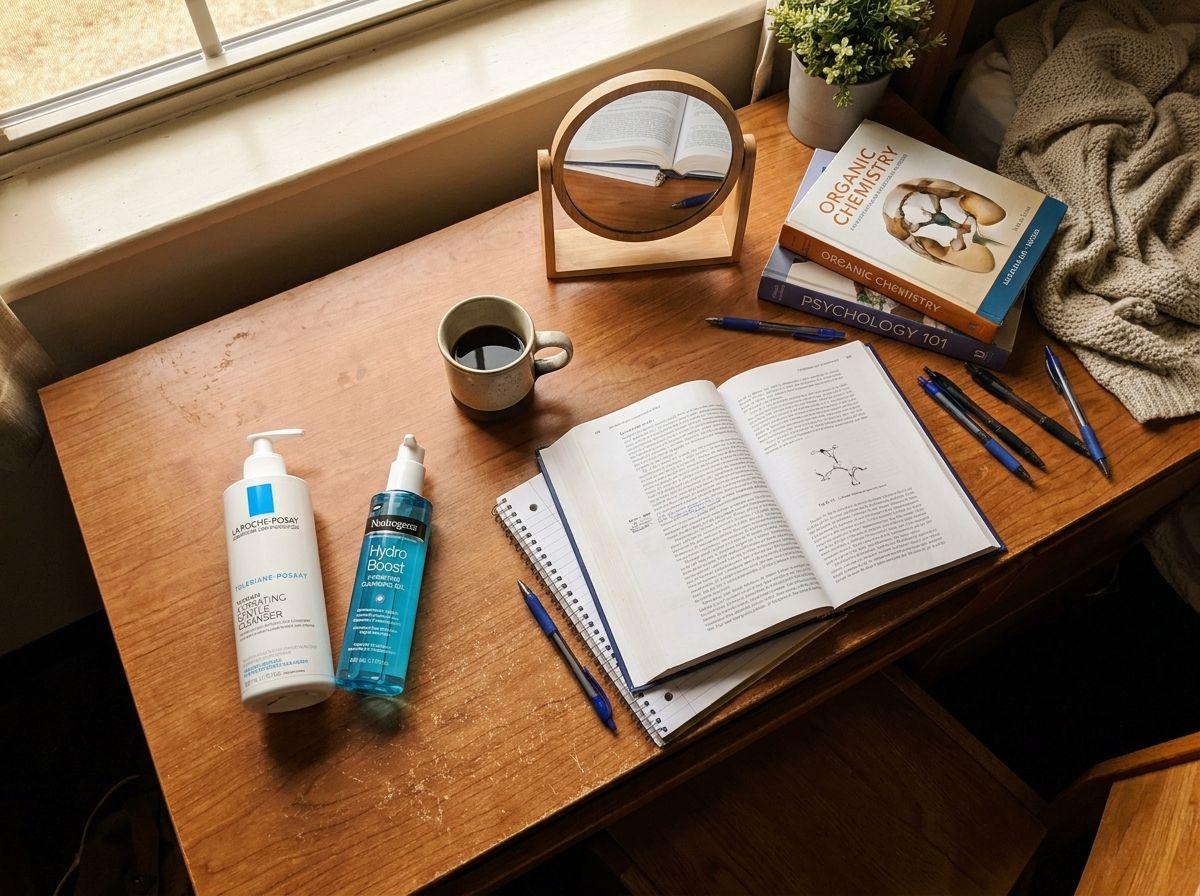
You’re not the only one asking. Skincare forums, dorm bathroom shelves, and group chats full of stressed-out students are full of the exact same debate. Both brands show up constantly in dermatology recommendations, both have cult followings online, and both promise to calm breakouts without wrecking your wallet. So let’s actually break this down, ingredient by ingredient, price tag by price tag, and figure out which one deserves a spot on your shelf.
Table of Contents
ToggleWhy College Skin Behaves So Differently
Before comparing product lines, it helps to understand why your skin might be acting up more now than it did in high school. Stress hormones spike during exam weeks, sleep gets pushed to the bottom of the priority list, dining hall food is rarely gentle on your gut, and shared dorm bathrooms mean your skin is exposed to different water, humidity, and even other people’s products.
Add in the habit of touching your face while studying, sleeping in makeup after a late night, or switching pillowcases once a month instead of once a week, and you’ve got a recipe for stubborn breakouts. This is exactly the environment where the right skincare routine, not just the right products, makes the biggest difference.
Meet La Roche-Posay: The Dermatologist’s Pick
La Roche-Posay is a French pharmacy brand that built its reputation on formulas developed with dermatologists, often using thermal spring water as a calming base ingredient. For acne-prone skin specifically, two products come up again and again: the Effaclar Duo, a spot treatment with niacinamide and benzoyl peroxide, and the Effaclar Purifying Foaming Gel Cleanser.
What Makes It Stand Out
- Formulas are generally fragrance-free and tested on sensitive skin, which matters if your acne comes with redness or irritation.
- Niacinamide helps calm inflammation while still targeting breakouts, so it’s gentler on skin barriers that are already stressed from lack of sleep or poor diet.
- Many products are non-comedogenic and oil-free, meaning they’re formulated specifically not to clog pores.
Where It Falls Short
- Price per ounce tends to run higher than typical drugstore brands, which can sting on a student budget.
- Some of the best-known products aren’t sold everywhere, so you might need to order online instead of grabbing them at a local pharmacy.
Meet Neutrogena: The Familiar Drugstore Staple
Neutrogena is the brand most of us grew up seeing in every pharmacy aisle, and for good reason. It’s affordable, widely available, and has decades of acne-focused products behind it. The Oil-Free Acne Wash and the Rapid Clear Stubborn Acne Spot Gel are two of the most recommended options for breakout-prone skin.
What Makes It Stand Out
- Salicylic acid formulas are effective at clearing clogged pores and reducing surface-level breakouts.
- Prices are budget-friendly, and products are sold almost everywhere, from campus convenience stores to big-box retailers.
- Larger product sizes mean better value if you’re using a cleanser daily.
Where It Falls Short
- Some formulas contain added fragrance, which can irritate sensitive or reactive skin.
- Certain acne products in the line use higher concentrations of active ingredients, which can be drying if your skin isn’t used to them.
Side-by-Side: What Actually Matters for Acne-Prone Skin
Active Ingredients
La Roche-Posay tends to lean on a gentler combination of niacinamide and lower-strength benzoyl peroxide, aiming to treat acne without stripping the skin. Neutrogena often relies on salicylic acid, which is excellent at unclogging pores but can be more drying with regular use, especially paired with the cold, dry air of a heated dorm room in winter.
Sensitivity and Skin Barrier
If your skin gets red, flaky, or tight easily, La Roche-Posay formulas are usually the safer starting point because of their fragrance-free, barrier-friendly approach. If your skin tends to be oilier and more resilient, Neutrogena’s stronger exfoliating formulas might clear breakouts faster without much irritation.
Price and Accessibility
This is where the decision often comes down to your actual budget as a student. Neutrogena wins on affordability and availability almost every time. La Roche-Posay costs more per bottle, but a little goes a long way, and many students find they need fewer separate products because the formulas multitask well.
Building a Simple Dorm-Friendly Routine
You don’t need a ten-step routine to see results. Here’s a realistic setup that works whether you land on La Roche-Posay, Neutrogena, or a mix of both.
Morning
- Gentle cleanser (either brand’s oil-free wash works well)
- Lightweight, oil-free moisturizer
- Sunscreen, non-negotiable, even on cloudy Tuesdays between classes
Night
- Cleanser to remove the day’s buildup
- Spot treatment on active breakouts only
- Moisturizer to keep your skin barrier from getting stripped
Keep it simple, stick with it for at least four to six weeks before judging results, and resist the urge to layer five new products at once just because your roommate swears by them.
Small Habits That Matter More Than You’d Think
Changing your pillowcase weekly, washing makeup brushes regularly, and wiping down your phone screen can make a noticeable difference. So can drinking more water than coffee and getting more than five hours of sleep before an exam, easier said than done, but worth the effort.
When It’s Time to See a Dermatologist
If breakouts are painful, leaving scars, or not improving after a couple of months of consistent care, that’s a sign to book an appointment with a dermatologist rather than keep experimenting on your own. Most campuses have student health services that can either treat you directly or refer you to a local specialist, often at a reduced student rate.
So, Which One Should You Actually Buy?
If your skin is sensitive, reactive, or you’re dealing with both redness and breakouts, La Roche-Posay is generally the gentler, more barrier-friendly choice, even with the higher price tag. If you’re working with a tighter budget, have oilier and more resilient skin, and want something you can grab at any pharmacy near campus, Neutrogena remains a reliable, affordable option that genuinely works for a lot of people.
There isn’t one universal answer to whether La Roche-Posay beats Neutrogena for acne-prone skin during your college years, it really depends on your skin type, your budget, and how your skin responds to active ingredients. The good news is that both brands are backed by real research and used successfully by millions of people, so whichever one you choose, you’re starting from a solid foundation rather than guessing blind.
Give your routine time, be gentle with your skin during stressful weeks, and remember that consistency matters far more than which bottle is sitting on your shelf.