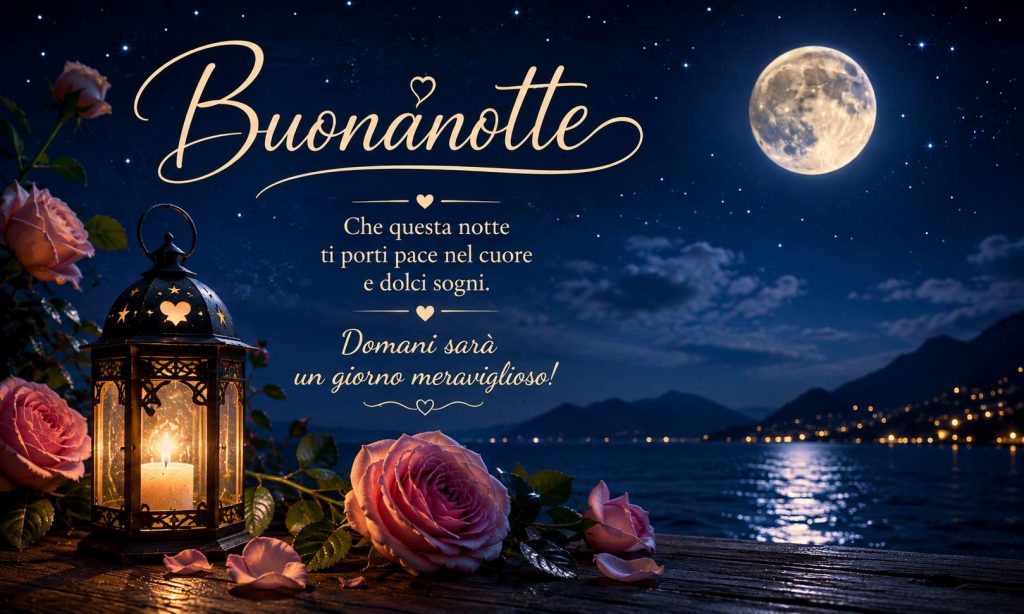

If you’ve spent any time around Italian friends, family, or group chats, you’ve probably noticed something odd happening every evening around 9 or 10pm: a flood of images. Sunsets, roses, kittens, candles, sometimes a cartoon moon with a face. Underneath, a caption like “buonanotte, sogni d’oro” or a warm, almost ceremonial message wishing everyone a meraviglioso buonanotte bellissimi, a wonderful and beautiful night. It looks excessive to outsiders. It isn’t. It’s a genuine social ritual, and understanding it tells you a lot about how Italians actually communicate affection day to day.
This isn’t a niche habit either. Ask anyone with Italian relatives on WhatsApp and they’ll confirm it: the goodnight message is practically mandatory, and skipping it can actually register as a small social slight. So let’s get into where this comes from, what the phrases mean, and how to use them properly if you want to fit in rather than sound like a phrasebook.
Table of Contents
ToggleWhere the “Buonanotte” Ritual Actually Comes From
Italy has a long-standing culture of verbal warmth that predates smartphones by centuries. Wishing someone well, loudly and often with a bit of theatre, is baked into everyday speech. “Buongiorno” isn’t just “good morning,” it’s a small performance of goodwill you’re expected to deliver to shopkeepers, neighbours, and strangers on the stairwell. “Buonanotte” works the same way at the other end of the day.
What changed with mobile messaging is the scale. Once WhatsApp and Facebook became common in Italian households in the early 2010s, older generations in particular latched onto the goodnight image as a way to stay present in each other’s lives without needing to have an actual conversation. A grandmother in Calabria can send a rose graphic to twelve family members scattered across three countries in under a minute. It’s low effort, high warmth, and it doesn’t require anyone to reply immediately, which is part of the appeal.
There’s also a generational split worth noting. Younger Italians tend to find the habit a bit kitsch and joke about it openly, while still, more often than not, quietly sending one to their nonna anyway. It’s become one of those customs people mock affectionately but rarely abandon.
What People Actually Say (Beyond the Basic “Buonanotte”)
The plain word “buonanotte” does the job, but it’s considered a bit flat on its own, especially in family or close-friend contexts. Italians tend to layer it with extra warmth. Some of the most common additions:
Sogni d’oro, meaning “golden dreams,” is probably the most widely used pairing. Riposa bene translates to “rest well” and shows up constantly in more formal or slightly older-generation messages. Buon riposo is a close cousin, slightly more old-fashioned, and you’ll hear it a lot from grandparents.
Then there’s the more elaborate stuff, phrases built around adjectives stacked for effect: a wish for una notte serena (a peaceful night), a meraviglioso buonanotte (a marvellous goodnight), or messages addressed to bellissimi, meaning “beautiful ones,” used affectionately toward a group of friends or family rather than describing physical appearance. It’s the equivalent of an English speaker saying “goodnight, lovely people” in a group chat, warm rather than literal.
None of this is meant to be taken at face value in a strict grammatical sense. Italian evening messages lean into hyperbole the way English speakers might say “have the best sleep ever” without meaning it as an instruction.
Why the Images Matter As Much As the Words
Here’s something that trips up non-Italians: the picture usually carries more social weight than the caption. A goodnight message without an accompanying image, especially in a family group chat, can read as rushed or half-hearted, even if the words themselves are perfectly warm.
The imagery follows fairly predictable categories. Nature scenes dominate, sunsets over water, fields of lavender, snow-capped mountains at dusk. Flowers come a close second, roses especially. Religious or spiritual imagery shows up often too, particularly among older generations, think candles, angels, or a simple cross with a soft glow. Animals, especially cats and owls, round out the rotation.
There’s an entire cottage industry of Facebook pages and WhatsApp sticker packs dedicated to producing these graphics, refreshed daily, often layered with glittery text effects that look distinctly early-2010s. It’s easy to mock the aesthetic, and plenty of Italians do, but the function is sincere: it’s a low-friction way of saying “I’m thinking of you” without needing anything back.
How to Use These Phrases Without Sounding Like a Textbook
If you’re learning Italian, dating someone Italian, or just trying to keep pace with a family group chat, here’s the practical version of all this.
Stick with buonanotte plus one warm addition rather than stacking three or four phrases together, which can come across as trying too hard from a non-native speaker. “Buonanotte, sogni d’oro” is safe, natural, and works in almost any context, romantic or platonic. Save the more elaborate constructions, the ones built around meraviglioso or bellissimi, for messages to groups or people you already know well, since they carry a slightly performative, affectionate tone that can feel odd coming from someone you’ve just met.
Timing matters more than people expect. These messages typically go out between 9pm and 11pm, rarely earlier. Sending one at 6pm reads as premature, almost like wishing someone happy birthday a week early.
If you’re replying rather than initiating, a simple “anche a te” (you too) or “grazie, altrettanto” (thanks, same to you) covers it. You don’t need to match the elaborateness of the original message; reciprocating the gesture is what matters, not out-writing it.
The Regional and Generational Variations Worth Knowing
Southern Italy tends to lean more heavily into the ritual than the north, with Naples and Calabria in particular known for enthusiastic, image-heavy family chats. Milan and the more business-oriented northern cities tend to keep things shorter, sometimes just a plain “notte” as a casual sign-off among younger professionals.
Age plays a bigger role than region, though. Anyone under 30 is far more likely to send a quick voice note or a meme than a glittery rose graphic. The full ceremonial version, complete with elaborate phrasing and stock imagery, is still very much alive among the 50-plus crowd, and it’s not going anywhere soon. If you’re messaging an older relative or family friend, matching that register, rather than sending a two-word “notte,” genuinely lands better and reads as more respectful of the relationship.
What Gets Misunderstood About This Custom
A common assumption from outside Italy is that this is purely a WhatsApp forward chain, the digital equivalent of a chain letter, low in genuine sentiment. That undersells it. Yes, the images are recycled and the phrases are formulaic, but the intent behind sending them is not automated. People choose who gets one and who doesn’t, and being left off the list, or noticing someone’s stopped sending them, is occasionally read as a sign something’s changed in the relationship.
Another misconception is that it’s exclusively an older-generation thing on its way out. It’s evolving, not disappearing. Younger Italians have shifted the format (memes, voice notes, TikTok sounds) while keeping the underlying habit of a nightly check-in message intact. The medium changes; the impulse to say goodnight properly doesn’t.
Frequently Asked Questions
Is “buonanotte” only used at bedtime, or can it mean “goodbye” in the evening too?
Both. Italians use buonanotte as a farewell any time after roughly 8 or 9pm, even if the person isn’t going to sleep for hours. It functions like an evening equivalent of “buonasera.”
What’s the difference between “buonanotte” and “buona notte” as two words?
They’re used interchangeably in casual writing, though “buonanotte” as one word is more standard. You’ll see both constantly in messages, and neither is considered wrong.
Is it rude not to reply to a goodnight message?
Not rude exactly, but noticeable within close family circles, especially with older relatives who use it as their main form of daily contact. A quick reply, even just an emoji, is generally appreciated.
Are these goodnight images considered old-fashioned or embarrassing by Italians themselves?
Plenty of younger Italians joke about them, sometimes affectionately calling them “roba da boomer” (boomer stuff). But the joking rarely stops people from sending or receiving them, and many admit they’d miss it if a parent or grandparent stopped.
The Practical Takeaway
If you want to sound natural rather than like you’re reciting a phrasebook, keep it simple with people you don’t know well (“buonanotte, sogni d’oro” covers almost every situation) and save the fuller, more affectionate phrasing for family and close friends who’ll actually appreciate the warmth behind it. Match the register of whoever you’re messaging, send it between 9 and 11pm, and don’t overthink the image. A rose graphic or a plain “notte” both do the job. What matters is that you sent something at all.