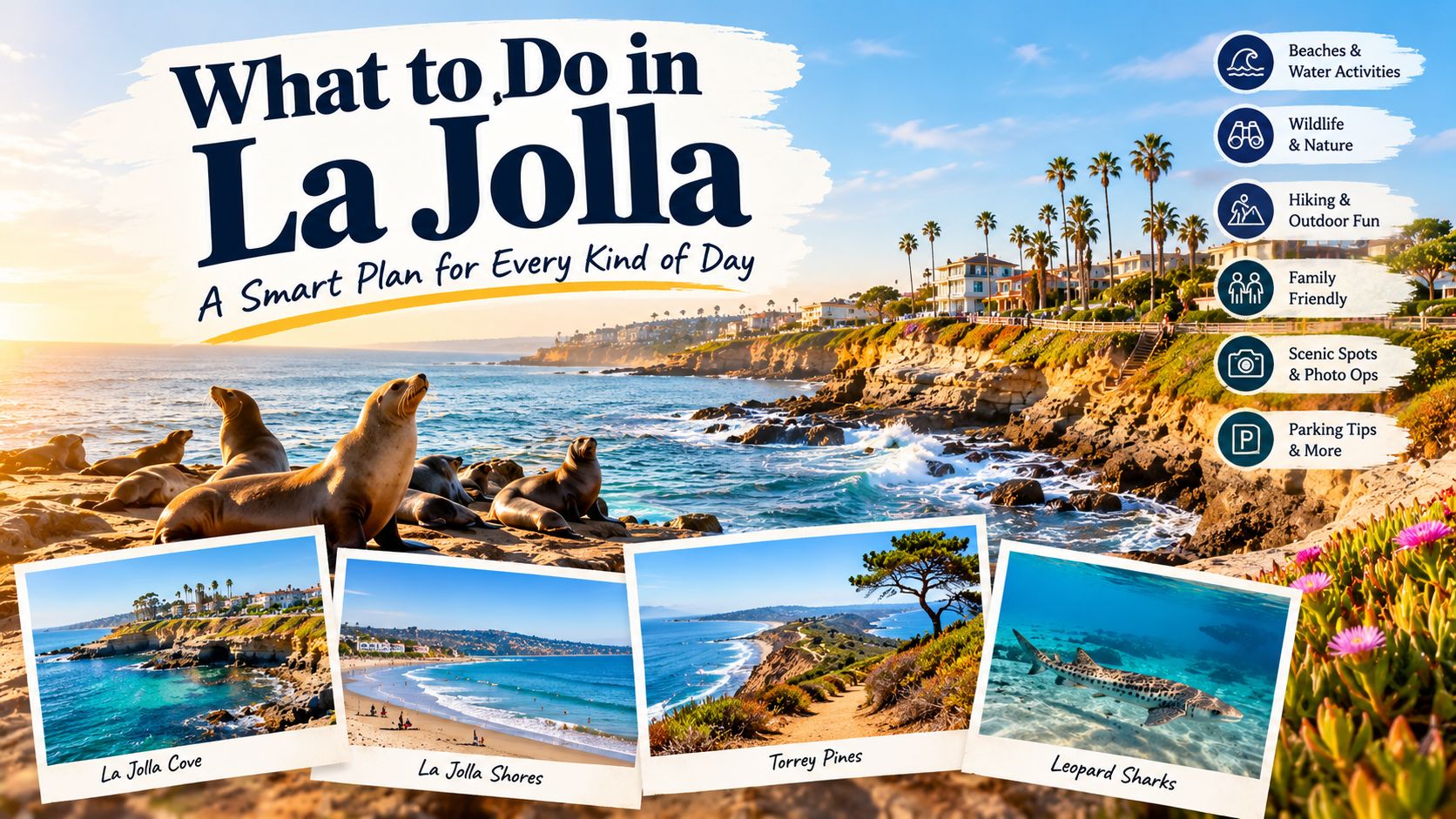
Most visits start the same way. You search for what to do in La Jolla, see photos of sea lions piled on the rocks, drive to the Cove, and then circle for twenty minutes hunting for a parking space. By the time you reach the water, the morning crowd has arrived and half your energy is gone.
The trouble isn’t a shortage of things to do. It’s that the right plan depends on your day: how many hours you have, what the weather is doing, who’s with you and whether you have a car. This guide sorts La Jolla by situation instead of by attraction, so you can pick the version that fits and skip the rest. You’ll also get a seasonal wildlife calendar, parking tactics and the small mistakes that quietly spoil a trip.
Quick answer: The best things to do in La Jolla are watching sea lions at La Jolla Cove, walking the bluff path through Ellen Browning Scripps Park, paddling or snorkeling at La Jolla Shores, and hiking Torrey Pines State Natural Reserve. Go early, check the tide, and sort out parking before anything else.
Table of Contents
ToggleHow La Jolla Actually Works
La Jolla (say “la HOY-ah”) is a coastal neighborhood of San Diego, roughly twenty minutes’ drive north of downtown. It’s small enough to feel like a village and busy enough to punish bad timing.
If you want an attraction-by-attraction rundown, our guide to the best things to do in La Jolla covers each spot in detail. This article does a different job: it helps you choose between them.
The Cove and the Shores Do Different Jobs
La Jolla Cove is a small, rocky pocket built for looking. You come for sea lions, cliffs and clear water, not for a towel-and-novel beach day. La Jolla Shores, a short drive north, is the opposite: wide sand, gentler water and the launch point for kayaks and paddleboards. Mixing the two up is the most common reason people feel underwhelmed.
Three Clocks Are Always Running
Tide decides whether tide pools are worth the walk. Season decides which animals you’ll see and which beaches are open. Parking decides how much of your day you actually get. Each one gets its own section below.
What to Do in La Jolla With Only Three or Four Hours
A short visit works best as one continuous walk with no backtracking.
- Arrive early and park near Coast Boulevard. Street spaces near the park fill quickly, so aim to be there before the crowds.
- Start at La Jolla Cove. Watch the sea lions from the railings, then drift along the bluff path through Ellen Browning Scripps Park, a grassy headland often called San Diego’s most photographed spot.
- Walk on to Children’s Pool. Harbor seals rest here, and the seawall gives you a close look without stepping into their space.
- Detour to the Cave Store. At 1325 Coast Boulevard, a gift shop doubles as the entrance to Sunny Jim Cave, billed as the only sea cave on the California coast you can reach by land. A hand-dug tunnel drops 145 steps to the water. There’s a small entry fee, and shoes with grip matter because the steps can be slippery.
- Finish with lunch in the Village. Walk uphill rather than driving again. You’ll keep your parking space and your patience.
What to Do in La Jolla for Free
La Jolla has a reputation for being expensive, and the hotels and restaurants earn it. The scenery doesn’t charge admission, though.
- La Jolla Cove and Scripps Park: free to visit, sea lions included.
- The Children’s Pool seawall: free harbor seal viewing, even when the beach itself is closed.
- The coastal bluff walk: the path linking the Cove to Children’s Pool costs nothing and rewards a slow pace.
- La Jolla Shores: a public beach with a free parking lot at Kellogg Park.
- Tide pools at low tide: look, don’t touch, and wear shoes with good grip.
- Sunset from the bluffs: easily the best free show in town.
Costs creep in elsewhere: tours, gear rental, meals, the Cave Store and the day-use parking fee at Torrey Pines. Budget for those and a free day stays free.
What to Do in La Jolla When It’s Cold, Grey or Wet
Coastal mornings can start cloudy, and winter brings the occasional wet day. La Jolla still works. You just move indoors for a while.
Birch Aquarium at Scripps sits on a bluff above the Pacific, and its exhibits are tied to the research of Scripps Institution of Oceanography. The Museum of Contemporary Art San Diego has a presence in the Village, with oceanfront galleries. The Village itself is made for ducking between galleries, boutiques and cafes. For an evening, La Jolla Playhouse, based at the University of California San Diego, gives you a theater option. Check opening hours and show schedules before you commit.
What to Do in La Jolla With Kids
Start at La Jolla Shores. The water is generally gentler than at many California beaches, there’s plenty of sand for digging, and Kellogg Park next door has grass and a playground. Add Birch Aquarium for a hands-on hour at its outdoor tide pool plaza.
Treat the Cove as a ten-minute stop rather than a long stay, since there’s little sand for small children. Keep everyone well back from the sea lions and seals. They look sleepy, but they’re wild animals.
What to Do in La Jolla for a Date or a Slow Evening
Sunset is the plan. Settle on the lawn at Scripps Park with a picnic (the city asks for no glass containers), watch the light drop over the bluffs, then walk the cliff path as the crowds thin out.
If you’d rather sit down, several restaurants sit right on the water. Weekends fill up, so book ahead instead of hoping for a walk-in table.
What to Do in La Jolla Without a Car
It’s doable, with a catch. Once you’re in the Village, the Cove, Scripps Park, Children’s Pool and the Cave Store all sit along one walkable stretch.
La Jolla Shores and Torrey Pines are a different story. A rideshare is the easiest option there, and on busy summer weekends a drop-off often beats hunting for a space. Arrange the drop-off at one end of your plan and the pickup at the other.
What’s Happening When: A Seasonal Calendar
Wildlife sets the rhythm here more than the weather does.
| When | What’s on | Good to know |
| Year-round | Sea lions at La Jolla Cove; tide pools at low tide | Check a tide chart and keep your distance from the animals |
| Winter | Gray whales migrating past the San Diego coast | The bluff viewpoints at Scripps Park suit casual whale-spotting |
| December 15 to May 15 | Harbor seal pupping season | Children’s Pool beach is closed to people; watch from the seawall |
| Roughly June to October | Leopard sharks at La Jolla Shores | Peak is typically August and September; a few linger into winter |
The Leopard Sharks Nobody Expects
Every summer, hundreds of leopard sharks gather in the shallows at the south end of La Jolla Shores. Most are pregnant females, and they’re generally harmless unless provoked. Waist-deep water is common, so you may see them without any gear at all.
A kayak or snorkel tour is the easiest way to get a good look. The area is a marine protected zone, so touching the sharks isn’t allowed. Look, float and let them cruise past.
Parking and Getting Around: Where Most Visits Go Wrong
Coast Boulevard and the Village
Parking near Scripps Park is street parking only. Time limits are posted and enforced, so read the signs before you walk away from the car. Early morning and late afternoon are easier, and parking a few blocks uphill and walking down saves a lot of circling.
La Jolla Shores
The Kellogg Park lot is free and closest to the water, but on summer weekends it often fills early in the morning. Nearby residential streets come with time limits and permit zones that are strictly enforced. Arrive early or take a rideshare.
Torrey Pines
The state reserve charges a day-use parking fee that varies by day and demand, so check the current rate before you go. Dogs aren’t allowed in the reserve or on its beach, and food isn’t permitted on the trails, though water is fine.
Torrey Pines for Every Fitness Level
Torrey Pines State Natural Reserve covers roughly 1,750 acres of coastal bluffs and protects the rare Torrey pine, which grows naturally only here and on Santa Rosa Island. It’s the best escape from the Village crowds, and the trails suit most abilities.
- Easy: the Guy Fleming Trail is a 0.7-mile loop with two ocean overlooks and great views of the pines.
- Moderate: the Razor Point Trail runs about 1.4 miles round trip through sandstone gullies to an ocean lookout. The Beach Trail is about three-quarters of a mile each way down to the sand, and it’s a steep climb back up.
- Longer: Broken Hill is the longest trail, and it can be combined with Razor Point and the Beach Trail for a loop of roughly three miles. The Beach and Broken Hill trails can close in bad weather, so check conditions before you set off.
Bring water and sun protection, and go early or late in the day to avoid the strongest light.
Five Mistakes That Quietly Ruin a La Jolla Day
- Assuming Children’s Pool is always open. From December 15 to May 15 the beach is closed to people, though you can still see the seals from the seawall.
- Treating the Cove like a beach day. It’s a viewing spot. Head to La Jolla Shores for sand and swimming.
- Crowding the animals. Signs at Children’s Pool ask visitors to keep around 50 feet back, and the same common sense applies to sea lions and leopard sharks.
- Bringing the dog to Torrey Pines. Pets aren’t allowed anywhere in the reserve or on its beach.
- Skipping the tide chart and the grippy shoes. Tide pools and rocky shorelines are only worth visiting at low tide, and the rocks and cave steps are slippery.
Frequently Asked Questions
What is the best thing to do in La Jolla?
Watching the sea lions at La Jolla Cove is the best first stop. It’s free, it’s right beside the bluff path in Ellen Browning Scripps Park, and you can combine it with a walk to Children’s Pool and a meal in the Village in a single morning.
How long do you need in La Jolla?
A half day covers the Cove, Scripps Park, Children’s Pool and lunch in the Village. Plan a full day if you want to add a kayak tour at La Jolla Shores or a hike at Torrey Pines.
Is there free parking in La Jolla?
Yes, but it’s limited. Kellogg Park at La Jolla Shores has a free lot, and some street spaces are free near the coast. Time limits are enforced and lots fill early on summer weekends. Torrey Pines charges a day-use fee.
When can you see leopard sharks in La Jolla?
Leopard sharks gather at La Jolla Shores from roughly June through October, with peak numbers typically in August and September. A small number can stay into the winter months. They’re generally harmless, but touching them is not allowed.
Can you go on the beach at Children’s Pool?
Outside pupping season, yes, but visitors are expected to stay behind the rope that divides the beach and keep away from the seals. From December 15 to May 15 the beach is closed to people, though the seals are still visible from the seawall.