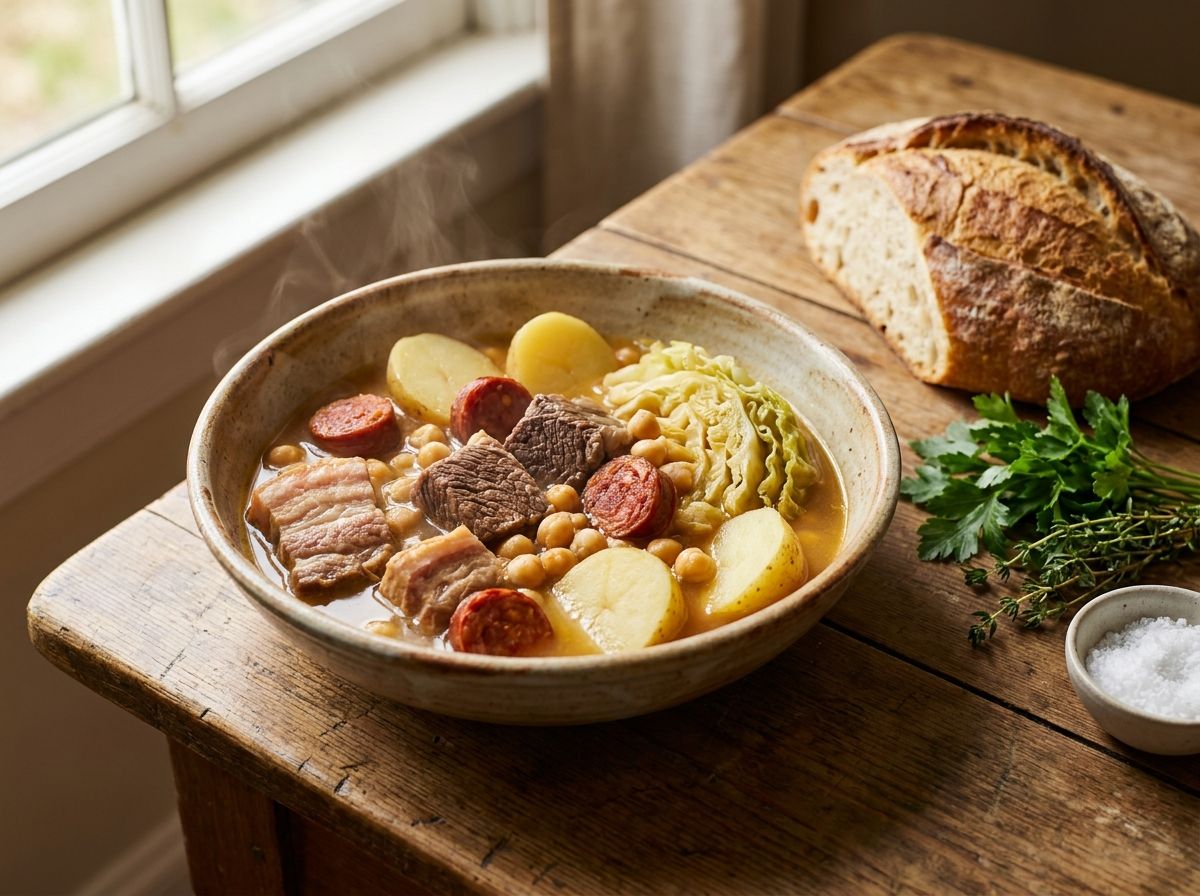
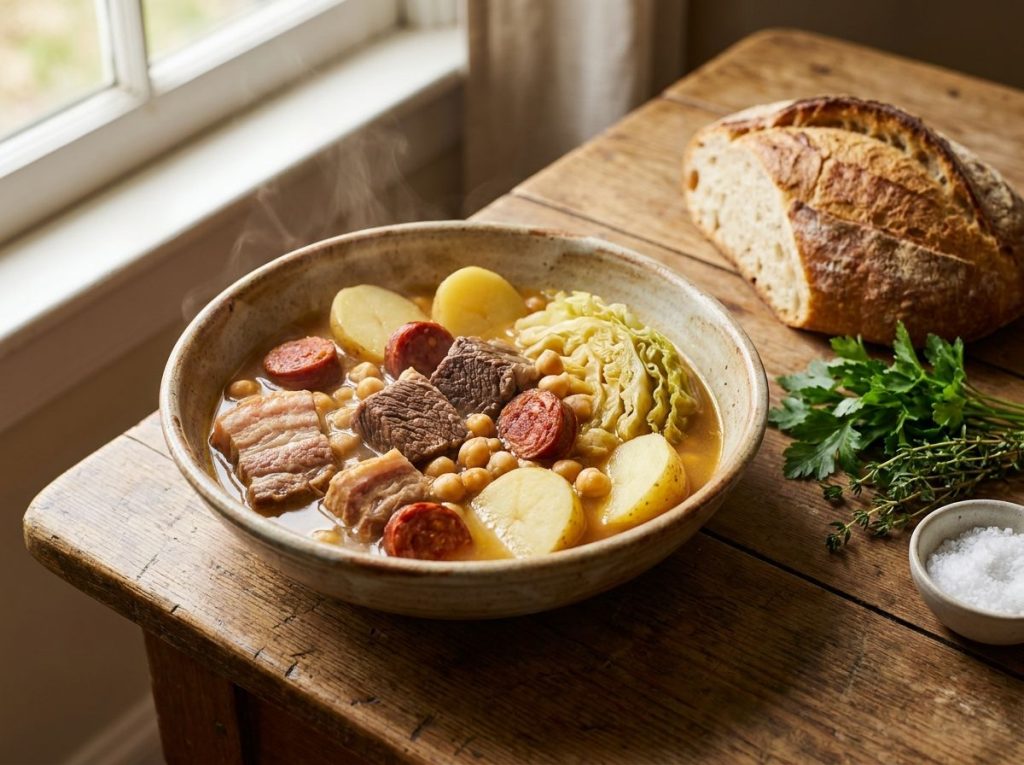
You know that feeling when the weather turns cold, the sky goes gray, and all you want is a bowl of something warm that sticks to your ribs? That is exactly when you start searching for the best cocido gallego near me. This is not just any soup. It is a meal that has fed farmers, fishermen, and families for centuries. It is comfort food at its most honest.
I have spent years traveling through Galicia, eating my way through small villages and big cities alike. I have sat in stone-walled kitchens where the pot bubbled for hours. I have watched abuelas (grandmothers) add handfuls of chickpeas and chunks of pork with the care of a surgeon. If you are craving this dish, you are not alone. Let me help you find the real deal, right in your own neighborhood.
Table of Contents
ToggleWhat Exactly Is Cocido Gallego?
Before you go hunting, you need to know what you are looking for. Cocido Gallego is a traditional Spanish stew from the region of Galicia in northwest Spain. It is not a quick meal. It is a slow-cooked masterpiece that combines chickpeas, potatoes, cabbage, and a variety of meats like pork shoulder, chorizo, panceta, and often beef shank.
The broth is golden and rich. The vegetables soak up all that porky goodness. The meats fall apart with the touch of a fork. It is served in three parts: the broth first, then the chickpeas and vegetables, and finally the meats on a separate platter. That way, you can enjoy each element on its own.
When you search for the best cocido gallego near me, you are looking for a place that respects this tradition. You want a kitchen that does not rush the cooking. You want a restaurant that uses local ingredients, not frozen shortcuts.
Why This Stew Is So Special
This dish is not fancy. It is humble food that became legendary. Galicia has a rainy, cool climate. The land is green and lush. For generations, farmers would prepare this stew in the morning, leave it on the wood stove all day, and eat it after a long day of work. It gave them energy and warmth.
What makes it different from other Spanish stews is the use of grelo or turnip tops. These are bitter greens that cut through the richness of the pork. They add a slight bitterness that balances everything out. If a restaurant skips the grelo, they are not making true cocido Gallego.
Another key is the chickpeas. In Galicia, they use a specific variety called garbanzos de la tierra. They are bigger and creamier than regular chickpeas. They soak up the broth like a sponge. When you find the best cocido gallego near me, the chickpeas will be soft but not mushy. They will hold their shape but melt in your mouth.
How to Spot an Authentic Version
You cannot just walk into any Spanish restaurant and expect magic. Many places serve a watered-down version. Here is how to tell if you are getting the real thing.
First, look at the meat selection. A true cocido Gallego has at least four types of pork. You should see chorizo (spicy sausage), lacón (cured pork shoulder), panceta (pork belly), and a piece of osso buco or beef shank. Some versions add a chicken leg or a piece of morcilla (blood sausage). If the menu only shows one kind of meat, keep walking.
Second, check the broth. It should be clear with a golden color. It should not be cloudy or greasy. The fat is rendered out during the long simmer. When you taste the broth, you should get a deep umami flavor with a hint of smoked paprika.
Third, ask about the cabbage. Galician cabbage is different from regular green cabbage. It is called repollo. It is firmer and sweeter. The restaurant should cook it until it is tender but still has a little bite. If they overcook it into mush, they are cutting corners.
Use these three checks when you search for the best cocido gallego near me. It will save you from a disappointing meal.
The Best Time of Year to Eat It
You can find this stew year round in most places. But it is truly a winter dish. In Galicia, it is a staple from November through March. That is when the weather gets cold and the ingredients are at their peak.
However, the dish has a special place in the cultural calendar. Many families eat it on Carnival Tuesday (Mardi Gras) before Lent starts. It is a final feast of pork before the fasting season begins. If you happen to be near a Galician community during that time, you will see extra offerings on menus.
That said, do not wait for winter. If you are craving it now, go find it. The best cocido gallego near me is available any day of the week in authentic restaurants. Just call ahead to make sure they are serving it that day. Some places only make it on weekends because it takes so long to cook.
What to Order Alongside Your Stew
A bowl of cocido Gallego is a full meal. But the locals know how to pair it. Here are the traditional side dishes that make the experience even better.
First, order a glass of ribeiro white wine. This is a Galician wine that is slightly acidic. It cuts through the richness of the pork and cleans your palate between bites. If you prefer red, try a mencía from the Bierzo region. It is light and fruity.
Second, start with some empanada gallega. This is a baked pie filled with tuna, onion, and bell pepper. It is a perfect appetizer while you wait for the stew. The flaky crust and savory filling prepare your taste buds for the main event.
Third, finish with a dessert called filloas. These are thin crepes served with honey or custard. They are simple and sweet, a nice contrast to the heavy stew.
When you are looking for the best cocido gallego near me, ask the waiter about these pairings. If they know their stuff, they will recommend the right wine and sides without hesitation.
How to Search for It Like a Local
Online reviews are helpful, but they can be tricky. Many tourists leave glowing reviews for restaurants that serve decent food. But locals have a different standard. Here is how to search like a local.
Use search terms that include the region. Instead of just “cocido gallego,” try “cocido gallego Galicia” or “cocido Gallego restaurant.” Look for places that mention the specific ingredients like lacón or grelo. If a menu highlights these words, they know what they are doing.
Check the restaurant’s social media. Look at photos of the stew. Does the broth look clear? Are the chickpeas whole? Do the meats look falling-off-the-bone tender? If the photos show a watery, pale soup with tough meat, keep scrolling.
Also, look for the restaurant’s history. Family-run places that have been open for decades are usually the best. They have passed down recipes through generations. They have a reputation to protect.
When I search for the best cocido gallego near me, I always filter by “most recent” reviews. I want to see what people said last week, not last year. Restaurants change. Cooks leave. Quality shifts. Recent reviews give you a true picture.
What to Expect When You Order
When you sit down to eat, be prepared for a process. This is not a quick lunch. The server will bring you a bowl of the broth first. Drink it slowly. Add a splash of white wine if you like. Then they will bring the vegetables and chickpeas in a separate bowl. Eat them with a spoon. Finally, the meat platter arrives. You can pick up the chorizo and panceta with your hands or use a fork. It is messy, casual, and wonderful.
Do not be shy about asking for extra bread. The broth is so good that you will want to sop it all up. Most places serve rustic country bread that is chewy and crusty. It is the perfect vehicle for the last drops of broth.
If you are ordering for two people, ask for a half portion. The full portion is massive. Even a hearty eater might struggle to finish it all. The best restaurants will split the portions for you without any fuss.
My Personal Favorite Spots (That You Can Find Anywhere)
You might live in a big city or a small town. Either way, you can find great cocido Gallego. Here are the types of places to look for.
First, look for Galician cultural centers. Many cities have a Casa de Galicia or a Centro Galego. These are community centers where locals gather. They often have a restaurant attached that serves homemade food. These are hidden gems.
Second, look for butcher shops that have a small dining area. In Galicia, many butchers serve lunch to their regular customers. They have the freshest meats and the best recipes. If you find a butcher shop that offers cocido, go there immediately.
Third, look for old-school Spanish restaurants. Not the trendy tapas bars. The ones with tablecloths and wooden chairs. The ones where the owner is behind the counter. These places have been around for thirty years. They do not change their menu because they do not need to.
On my last trip, I found a tiny spot in a basement. No sign outside. Just a metal door. Inside, a dozen people sat at long tables. The pot was in the corner. The owner brought out the broth in a clay bowl. It was the best cocido I have ever had. That is the magic of this dish. It finds you when you least expect it.
Why You Should Not Settle for Imitations
I have seen too many people order a so-called “cocido Gallego” and get a bowl of canned chickpeas with cheap sausage. That is not the dish. That is a sad imitation.
When you settle for a bad version, you miss out on the complexity. You miss the way the pork fat slowly melts into the broth. You miss the slight bitterness of the greens that cuts through the richness. You miss the texture of the chickpeas that have soaked for twelve hours.
The Best Ensalada de Apio y Manzana Near Me is not just about convenience. It is about tradition. It is about respecting the ingredients. It is about taking the time to do it right.
So if you see a restaurant offering it for a very low price, be suspicious. Good ingredients cost money. A good chorizo is not cheap. A quality piece of lacón takes time to cure. If the price seems too good, the quality probably is too.
How to Cook It at Home (If You Cannot Find It)
I know that sometimes you just cannot find a good restaurant nearby. That is okay. You can make it at home. It takes time, but it is worth it.
Start with dried chickpeas. Soak them overnight. Then boil them with a bay leaf and a whole onion. In a separate pot, cook your pork cuts with water, salt, and a pinch of paprika. Combine everything after an hour. Add the cabbage and potatoes thirty minutes before serving.
The trick is to not rush. Low and slow is the rule. The broth should barely simmer. The meats should cook until they are tender enough to pull apart.
When you serve it, follow the three-part method. Broth first. Then vegetables. Then meat. That is how the locals do it.
I have made this dish many times. It never comes out exactly the same twice. But that is part of the charm. Every pot has its own personality.
The Heart of the Matter
At the end of the day, cocido Gallego is more than food. It is a connection to a place and a people. It is about sitting around a table with friends and family. It is about slowing down and enjoying the moment.
When you search for the best cocido gallego near me, you are looking for that experience. You want the warmth of the broth and the comfort of the meat. You want the story behind the recipe. You want to taste the history of Galicia in every bite.