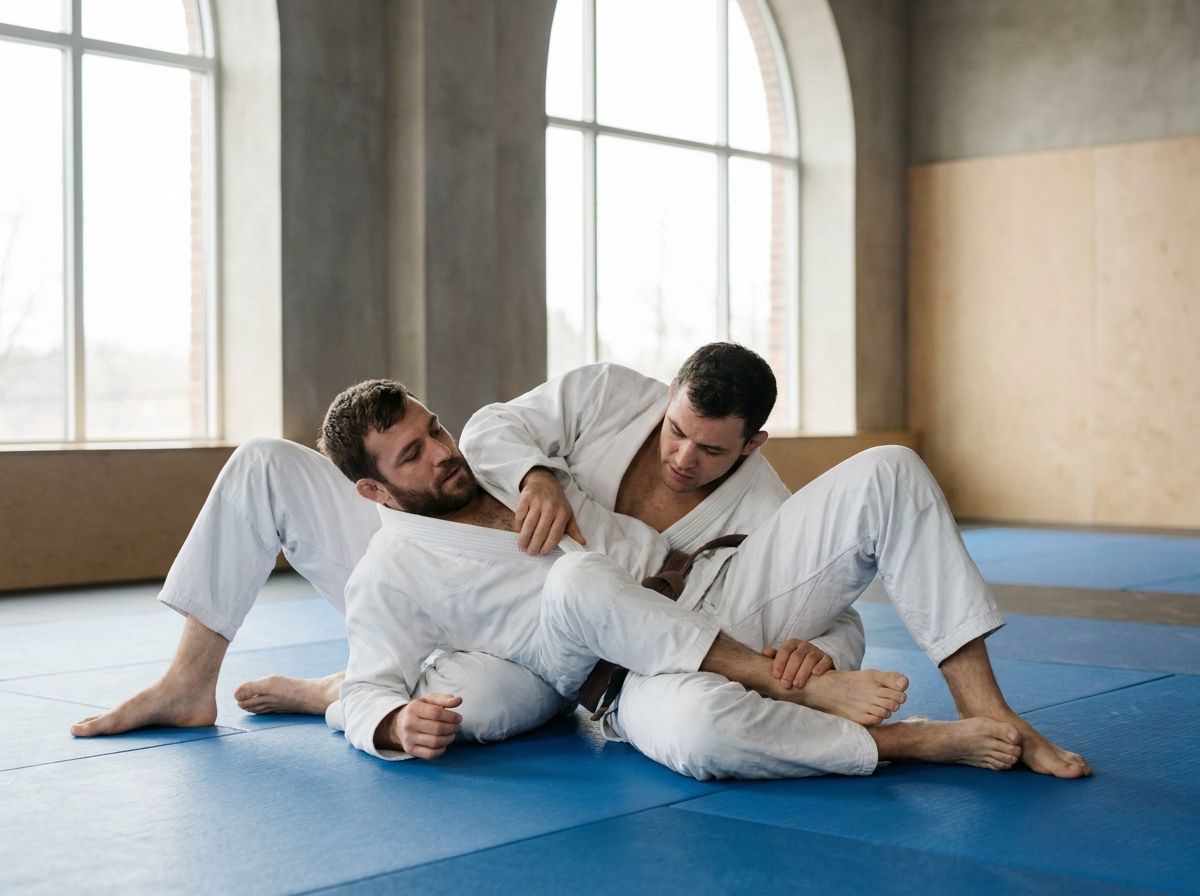
Brazilian Jiu-Jitsu has grown from a niche grappling discipline into one of the most respected combat sports and self-defense systems in the world. Rooted in leverage, technique, and patient problem-solving rather than raw power, this martial art continues to attract people of every age, size, and fitness level. Whether the goal is fitness, self-defense, competition, or simply a new way to challenge the body and mind, BJJ martial arts training offers a structured path that rewards consistency over brute strength.
This guide walks through the history, core principles, techniques, belt progression, competition scene, and everyday benefits of Brazilian Jiu-Jitsu, giving a clear picture of why this discipline has earned such a devoted global following.
What makes this martial art particularly interesting is how it continues to evolve. New techniques, positions, and strategies are still being developed and refined at academies and competitions around the world, which keeps even long-time practitioners engaged and learning. Unlike some traditional combat sports that have remained largely unchanged for generations, Brazilian Jiu-Jitsu is a living, evolving system shaped by ongoing experimentation on the mats.
Table of Contents
ToggleThe Origins of Brazilian Jiu-Jitsu
Brazilian Jiu-Jitsu traces its lineage back to Japanese Judo and traditional jiu-jitsu, which were later adapted and refined in Brazil during the early twentieth century. The Gracie family played a central role in shaping the art into what it is today, emphasizing ground control and submission holds that allowed a smaller, lighter practitioner to overcome a larger opponent through technique alone.
Over the decades, the discipline absorbed influences from wrestling, Judo, and Sambo, evolving into the well-rounded grappling system practiced in academies worldwide. This blend of styles is part of what makes the art so adaptable, since practitioners are encouraged to develop a personal game built around their own body type, strengths, and instincts rather than copying a single rigid style.
As the art spread beyond Brazil, it found a global audience through mixed martial arts competitions during the 1990s, where practitioners repeatedly demonstrated that ground control and submission skill could overcome opponents with a striking background. This exposure helped establish Brazilian Jiu-Jitsu as an essential component of modern mixed martial arts training and introduced the discipline to a much wider international audience.
Today, the art is taught on nearly every continent, with dedicated academies, federations, and competition circuits supporting millions of practitioners. While the techniques have become more refined and specialized over time, the underlying philosophy of using intelligent technique to overcome size and strength has remained consistent since the earliest days of the art.
Core Principles Behind the Art
At its heart, Brazilian Jiu-Jitsu operates on a simple idea: technique and timing outperform size and strength when applied correctly. This principle shapes everything from how a class is structured to how techniques are taught.
Several concepts sit at the foundation of every training session:
- Leverage over force – using angles, hips, and body weight to control an opponent rather than relying on muscle.
- Positional control – advancing through a hierarchy of dominant positions before attempting a submission.
- Base and balance – maintaining a stable posture to avoid being swept or controlled.
- Patience and problem-solving – treating each roll as a puzzle rather than a race to finish quickly.
- Continuous learning – even experienced black belts describe themselves as lifelong students of the art.
These principles are what separate Brazilian Jiu-Jitsu from many striking-based disciplines. Instead of exchanging blows, practitioners work to neutralize an opponent through grips, transitions, and calculated pressure, which is one reason the art is often described as “human chess.”
Ground Fighting and Grappling Fundamentals
Ground fighting is the signature feature of BJJ martial arts training. While many traditional martial arts focus primarily on striking while standing, Brazilian Jiu-Jitsu places heavy emphasis on what happens once a confrontation moves to the floor, which research and real-world observation suggest is where a large percentage of physical altercations eventually end up.
Students typically begin by learning fundamental positions such as the guard, mount, side control, and back control. From there, they progress to escapes, sweeps, and transitions that allow them to move from a disadvantageous position into a dominant one. Submission techniques, including joint locks and chokes, are introduced gradually and always practiced under close supervision to keep training safe.
Sparring, often called “rolling” within the community, is where these techniques are tested against a partner who is genuinely resisting. This live, resistance-based training is a defining feature of the art and is part of why practitioners tend to develop such reliable, functional skills compared to disciplines that rely mostly on choreographed drills.
The guard, in particular, is considered one of the most defining aspects of the art. Rather than treating a position on one’s back as purely defensive, Brazilian Jiu-Jitsu teaches practitioners to use their legs, hips, and grips to control, sweep, and even submit an opponent from underneath. Variations such as closed guard, open guard, half guard, and butterfly guard each offer different tactical options, and most practitioners eventually gravitate toward a handful of guard styles that suit their body type and personal preferences.
Passing the guard, meanwhile, is one of the most technically demanding skills in the sport, requiring precise footwork, pressure, and timing to neutralize an opponent’s legs and advance toward a dominant position. The ongoing exchange between guard retention and guard passing is often what makes matches between skilled practitioners so dynamic and unpredictable.
Gi and No-Gi Training Explained
Brazilian Jiu-Jitsu is typically practiced in two formats, and most serious students eventually train in both.
Gi training involves wearing a traditional woven uniform, similar to a Judo gi, which practitioners use to grip, control, and manipulate an opponent’s posture. The gi adds an extra layer of technical complexity, since collar chokes, sleeve control, and lapel guards all become part of the toolkit.
No-gi training is practiced in rash guards and shorts or grappling tights, removing the fabric grips entirely. This style tends to move faster and places greater emphasis on underhooks, overhooks, and body positioning rather than clothing grips. Many practitioners find that no-gi translates more directly to mixed martial arts and self-defense scenarios where an attacker is unlikely to be wearing a gi.
Both formats reinforce the same underlying principles of leverage and control, but each develops slightly different instincts, which is why well-rounded academies typically offer classes in both styles.
Quality equipment plays a meaningful role in how comfortable and effective training feels. A well-fitted gi made from durable, breathable material can hold up to repeated washing and heavy grip fighting without losing shape, while a properly sized rash guard and shorts allow for freedom of movement during no-gi sessions. Many practitioners also invest in mouthguards, ear guards to prevent cauliflower ear, and knee pads, particularly as training frequency increases. Investing in well-made gear early on tends to pay off, since low-quality materials often wear out quickly or become uncomfortable during longer training sessions.
The Belt System and Progression
Progression in Brazilian Jiu-Jitsu is famously slow compared to many other martial arts, and that pace is considered a feature rather than a flaw. The adult belt system generally moves through white, blue, purple, brown, and black, with stripes marking incremental progress within each rank.
Reaching a black belt commonly takes eight to twelve years of dedicated training, reflecting the depth of technical knowledge required. This gradual structure means practitioners are rewarded for genuine skill development and mat time rather than attendance alone. Many instructors also require students to demonstrate not just technical ability but also the maturity, humility, and teaching capacity expected at higher ranks.
For beginners, this slow progression can actually be reassuring. Rather than chasing a quick milestone, students are encouraged to enjoy the process, treat every class as an opportunity to learn something new, and measure success in small, steady improvements rather than belt color alone.
Competition and Sport Jiu-Jitsu
While many practitioners train purely for fitness or self-defense, competition plays a significant role in the culture surrounding Brazilian Jiu-Jitsu. Tournaments range from small local events held at a single academy to large international championships that draw thousands of competitors and spectators.
Matches are typically organized by belt rank, age, and weight class to keep competition fair, and points are awarded for actions such as takedowns, sweeps, passing the guard, and achieving dominant positions like mount or back control. A match can also end early if a competitor secures a submission, forcing their opponent to tap out before a joint lock or choke causes injury.
Competing is not a requirement for progression through the belt system, but many instructors encourage students to try at least one tournament during their training journey. Stepping onto the mat against an unfamiliar opponent under time pressure tends to expose gaps in technique far more quickly than regular training, and the experience often accelerates a student’s overall development. That said, plenty of dedicated practitioners choose to focus purely on personal growth and skip competition entirely, and this is just as valid a path within the art.
Self-Defense Applications
One of the most widely recognized strengths of Brazilian Jiu-Jitsu is its practical value in real-world self-defense situations. Because the art relies on control, leverage, and positioning rather than striking power, it allows a smaller or lighter individual to manage a larger, stronger opponent without needing to match their strength.
Techniques such as clinching, takedowns, and ground control give practitioners the tools to neutralize a threat, create space to escape, or hold an aggressor safely until help arrives, often without causing unnecessary injury. This non-striking approach is particularly valuable in scenarios where excessive force could create legal complications, making BJJ a practical choice for people who want self-defense skills that emphasize control over aggression.
Many self-defense-focused academies also incorporate situational drills that simulate grabs, holds, and close-quarters confrontations, helping students build the awareness and calm needed to respond effectively under pressure rather than freezing or panicking.
Physical and Mental Benefits
Beyond self-defense and competition, Brazilian Jiu-Jitsu delivers a broad range of everyday benefits that keep practitioners coming back to the mats.
- Full-body conditioning – rolling and drilling engage the core, grip strength, cardiovascular system, and nearly every major muscle group.
- Improved flexibility and mobility – regular practice naturally builds range of motion in the hips, shoulders, and spine.
- Stress relief and mental clarity – the focused, problem-solving nature of training offers a break from daily pressures.
- Discipline and patience – the slow belt progression teaches practitioners to embrace gradual improvement.
- Confidence and body awareness – learning to control situations physically often translates into greater composure off the mats.
- Community and camaraderie – academies tend to foster tight-knit groups built around mutual respect and shared goals.
These benefits explain why so many people who begin BJJ purely for fitness or self-defense end up staying for the community and personal growth the art provides.
Injury Prevention and Smart Recovery
Like any physically demanding activity, Brazilian Jiu-Jitsu carries a degree of risk, particularly around the joints, neck, and connective tissue. However, most injuries can be significantly reduced through sensible training habits and a quality instructional environment.
A few habits go a long way toward keeping practitioners healthy over the long term:
- Tapping early – recognizing a submission and tapping before it causes damage, rather than trying to escape a fully locked-in hold.
- Warming up properly – dedicating time to mobility work and light movement before drilling or sparring.
- Communicating with training partners – discussing intensity levels, especially when training with someone significantly more experienced or physically stronger.
- Listening to the body – resting when something feels off rather than pushing through sharp or unusual pain.
- Gradual intensity increases – building up sparring frequency and intensity over time rather than jumping straight into hard rolling as a beginner.
Recovery matters just as much as the training itself. Adequate sleep, proper hydration, and a balanced diet all support the body’s ability to repair muscle tissue and maintain joint health between sessions. Many practitioners also incorporate light mobility work, stretching, or yoga into their weekly routine to keep the hips, shoulders, and spine moving freely, since flexibility plays a direct role in both performance and injury prevention on the mats. Academies that prioritize a culture of safety, controlled intensity, and mutual respect between training partners tend to see far fewer injuries than those that encourage overly aggressive sparring, particularly among newer students.
Choosing the Right Academy
Selecting a quality academy makes a significant difference in how enjoyable and effective the learning experience becomes. When evaluating a school, it helps to consider the quality of instruction, the structure of the curriculum, the cleanliness and safety of the training space, and how welcoming the environment feels to newcomers.
A well-run academy should offer:
- Clear, structured lesson plans appropriate for different skill levels
- Experienced instructors who prioritize safety and proper technique
- Clean mats, well-maintained equipment, and quality training gear
- A supportive culture that welcomes beginners without judgment
- Opportunities for both gi and no-gi training
Publications covering martial arts and lifestyle topics, including 5ive Magazine, frequently highlight how much the right training environment shapes a student’s long-term commitment to the sport. A supportive academy with knowledgeable coaches and quality equipment tends to keep students motivated far longer than one focused purely on rapid results.
Getting Started as a Beginner
Anyone considering BJJ martial arts training should know that most academies welcome complete beginners with open arms. It is common to feel awkward or overwhelmed during the first few classes, and this is a normal part of the learning curve rather than a sign of poor fit.
New students are typically encouraged to attend fundamentals classes first, where instructors break down basic positions, escapes, and safe falling techniques before introducing sparring. Investing in proper training gear, including a well-fitted gi and mouthguard, along with maintaining good hygiene habits, helps beginners settle into the training routine comfortably.
Consistency matters more than intensity in the early stages. Attending two or three classes a week, staying patient with the learning curve, and asking questions during class tend to produce steadier long-term progress than sporadic, high-intensity sessions.
Common Questions About Brazilian Jiu-Jitsu
Is Brazilian Jiu-Jitsu suitable for people with no athletic background?
Yes. Classes are typically structured to accommodate complete beginners, and techniques are broken down step by step before live sparring is introduced. Fitness tends to improve naturally as a byproduct of consistent training rather than being a prerequisite to start.
How often should a beginner train each week?
Two to three sessions per week is a common recommendation for beginners, allowing enough time for the body to recover between classes while still building consistency and muscle memory.
Is Brazilian Jiu-Jitsu safe for children?
Many academies offer dedicated kids’ programs that focus on discipline, coordination, and age-appropriate techniques, with an emphasis on safety and fun rather than intense sparring.
Does BJJ involve striking?
No. Unlike boxing, kickboxing, or many traditional martial arts, Brazilian Jiu-Jitsu is a grappling-based discipline that does not involve punches or kicks, which is part of why it is considered accessible to a wide range of ages and fitness levels.
How long does it take to feel confident on the mats?
Most students begin to feel noticeably more comfortable with basic movement, escapes, and positional awareness within the first three to six months of consistent training, though genuine confidence in live sparring typically develops over a year or more.
Final Thoughts
Brazilian Jiu-Jitsu remains one of the most practical, well-rounded martial arts available today, combining genuine self-defense value with meaningful physical and mental benefits. Its emphasis on technique over strength, gradual skill development, and supportive training culture continues to draw newcomers from every background into academies around the world. For anyone weighing their options among modern combat sports, BJJ martial arts offers a proven, time-tested path built on quality instruction, disciplined practice, and steady personal growth.