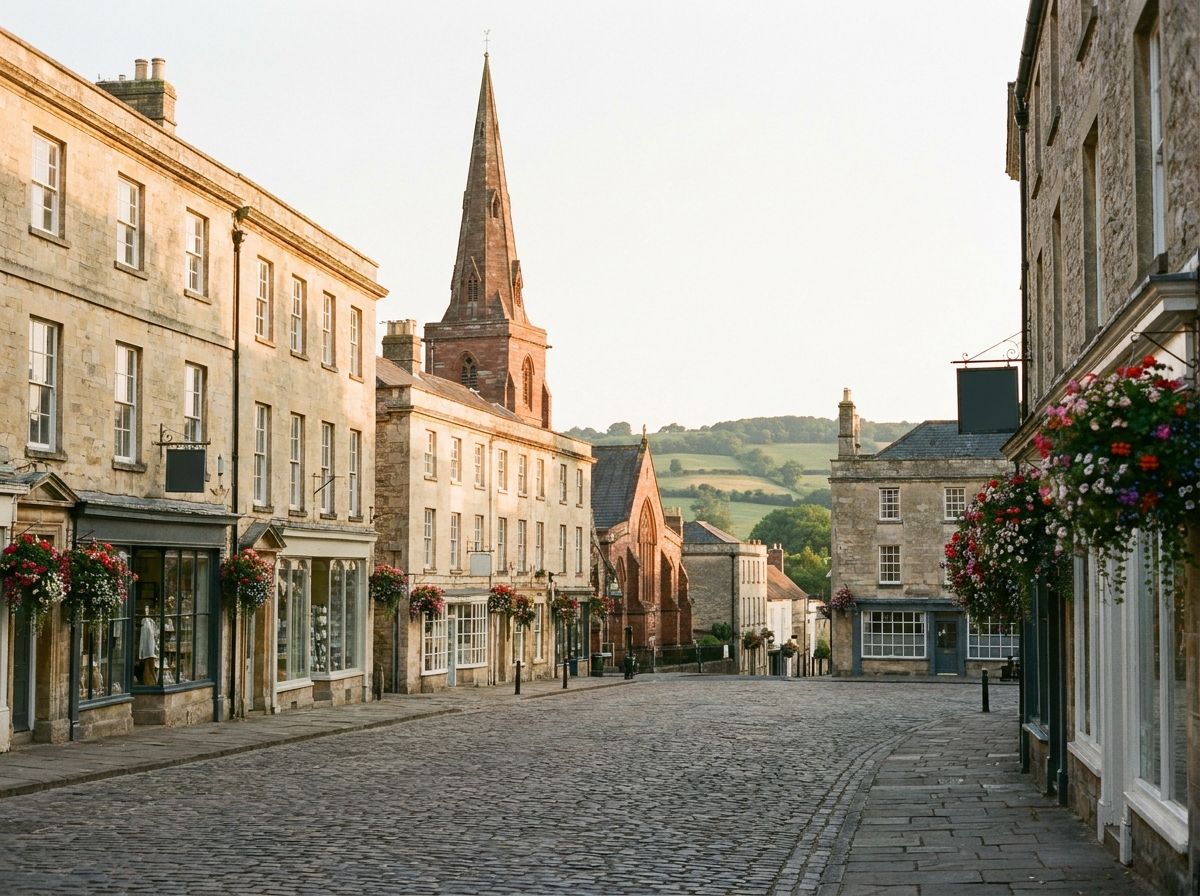
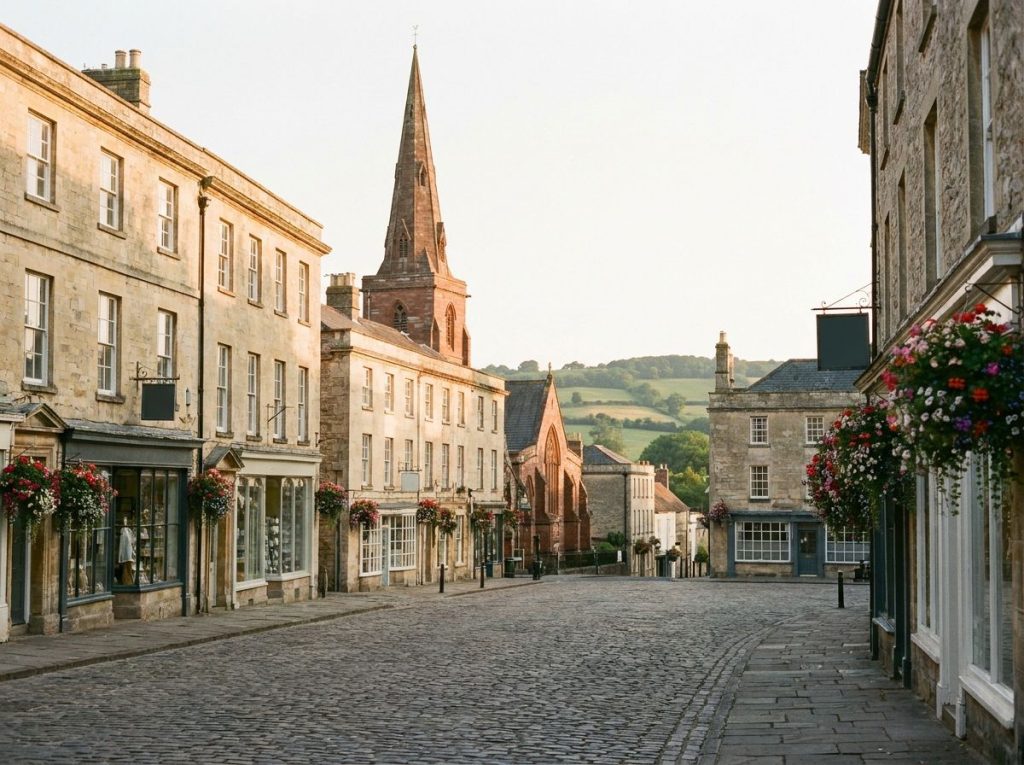
Somerset has no shortage of pretty market towns, but Wiveliscombe does things a little differently. Rather than dressing itself up for passing tourists, it has spent centuries simply getting on with life: trading wool and cloth, brewing beer that once travelled across the West Country, and keeping its Saturday market busy without much fuss. Locals shorten the name to Wivey, and the nickname suits it well. It feels lived-in rather than styled for visitors. At 5ive Magazine, we’re drawn to towns like this, the ones that reward a slower look. This guide to Wiveliscombe, UK covers where the town sits, how it came to be, and the everyday details that make it worth knowing.
Table of Contents
ToggleWhere Is Wiveliscombe?
Wiveliscombe sits in the western half of Somerset, roughly nine miles from Taunton, which has served as its post town for as long as most records go back. With a population of just over three thousand at the last census, it’s small enough to walk across in twenty minutes yet busy enough to feel properly alive on a market morning.
The town is built at the foot of the Brendon Hills, and this position shapes almost everything about it. Head north or west from the square and the land climbs steadily toward Exmoor National Park, giving Wiveliscombe a natural role as a gateway between farmland and the wilder moorland beyond.
The Devon border lies around five miles away, close enough that plenty of residents cross it regularly for work or a change of scenery. Smaller settlements sit within the wider parish itself, including Croford, Langley, Maundown, and Whitefield, while Milverton and Bampton are among the nearby towns worth knowing if you’re exploring further afield. Administratively, Wiveliscombe now falls under Somerset Council, a unitary authority that took over local government duties in 2023 after several rounds of reorganisation.
It’s a rural setting, but not an isolated one, with narrow lanes lined by hedgerows and views that open up quickly once you’re past the edge of town.
A Brief History of Wiveliscombe
People have lived around Wiveliscombe for a very long time. There’s a Neolithic hillfort at King’s Castle just east of the town, an Iron Age site known as Clatworthy Camp to the north west, and the remains of a Roman fort near Manor Farm. Roman coins have turned up locally over the years, and residents once simply called the old fortification “the Castle” long before its origins were properly understood.
The town’s later history is closely tied to the Bishops of Bath and Wells, who held a palace here as far back as the 15th century, traces of which still survive near the parish church in the form of a gateway arch. From there, Wiveliscombe grew into a market and cloth-making town, eventually gaining borough status, with The Square becoming the commercial heart of the settlement, a role it still plays today.
Brewing is the chapter most people mention first. William Hancock founded a brewery here in 1807, and the Hancock family went on to shape the town for generations, not only through beer but through rugby too. Several of the Hancock sons played for Somerset, and one, Frank Ernest Hancock, captained Wales. The brewery merged with Arnolds of Taunton in 1927 before later changing hands, and large-scale brewing in Wiveliscombe eventually came to an end. Walk around the older streets today, particularly Church Street and Golden Hill, and the Georgian and Victorian buildings still hint at how prosperous those trading years once were.
Things to See and Do in Wiveliscombe
Wiveliscombe rewards people who like to walk rather than tick off a checklist. The Square is the natural starting point, ringed by listed buildings and still functioning as the social centre of town, and from there, St Andrew’s Church is worth a look, built from the deep red sandstone found throughout the older parts of town.
The Jubilee Gardens are a quieter highlight. Opened in 1977 to mark the Queen’s Silver Jubilee and later updated with sculpted gates and carved oak seating, they form part of the wider Wiveliscombe Heritage Arts Trail and make a pleasant spot to pause partway through a walk. For something more active, Wivey Pool has been run by the community since 1927 and still draws families through the summer months, with a sunbathing deck and picnic area right by the Recreation Ground.
A few places worth prioritising if time is short:
- The Square and its listed buildings, the historic centre of town
- St Andrew’s Church, built from local red sandstone
- Jubilee Gardens, part of the Wiveliscombe Heritage Arts Trail
- Wivey Pool, the community-run open-air swimming pool
- The Wivey Way and Brendon Towers Way walking routes
Walking is where Wiveliscombe comes into its own. The town holds official Walkers Are Welcome status, and both routes lead straight out into the surrounding hills, well signposted and manageable for most fitness levels. Sport has deep roots here too. Wiveliscombe Rugby Football Club was founded in 1872, largely thanks to the Hancock family, and it remains part of the town’s identity today.
Local Shops, Markets, and Everyday Life
What stands out about Wiveliscombe’s high street is how much of it is still independently owned. Many shopfronts date back to the Victorian era, and the businesses inside them tend to be family-run rather than part of any chain. Thorne’s, the local butchers, has built a strong reputation over the years, and Wivey Larder stocks the kind of local produce that’s hard to find in a supermarket. There’s also a long-established hardware shop, a chocolatier, a pharmacy, a post office, and a handful of antique and interiors shops, including one housed in the old Courthouse building.
Saturday mornings bring the farmers’ market to The Square, giving local producers a direct route to customers, with stalls selling fresh vegetables, meat, cheese, bread, seasonal fruit, cider, and fruit juice from nearby farms. It’s a fair barometer of how seriously this part of Somerset takes its food, and the quality on offer reflects real care rather than mass production.
The pace of daily life here is unhurried. People stop to chat outside shops, and the square still functions as a natural meeting point, much as it has for generations.
Food, Drink, and Local Craftsmanship
Somerset’s reputation for good food and drink holds up well in Wiveliscombe. The town still has its own brewing tradition even after Hancock’s closed, with The Bear Inn running a small microbrewery behind the pub and serving home-cooked food alongside its own ales, while The White Hart, a former seventeenth-century coaching inn, offers another solid option for a proper meal in a building with real history behind it.
Beyond the pubs, the surrounding countryside supplies much of what ends up on local tables, with area farms rearing free-range pork, chicken, and venison on a smaller scale, valuing welfare and flavour over volume. That same attention shows up in the town’s older buildings too. Local red sandstone was the material of choice for generations of builders here, and it’s still visible in the church and in cottages along streets like Silver Street and Golden Hill. It says something about a place when both the materials it was built from and the food grown around it are treated with this much care.
Getting to Wiveliscombe
Wiveliscombe sits just off the B3227, once part of the main A361 route before the North Devon Link Road opened in 1988 and traffic patterns shifted elsewhere. There’s no railway station in the town itself, but Taunton and Tiverton Parkway both offer mainline connections within a thirty to forty minute journey by car, bus, or taxi, and First Buses of Somerset run a regular service between Wiveliscombe and Taunton with onward connections toward Bampton and Dulverton.
Getting there in brief:
- By road: around twenty minutes from Taunton via the B3227
- By rail: nearest mainline stations are Taunton and Tiverton Parkway
- By bus: First Buses of Somerset connects Wiveliscombe to Taunton and on to Bampton and Dulverton
- By car from further afield: M5 Junction 25 at Taunton or Junction 27 near Tiverton both offer reasonably direct routes in
Why Wiveliscombe Is Worth Knowing
Wiveliscombe isn’t trying to be a destination in the way some Somerset towns are. It doesn’t have a famous castle or a well-known festival drawing coach parties every summer. What it has instead is a genuine sense of place: a working market square, shops run by people who know their customers, a brewing history that shaped the town for over a century, and hills on every side that make walking out of town almost irresistible.
That combination is harder to find than it sounds, and it’s what makes Wiveliscombe worth a proper look rather than a quick pass-through. Spend a morning at the farmers’ market, an afternoon on the Brendon Towers Way, and an evening at The Bear Inn, and you’ll come away with a fair sense of what this corner of Somerset is actually like. 5ive Magazine will keep covering towns like this, the ones that don’t need embellishing to be worth the trip.