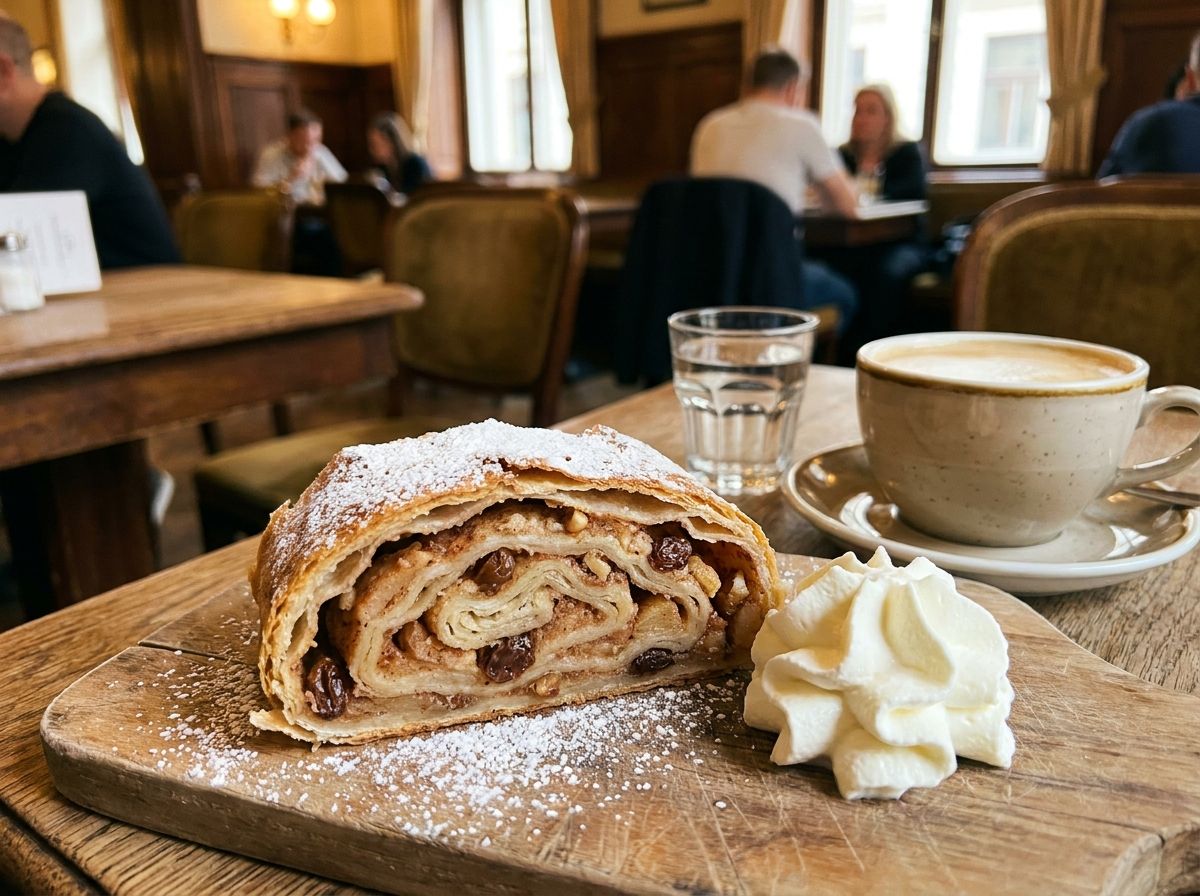
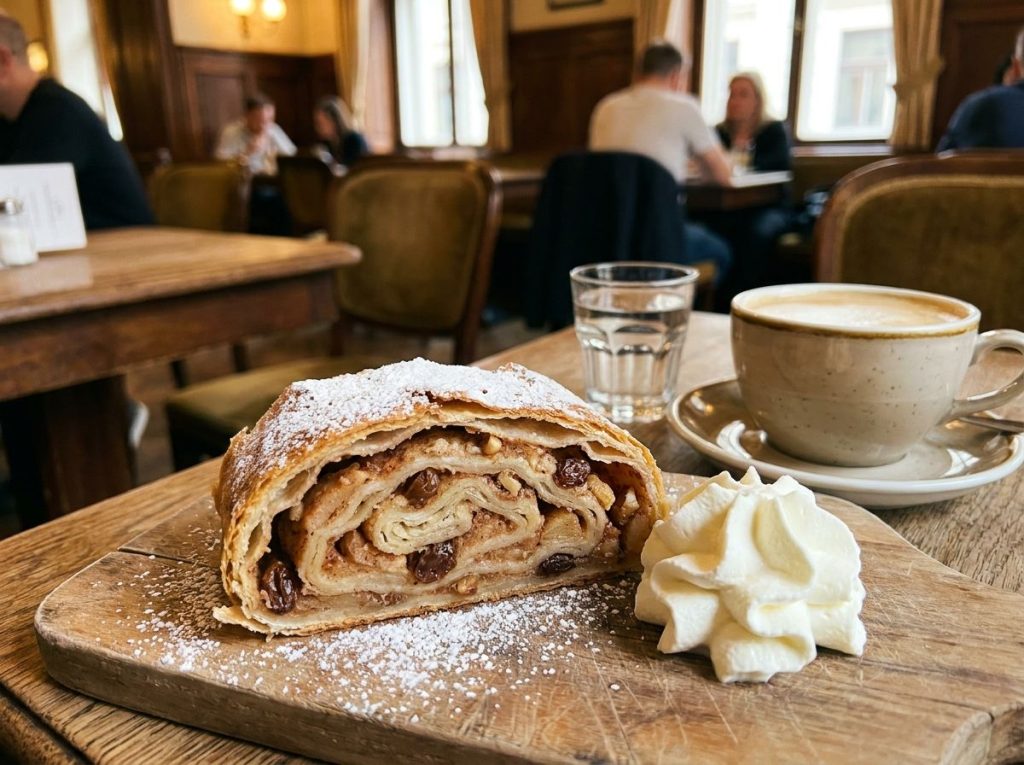
There is a particular smell that pulls you into a bakery before you even see the pastry case. Warm cinnamon, browned butter, and something sweet baking behind the counter. If you have ever followed that smell and found a slice of apple strudel waiting for you, you already understand why people spend their weekends searching for the best apple strudel near me instead of settling for whatever bakery happens to be closest.
This pastry has a way of feeling like a memory the very first time you try it. Maybe that is because apple strudel carries centuries of history in every flaky layer. Let’s get into what makes it so special, where it actually comes from, and how to know when you have found a genuinely great one.
Table of Contents
ToggleWhat Exactly Is Apple Strudel?
Apple strudel is a rolled pastry made from thin, stretched dough wrapped around a filling of spiced apples, sugar, raisins, and toasted breadcrumbs. Once baked, it comes out golden and flaky on the outside, with a soft, fragrant apple filling inside. In German, it is called Apfelstrudel, and it is widely considered Austria’s national pastry.
The word strudel actually means whirlpool or swirl in German. That name comes from the spiral pattern you see when a slice is cut, formed by the way the thin dough wraps around the filling as it bakes.
Where Apple Strudel Really Comes From
Most people assume apple strudel is a purely Austrian invention. Its real story starts somewhere else entirely.
A Recipe Older Than You Might Think
The oldest known strudel recipe dates back to 1696, handwritten and still kept today in the Vienna City Library. But the technique behind that paper thin dough traveled a long road before it ever reached Austria.
Historians trace the method back to the Ottoman Empire, where thin, layered pastries like baklava were already a beloved tradition. Turkish soldiers carried these techniques into Central Europe during military campaigns in the fifteenth and sixteenth centuries, and the idea eventually passed through Hungary before settling in Vienna.
How It Became Vienna’s Favorite Treat
Once strudel arrived in the Habsburg court, it did not take long to become a favorite. Empress Maria Theresa was known to enjoy it, and by the eighteenth century, apple strudel had become a fixture of Viennese coffeehouse culture.
From there, it spread across the wider Austro-Hungarian Empire, showing up in Hungarian, Czech, Slovenian, and Croatian kitchens. Each region gave it a slightly different name and a few small twists on the same basic idea.
The Ingredients That Make a Truly Great Apple Strudel
A good apple strudel comes down to a handful of ingredients. Each one carries real weight in the final result.
The Dough Matters More Than You’d Think
Traditional strudel dough is different from puff pastry or filo, even though people often confuse the three. It is a simple mixture of flour, water, oil, and a touch of salt, kneaded until smooth and then stretched by hand until it is almost see-through.
Bakers sometimes joke that the dough should be thin enough to read a love letter through it. That thinness is exactly what gives real strudel its signature crackle when you bite into it.
Puff Pastry and Filo as Shortcuts
Many home cooks reach for puff pastry or filo dough instead of hand-stretching their own. Both make a decent substitute, though the texture ends up a little different from true, hand-pulled strudel dough.
Choosing the Right Apples
Not just any apple will do here. Traditional recipes call for tart, firm varieties, often Boskoop or Granny Smith, since they hold their shape during baking rather than collapsing into mush.
That tartness matters for balance. A great apple strudel should never taste one note sweet, and the apples are doing most of that flavor work.
The Little Details: Raisins, Breadcrumbs, and Spice
Cinnamon and sugar are almost a given, but the small additions separate an average strudel from a memorable one. Raisins soaked briefly in rum add warmth and richness, while toasted breadcrumbs quietly soak up excess moisture from the apples as they bake.
That last detail matters more than people realize. Without those breadcrumbs, the finished pastry often turns soggy before it ever reaches the table.
How Apple Strudel Is Traditionally Served
In Vienna, apple strudel rarely arrives on its own. It is often paired with Vanillesauce, a light vanilla custard sauce, or a spoonful of unsweetened whipped cream known locally as Schlagobers.
It also shows up during Jause, the Austrian tradition of an afternoon coffee break, served alongside a Wiener Melange or a simple cup of coffee. In some Catholic households, it has even served as a main course on meat-free days, proof of just how versatile this pastry has always been.
How to Recognize the Best Apple Strudel Near Me
Once you know what goes into a proper strudel, spotting a great one gets much easier.
A Quick Checklist
- Visible layers. You should see thin, flaky layers when the strudel is sliced, not one thick, doughy crust.
- A crisp, golden exterior. The outside should look and sound crisp, never pale or soft.
- Balanced filling. The apples should taste tart and spiced, not just sugary.
- A tender, dry center. Good breadcrumbs mean the filling stays moist without ever turning watery.
- Served warm. Strudel tastes best fresh from the oven, often with a light dusting of powdered sugar on top.
The Simple Steps Behind Every Great Strudel
Curious how bakers actually get there. The process usually follows a few consistent stages.
- Knead the dough until smooth and slightly tacky, then let it rest so the gluten relaxes.
- Stretch the dough by hand over a floured cloth until it turns paper thin.
- Prepare the filling by mixing sliced apples with sugar, cinnamon, raisins, and toasted breadcrumbs.
- Roll the strudel gently, using the cloth to guide the dough into a tight log around the filling.
- Bake until golden, usually around 350 degrees Fahrenheit, until the crust turns a rich, warm brown.
Every step depends on the one before it. That is part of why an authentic strudel takes real patience to get right.
What to Look For When Searching for the Best Apple Strudel Near Me
If you are hoping to track down the Best Mondongo Soup Near You in your own neighborhood, a few small details tend to give away a bakery that takes this pastry seriously.
Look for strudel baked fresh throughout the day rather than sitting under glass since morning. A shop willing to let you watch the rolling process is usually proud of what it makes. A menu that pairs the strudel with coffee, vanilla sauce, or a small scoop of vanilla ice cream is often following a tradition that goes back generations.
Small bakeries and cafes with Austrian or Central European roots tend to take this pastry the most seriously, since the recipe usually carries a bit of family history behind it.
A Treat Worth Slowing Down For
Apple strudel has survived centuries, crossed empires, and settled into kitchens far from where it started, and it still tastes like something worth sitting down for. Next time that cinnamon smell pulls you toward a bakery window, you will know exactly what to look for.