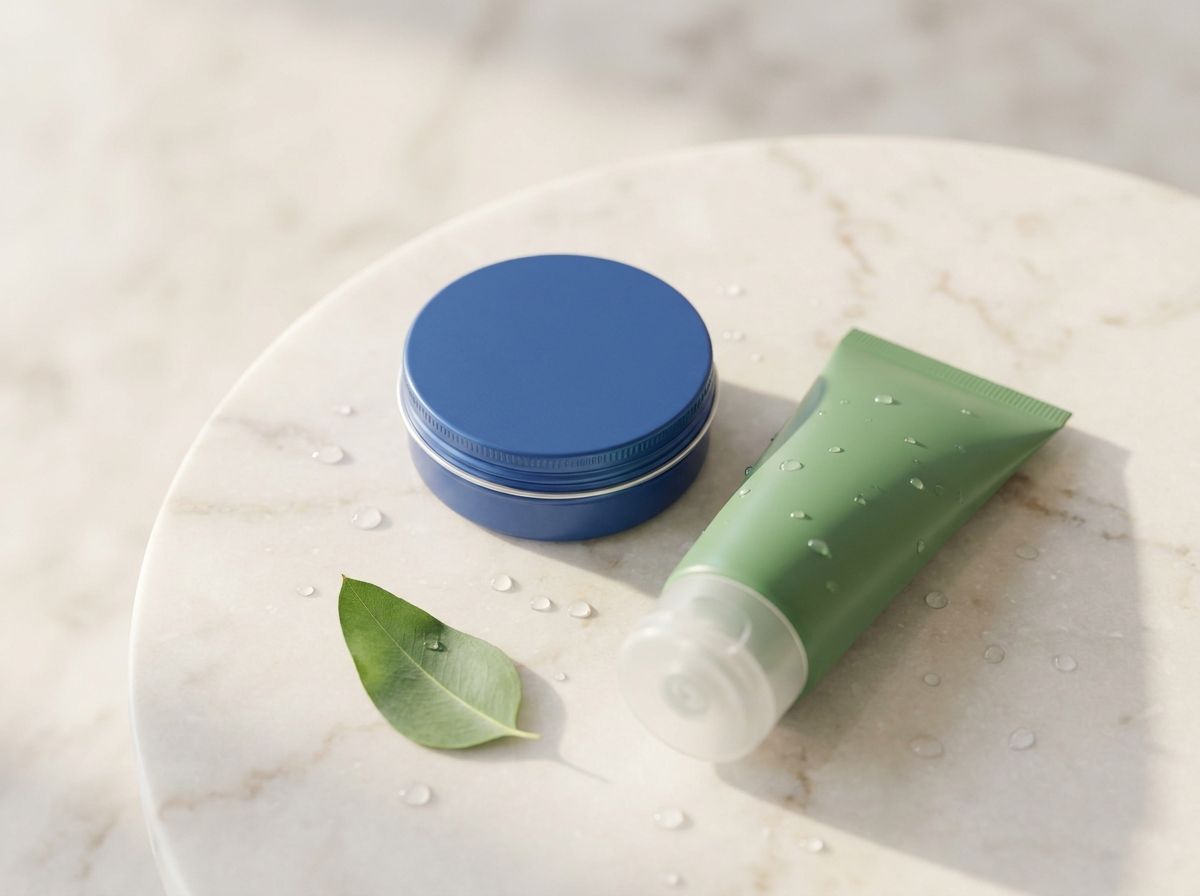
If you have stood in the skincare aisle staring at a blue tin and a bright green tube, wondering which one is worth your money, you are not alone. Both brands sit at the affordable end of the shelf, both promise healthy skin, and both have loyal fans who swear by them. This guide breaks down what each brand actually offers, how they work on real skin, and which one fits your routine, your budget, and your patience level.
Table of Contents
ToggleSection 1: The Everyday Debate
Nivea has been around for over a century. It built its name on simple, no-nonsense formulas that do one job well: keep skin moisturized. Garnier came later with a more “skincare science” image, adding botanical extracts, vitamin C, and niacinamide to its lineup. Neither brand is trying to be a luxury label. Both are made for people who want results without spending a small fortune. The real question is not which brand is better in general, but which one is better for your skin, your goals, and your budget.
This Nivea vs Garnier comparison matters more than people realize, because the moisturizer someone settles on early often becomes a long-term habit. Getting it right early saves money, saves skin, and saves the frustration of cycling through products that never quite deliver. The sections below walk through both brands in detail, from ingredients to price to real timelines, so the decision can be based on facts rather than packaging.
Section 2: What Nivea Actually Offers
Nivea’s formulas are built around a small number of core ingredients: glycerin, mineral oil or light emollients, and a handful of stabilizers. There is nothing flashy about the ingredient list, and that is the point. Fewer ingredients mean fewer chances for irritation. Dermatologists often recommend Nivea’s basic cream for people recovering from procedures like laser treatment or chemical peels, precisely because it will not sting or trigger a reaction.
The trade-off is that Nivea does not target specific concerns. It will not fade dark spots, control oil production, or shrink pores. It simply hydrates and protects the skin barrier. For some people, that is exactly what they need. For others who want more active ingredients working in their favor, it can feel underwhelming.
There is also a practical upside to that simplicity. When something goes wrong with a skincare routine, the first step is usually to figure out which ingredient caused the problem. With a short ingredient list, that troubleshooting process is much easier. People with rosacea, eczema-prone skin, or a history of allergic reactions to fragrance or preservatives often gravitate toward Nivea for this exact reason, even if they eventually add other products around it.
Section 3: What Garnier Actually Offers
Garnier’s product lines are more segmented. There is a version for oily skin, one for dry skin, one with vitamin C for brightening, and one with hyaluronic acid for plumping. This gives shoppers more control over what they are buying, but it also means more research is needed before purchase. Pick the wrong variant and you might end up with something too heavy or too light for your skin type.
Garnier tends to include a few extra actives beyond basic moisture, such as niacinamide or plant extracts. These can genuinely help with mild concerns like dullness or uneven tone, though the concentrations are usually modest compared to dedicated treatment products. The formulas also tend to feel lighter and absorb faster, which many people associate with a more “modern” skincare feel.
Texture is one of the more underrated differences between the two brands. Garnier’s gel creams and lightweight lotions tend to sit better under makeup and in warmer, more humid climates, where a heavier cream can feel suffocating on the skin. That lighter finish is part of why so many people describe Garnier as feeling more like a proper skincare step rather than just a moisturizing step.
Section 4: Ingredient Comparison
When you compare ingredient lists side by side, the difference is really about complexity versus simplicity. Nivea keeps things minimal, which lowers the odds of a bad reaction but also limits what the product can do beyond basic hydration. Garnier adds more functional ingredients, which can produce slightly better results for certain concerns, but also raises the odds that one of those added ingredients does not agree with your skin.
Neither brand uses harsh actives like retinoids or high-strength acids in their everyday moisturizers, so both are considered gentle by industry standards. If you have very reactive or compromised skin, Nivea’s shorter ingredient list is usually the safer starting point.
Section 5: Price and Accessibility
Both brands are priced for everyday use, not special occasions. Nivea tins and Garnier tubes are typically available at pharmacies, supermarkets, and convenience stores almost everywhere, so restocking is rarely a problem. Price differences between the two are usually small, often a dollar or two depending on size and formula. Neither brand requires a big financial commitment to try, which makes the decision lower stakes than it might feel standing in the aisle.
This accessibility is part of why both brands remain popular decades after launch. There is no need to order online, wait for shipping, or hunt down a specialty store. A tin or tube can be picked up during a regular grocery run, which removes one more excuse for skipping a routine altogether.
Section 6: Who Should Choose Nivea
Nivea makes the most sense if you fall into one of these groups:
You have naturally balanced or resilient skin that does not react badly to new products. You just finished a professional treatment like microneedling, laser resurfacing, or a chemical peel and need something calm and predictable while your skin heals. You are new to skincare altogether and want to build a simple habit before adding complexity. You have sensitive skin and have been burned before by products with long ingredient lists. In all of these cases, Nivea’s job is not to wow you. Its job is to not let you down, and it tends to succeed at that.
Section 7: Who Should Choose Garnier
Garnier fits better if:
You have a specific concern like dullness, mild oiliness, or early fine lines and want a product with a bit more targeted action. You enjoy the process of skincare and like feeling that you are doing something active for your skin, not just moisturizing. You have used basic moisturizers before and are ready for a small step up in complexity. You want a product that feels lighter on the skin and absorbs faster, especially useful in humid climates or under makeup. Garnier rewards a little more attention. You will likely need to pick the right variant for your skin type rather than grabbing whatever is on the shelf.
Section 8: What to Expect, Week by Week
Weeks 1 to 2: Skin starts adjusting to a consistent routine. Some people notice slightly less tightness or flakiness if they were previously using nothing or something too harsh. This is a settling-in period, not a transformation period.
Weeks 3 to 4: Hydration becomes more consistent throughout the day. Texture may start to feel smoother to the touch, though visible change is still subtle.
Weeks 5 to 8: Glow returns if your skin was looking dull before. Breakout frequency tends to decrease for people whose issues were partly driven by a damaged skin barrier. Fine lines caused by dehydration appear less pronounced. Confidence in the routine builds simply because nothing bad has happened.
3 Months: Skin looks visibly healthier overall. People around you might ask what changed, even if you have not told them you switched products. By this point you will know which formula you personally prefer, and you will be in a good position to decide whether to stick with your basic moisturizer or start layering in specialty products like serums or targeted treatments.
Section 9: The Honest Truth: What to Expect
Nivea’s Reality
Nivea will not give you a dramatic transformation. What it will give you is a reliable foundation that your skin can depend on. It feels clinical rather than luxurious, and it is not trying to hide that. It works best for people who already have reasonably good skin and just need to maintain it. It is also a strong choice for the period right after professional treatments like lasers or peels, when your skin needs calm, not stimulation. Ultimately, Nivea works because it avoids doing anything that could irritate you.
Garnier’s Reality
Garnier feels more like “skincare” in the way it is marketed and formulated, which is psychologically satisfying for a lot of people. Results can arrive slightly faster thanks to the additional ingredients in the formula. It tends to be the better option if you have a specific concern like oiliness or sensitivity that a plain moisturizer cannot address. Its marketing is also simply smarter, making you feel like you are engaging with real science rather than just applying cream. But underneath the marketing, Garnier works because the formulation itself is decently put together, not just because of clever branding.
The Truth Neither Brand Tells You
For genuinely clear, glowing skin, the biggest factors are not the product you choose. Diet, sleep, and sunscreen use account for roughly 60 percent of your results. The skincare products you apply account for about 30 percent. Which brand you pick makes up the remaining 10 percent. So whether you land on Nivea or Garnier, around 90 percent of your outcome will come down to how consistent you are and whether you protect your skin from the sun every single day.
Section 10: Final Verdict and Recommendation
For most skincare beginners, start with Nivea.
Here is why that makes sense for the majority of people. It has the lowest barrier to entry: it is cheap, widely available, and simple to use correctly. It is nearly impossible to mess up because the formula is so straightforward. If it works for your skin, which it does for most people, you have found a reliable staple. If it does not work out, you have only lost a few dollars, not a significant investment. Most importantly, it builds confidence through reliability rather than excitement, which matters when you are still forming the habit of a daily routine.
Consider moving to Garnier once:
You have used Nivea consistently for about 8 weeks and understand how your skin responds to a basic routine. You want to experiment with different textures or ingredients now that you have a baseline. You have identified a specific skin concern, such as oiliness, sensitivity, or dryness, that a plain moisturizer is not fully addressing. You feel ready to handle a slightly more involved routine without getting overwhelmed.
The real answer: both brands are good, and your skin will likely respond well to either one. The best skincare product is simply the one you will actually use every day without fail. If Nivea’s plain blue tin feels a little boring to you and Garnier feels more exciting to open and apply, go with Garnier. Excitement leads to consistency, and consistency is what actually changes your skin over time. In the end, consistency beats perfection every single time.