New online shops and service providers appear every week, and the great majority of them are exactly what they claim to be. A small number are not, and telling the two apart has become harder than it used to be. The old advice, look for a padlock icon, check the spelling, glance at the homepage, still has some value, but it no longer tells the whole story. A convincing fake shop can look every bit as polished as an established one, and a well designed website says nothing about whether an order will arrive, whether the materials match what was promised, or whether anyone will pick up the phone if something goes wrong. At 5ive Magazine, this is one of the questions we get asked about fairly often, so this guide brings together the checks that still hold up, along with a few that have quietly stopped being useful on their own.
Table of Contents
ToggleWhy New Online Platforms Deserve a Closer Look
The number of small, quickly built online shops and service websites has grown much faster than most people’s ability to check them properly. Setting up a storefront or a simple business website now takes very little time, money or technical knowledge. That is good news for genuine small businesses getting started, and just as useful for anyone hoping to take advantage of a shopper who is not paying close attention. Add in targeted advertising on social media, and it becomes entirely normal to land on a website you have never heard of and know almost nothing about the people behind it.
None of this means new platforms should be avoided. Plenty of well run, reliable businesses started with no history and no recognisable name behind them. It simply means the responsibility for checking has shifted a little more onto the shopper, and a few extra minutes spent looking into a business before paying is rarely time wasted.
Start With the Business Behind the Website
Before looking at anything else on a site, it is worth working out who is actually running it. A genuine business, whether it sells products or offers a service such as marketing, design, or consulting, is usually straightforward about this. A few things worth checking:
- A clear About page naming the actual company, not only a brand or product name
- A real, physical address, rather than a contact form as the only way to get in touch
- A phone number or email address that someone genuinely answers
- A registered company number where relevant, which can be checked against Companies House for UK based businesses
If this kind of information is missing, vague, or scattered across several similarly named websites with slightly different explanations of what the company actually does, treat that as a reason to slow down rather than a minor gap. Established, accountable businesses tend to describe themselves the same way wherever you encounter them. When the description changes depending on which page or domain you land on, it is worth asking why that is.
Look Closely at Product and Material Quality Before You Buy
Photographs and product descriptions are the easiest part of any website to get right, regardless of whether the actual product lives up to them. A handful of checks help separate genuine quality from a listing that simply looks good:
- Search for the exact product photo elsewhere online. If an identical image shows up across several unconnected shops, it is likely a stock photo rather than a picture of the specific item you would receive
- Read material and specification details closely. Vague phrases such as premium fabric or high grade material, without any further explanation, are worth treating with some caution
- Check whether sizing, care instructions or technical specifications are included at all. Businesses confident in their materials are usually specific about them
- Where a certification or standard is claimed, check that it is a real one and that it is simple to verify independently
None of these checks guarantee quality by themselves, but taken together, they tend to separate businesses that stand behind what they sell from listings built mainly to move product as quickly as possible.
Vetting a Service Provider or Agency Specifically
If you are looking at a service business rather than a shop, an agency, a consultant, a marketing or design company, a few extra checks are worth adding. Ask for case studies or past client examples, and where possible, look for ones that can be verified independently rather than only the examples shown on the company’s own site. Check whether the people actually doing the work have a visible professional history, such as a detailed profile on a platform like LinkedIn, rather than just a first name and a stock photograph. For regulated fields such as accounting or legal services, confirm membership with the relevant professional body, since genuine practitioners are usually glad to have this checked and will provide the details without hesitation. A service business that stays vague about who does the actual work, or relies entirely on testimonials it has written about itself, deserves the same level of caution as an online shop with no verifiable history behind it.
Judge the Quality of Customer Service Before You Need It
It is worth testing customer service before there is an actual problem to solve, not after one appears. A short message through a contact form or live chat, asking something simple about delivery times or the returns policy, tells you a good deal. A business confident in its own service will usually reply within a reasonable window, in plain language, with a specific answer rather than a copied response. Worth paying attention to:
- Whether more than one way to make contact is offered, such as email, phone and live chat
- How clearly the returns and refund policy is written, and whether it is easy to find before checkout rather than buried afterward
- Whether the person replying can answer specific questions about the product or service, rather than repeating general marketing language
A shop or agency that makes it difficult to reach an actual person, or that only offers vague reassurance instead of a clear answer, is telling you something useful about what to expect if an order or project does not go smoothly.
Reading Reviews Without Being Misled by Them
Reviews remain one of the most useful tools available, and also one of the easiest things for a dishonest business to fake. A cluster of five star reviews posted around the same time, written in similar language, with no specific detail about the order, size, colour or delivery experience, is a pattern worth noticing rather than ignoring. Genuine reviews tend to be a little messier than that. They mention specific issues alongside the praise, reference actual product names or service details, and tend to appear spread out over time rather than arriving in a short burst.
It helps to check reviews on an independent platform rather than relying only on the testimonials displayed on the business’s own website, since those can be selected, edited, or written entirely in house. A short search for the business name alongside the word review often brings up independent commentary that a carefully curated homepage will never show.
Payment Security and Checkout Safety
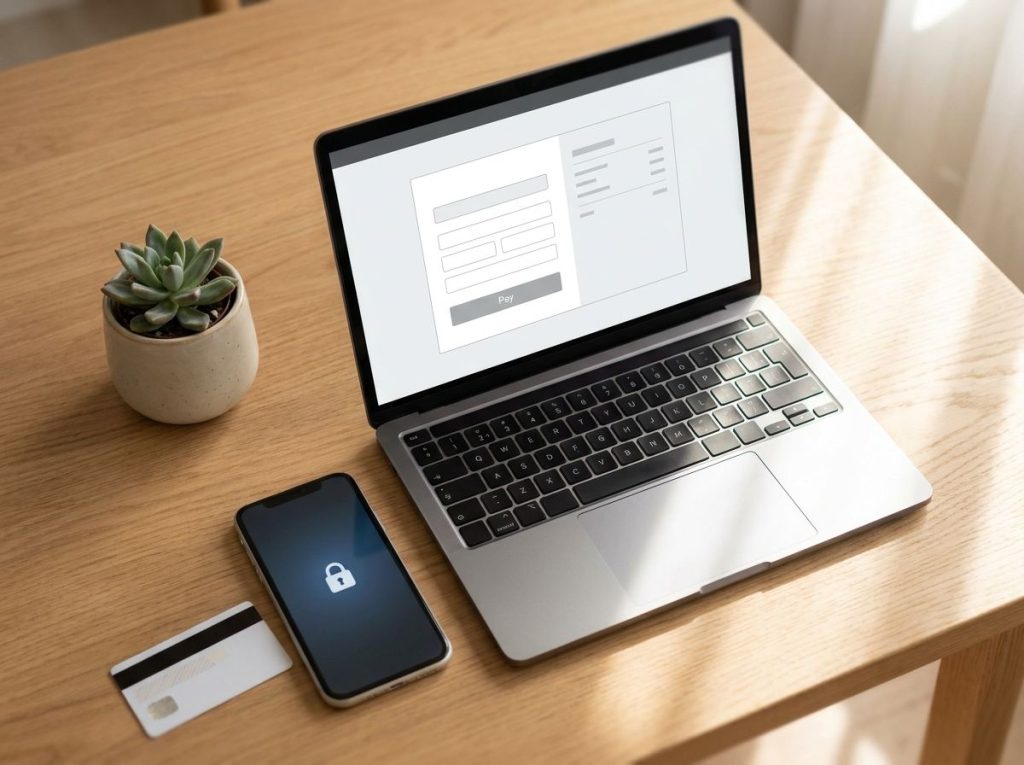
A secure padlock icon and a web address beginning with https are still worth checking, since their absence is a clear warning sign, but their presence alone no longer proves very much. Convincing fake shops now include both as a matter of course. What matters more is how you are actually asked to pay. A legitimate business will offer recognised payment options, such as major card networks or PayPal, processed through a proper checkout, rather than asking for a direct transfer into a personal account. If a seller pushes towards a bank transfer, particularly alongside any pressure around time limits or a special discount, treat that as a serious warning sign rather than a small inconvenience.
Paying by card also gives a practical safety net within the UK. For purchases between one hundred and thirty thousand pounds, a Section 75 claim with the card provider may be available if goods never arrive or turn out not to match their description. Debit card payments are usually covered instead through the chargeback scheme, which many banks will action even outside that price range. Knowing these protections exist before making a purchase is considerably more useful than trying to remember them only after something has already gone wrong.
Common Red Flags Worth Slowing Down For
A few patterns tend to appear again and again across shops and services that later turn out to be a problem. None of them proves dishonesty on its own, but seeing several together is worth pausing over:
- Prices noticeably lower than every other retailer selling the same item, without any clear explanation
- Countdown timers, claims of very limited stock, or pressure to decide immediately
- A delivery estimate that does not match a claimed UK base, such as several weeks for what should be a domestic order
- Identical wording, layout or About Us text appearing across more than one differently named website
- A request to pay by direct bank transfer instead of a standard, protected checkout
- Reviews that read as generic, repetitive, or strangely similar to one another in tone
Noticing one of these on its own is rarely a reason to walk away entirely. Noticing three or four together is a reasonable reason to pause, or to spend a little more time looking into the business before going ahead.
A Simple Checklist Before You Commit
Keeping this process quick matters, since most people are not going to run a full investigation before buying a phone case or booking a small service. A short checklist covers most of what actually matters:
- Confirm the business has a findable address, a working contact number, and a company registration where relevant
- Look up reviews on an independent site rather than relying only on the ones shown on the homepage
- Check that product or service descriptions are specific rather than vague or repeated word for word elsewhere
- Send a quick question to customer service and notice how, and how quickly, someone responds
- Pay by card rather than direct transfer wherever that option is available
- Search the business name together with the word review before finalising anything larger than a small, low risk purchase
Working through this before checkout takes only a few minutes and covers almost everything that tends to go wrong with an untrustworthy shop or service.
Getting Support If Something Goes Wrong
If a purchase does turn into a problem, Citizens Advice offers free guidance through its consumer helpline in the UK, and can walk you through a chargeback or Section 75 claim step by step. Suspicious adverts can be reported to the Advertising Standards Authority, and the Competition and Markets Authority has powers to act against traders who target UK shoppers unfairly, even where those traders are based overseas. None of these routes require money to have already been lost before getting in touch. Reaching out as soon as something feels off tends to lead to a considerably better outcome than waiting until after a payment has gone through and the trail has gone cold.
Final Thoughts
Most new shops and service providers online are entirely genuine, and being careful does not mean assuming the worst about every unfamiliar brand. It simply means paying attention to the same handful of details each time: who is actually behind the business, whether the product or service claims hold up under a closer look, how customer service behaves before it is actually needed, and how payment is being requested. Taken together, those checks say far more about a business than a polished homepage ever will, and working through them takes only a few minutes. At 5ive Magazine, that short pause before checkout is the habit worth building into any online purchase, whether the brand behind it is brand new or long established.