Houston Astros vs New York Yankees match player stats from this season tell a genuinely split story, which is rarer than you’d think between two teams that have spent years defining each other’s playoff runs. New York took the April series in Houston, the Astros answered by winning the August series in the Bronx, and both sets turned on a handful of individual performances that are worth understanding rather than just skimming past. If you’re trying to figure out who actually has the edge in this rivalry right now, the box scores from these two series give you a clearer answer than the standings alone.
Here’s what actually happened in each series, the players whose stat lines decided the outcomes, and how to read those numbers without drawing the wrong conclusion from a small sample.
Table of Contents
ToggleThe April Series in Houston Went Down to the Wire
New York opened its 2026 slate against Houston at Daikin Park in late April, and the two teams split the first pair of games before New York closed it out. Game one went to the Yankees 8-3, with reliever Fernando Cruz picking up the win and New York piling on late, scoring three runs in the seventh and adding more in the eighth and ninth to pull away from what had been a tighter game through the middle innings. Houston answered the next night behind starter Spencer Arrighetti, who improved to 3-0 as the Astros jumped on Yankees starter Luis Gil early, scoring in the first, third, and fifth innings on their way to a 7-4 win that evened the series.
The finale swung back to New York, and the Yankees took the series two games to one. That result mattered more than a typical early season series because it came against a division rival that would go on to have a genuinely competitive year in a weaker American League West, and it set an early tone that New York carried into the summer.
Why a Split Series Still Favored One Team
A series that finishes two games to one can look like a coin flip if you only glance at the final tally, but the individual performances inside it tell you more about form than the series record does. New York’s bullpen depth showed up clearly in that opening win, with multiple relievers combining to shut the door on a Houston lineup that had scored early. Houston’s response in game two was built almost entirely around one dominant pitching performance rather than a full lineup breaking out, which is a meaningfully different pattern than a team stringing together quality at bats from top to bottom. When you’re comparing two series like this, pay attention to whether the wins came from a complete team effort or a single standout game, because that distinction predicts future matchups better than the raw series score does.
The August Series in the Bronx Flipped the Script
Houston and New York met again in late August, this time at Yankee Stadium, and the results reversed almost exactly. New York blew the opener open, winning 9-3 behind a night that Ben Rice and Luis García Jr. will remember for a while. Rice reached base in all five of his plate appearances, drawing three walks and hitting a home run in his lone official at bat that resulted in a hit, finishing with a batting line that looked almost unreal on paper. García went three for five with a home run and two RBI, and between the two of them New York’s lineup did the heavy lifting in a game where Houston’s offense mostly went quiet outside of a Daulton Varsho home run.
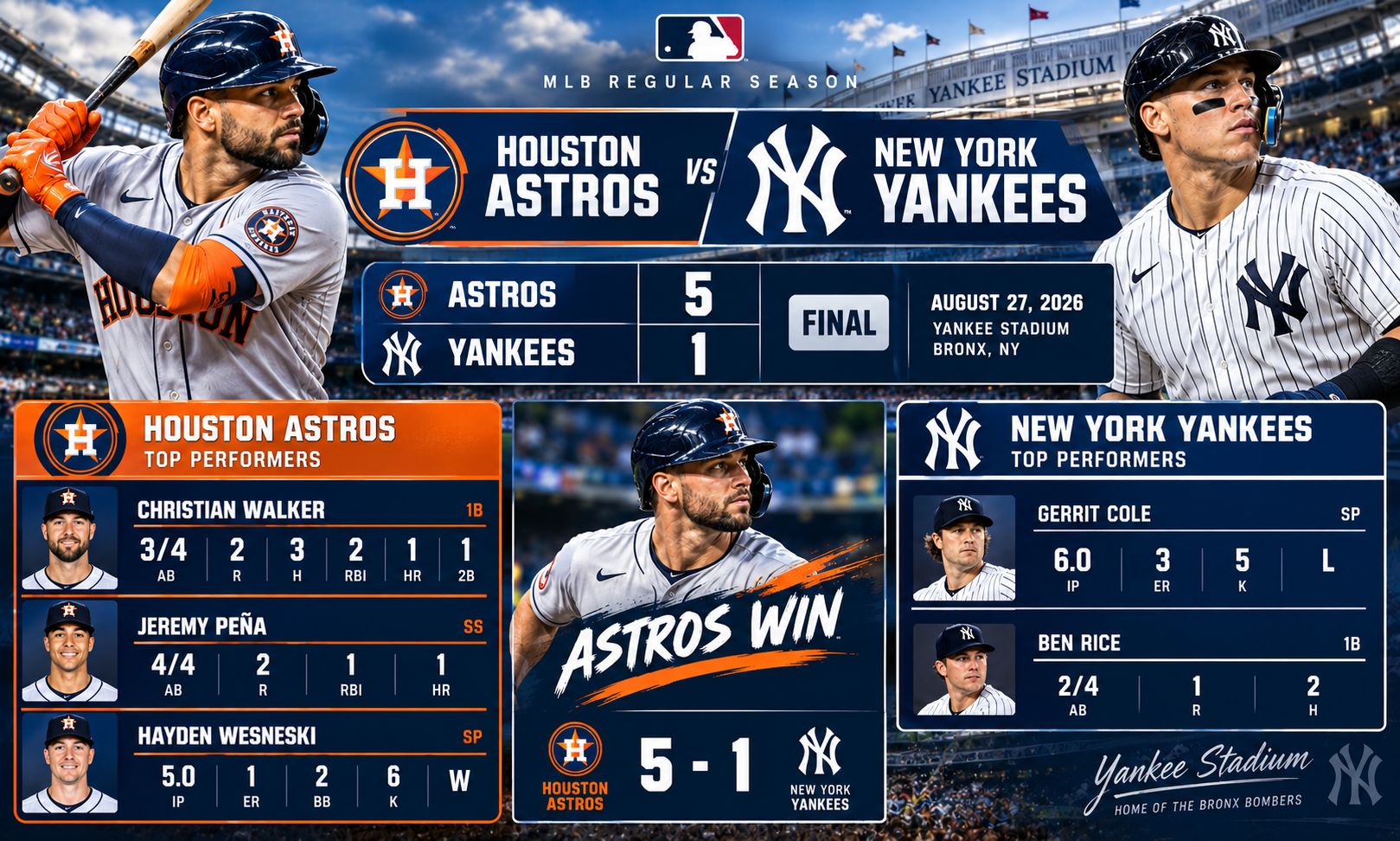
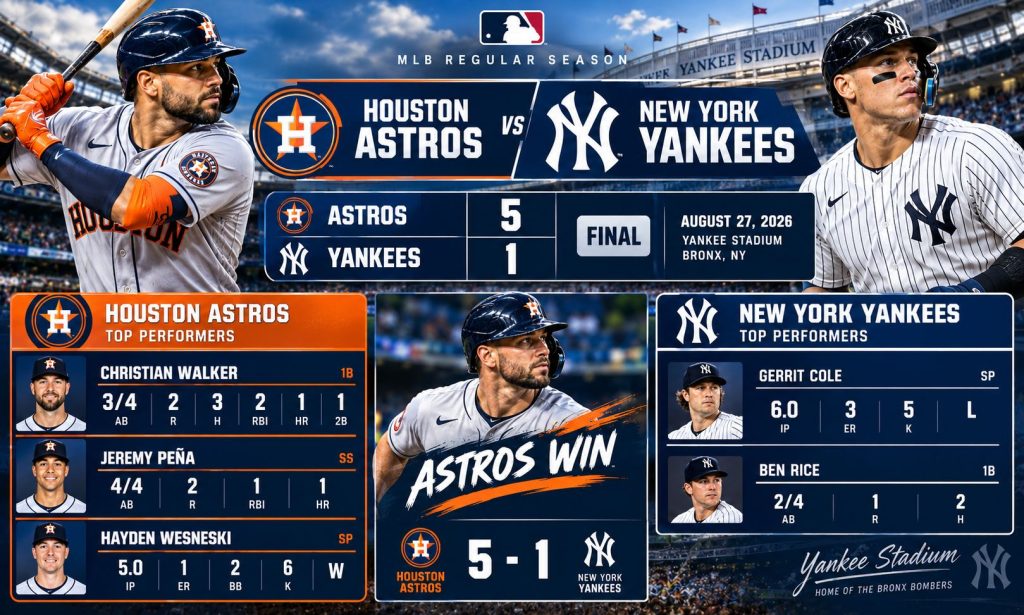
Houston flipped the script over the next two games and took the series. Game two went to the Astros 5-1, powered by Christian Walker’s four hit game that included a home run and two RBI, plus a solo shot from Jeremy Peña that got things started. Walker’s night was about as complete an offensive performance as you’ll see in a single game: four at bats, three hits, a homer, and a .750 average for the day. Houston closed out the series with another win in game three, taking it two games to one and evening the season series between the two clubs at a game apiece across their two meetings that year.
The Same Players Kept Showing Up in the Big Moments
What stands out looking at both series together is how concentrated the production was among a small handful of players on each side. Rice and García carried New York’s biggest offensive night, while Walker and Peña did the same for Houston in their series win. That’s worth remembering the next time these two teams meet, because neither lineup is winning purely on depth right now. Both rosters have a couple of hitters capable of completely taking over a game, and whichever team gets those specific players hot in a given series tends to walk away with it, regardless of what either team’s overall numbers say heading in.
What the Standings Actually Show Once You Zoom Out
By early September, Houston sat atop a genuinely weak American League West with a record hovering right around the break even mark, while New York held a strong position in a much tougher American League East behind Tampa Bay. That context matters when you’re comparing these two teams stat for stat, because a first place record in a soft division doesn’t carry the same weight as a comparable record against tougher competition. Houston has done what it needed to do against its own division, but its head to head results against a legitimate contender like New York give a better read on how the roster stacks up against playoff caliber opponents.
Houston’s lineup also has one more data point worth knowing about separate from these two series specifically. Isaac Paredes reached the 100 home run mark for his career this season, becoming the youngest Mexican-born player to hit that milestone in MLB history. It’s the kind of individual achievement that doesn’t show up in a single box score against any one opponent, but it does tell you something about the kind of power threat Houston’s lineup carries into every series, Yankees included.
How to Read These Box Scores Without Missing the Point
A three game series is a small sample, and it’s easy to overreact to one huge individual game. Rice’s five for five reach base performance in the August opener was real and impressive, but he didn’t repeat anything close to it over the next two games of that same series. The smarter approach is to track a player’s production across a full month rather than anchoring to a single standout night, since one hot game against a specific opponent doesn’t reliably predict what happens the next time these two teams face off.
Pitching lines deserve the same treatment. Arrighetti’s strong outing in the April series improved him to 3-0 at the time, which looks great in isolation, but a win-loss record for a starter says more about run support than it does about actual performance quality. Look at innings pitched, walks, and strikeouts across several outings before drawing conclusions about whether a pitcher has genuinely turned a corner or just caught a lineup on an off night.
The Bullpen Factor People Skip Past
Both of these series were decided as much by relief pitching as they were by the offensive fireworks, and that part of the box score gets ignored more often than it should. New York’s win in the April opener came together in the late innings once the bullpen took over a game that had been within reach for Houston through the middle frames, and that kind of late lead protection matters more over a full season than any single hitter’s hot streak. A team that can hand a one or two run lead to its bullpen in the seventh inning and reliably close it out has a real structural advantage that shows up across dozens of games, not just one series.
Houston’s bounce back in the August series worked the same way in reverse. Once their offense broke through against New York’s pitching staff in games two and three, their relief corps did enough to protect those leads rather than let New York claw back the way they had in the opener. That’s the kind of detail that separates a team that wins series from one that wins isolated games, and it’s worth tracking across a stretch of games rather than reading into any single save or blown lead.
Frequently Asked Questions
Who won the season series between the Astros and Yankees in 2026?
The two series split evenly. New York won the April series in Houston two games to one, and Houston returned the favor in August at Yankee Stadium, also winning two games to one, leaving the overall head to head record even for the year.
Which individual performance stood out most across these series?
Christian Walker’s four hit, one homer, two RBI game in the August series ranks among the best individual lines from either series, though Ben Rice’s five for five reach base night in the series opener a day earlier is a close comparison depending on what you value more, contact or plate discipline.
Where can I check live stats the next time these teams play?
MLB.com’s Gameday feature and ESPN’s box score pages update during games in real time and remain the most reliable sources, since any season recap becomes outdated the moment a new series begins.
Does a first place division record mean more than a strong record in a tougher division?
Not necessarily. Division strength varies significantly year to year, and a team leading a weaker division isn’t automatically better than a team with a similar or slightly worse record in a more competitive one. Head to head results against strong opponents, like these two series between Houston and New York, offer a more useful gauge of true team quality.