Picture a cold platform at 7 a.m. Most people are hunched, tugging at jackets that stop at the hip and leave the wind a clear path to their knees. Then there is one person standing calmly in a long black coat, looking warm and put together.
That coat is not magic. It is the right length, the right fabric, and a good fit, chosen on purpose.
This guide helps you find the same thing. You will learn how the main styles differ, how to judge warmth beyond the label, how to check fit before you buy, what to wear it with, and how to keep it looking sharp for years.
Table of Contents
ToggleThe Short Answer: Which Long Black Winter Coat Should You Buy?
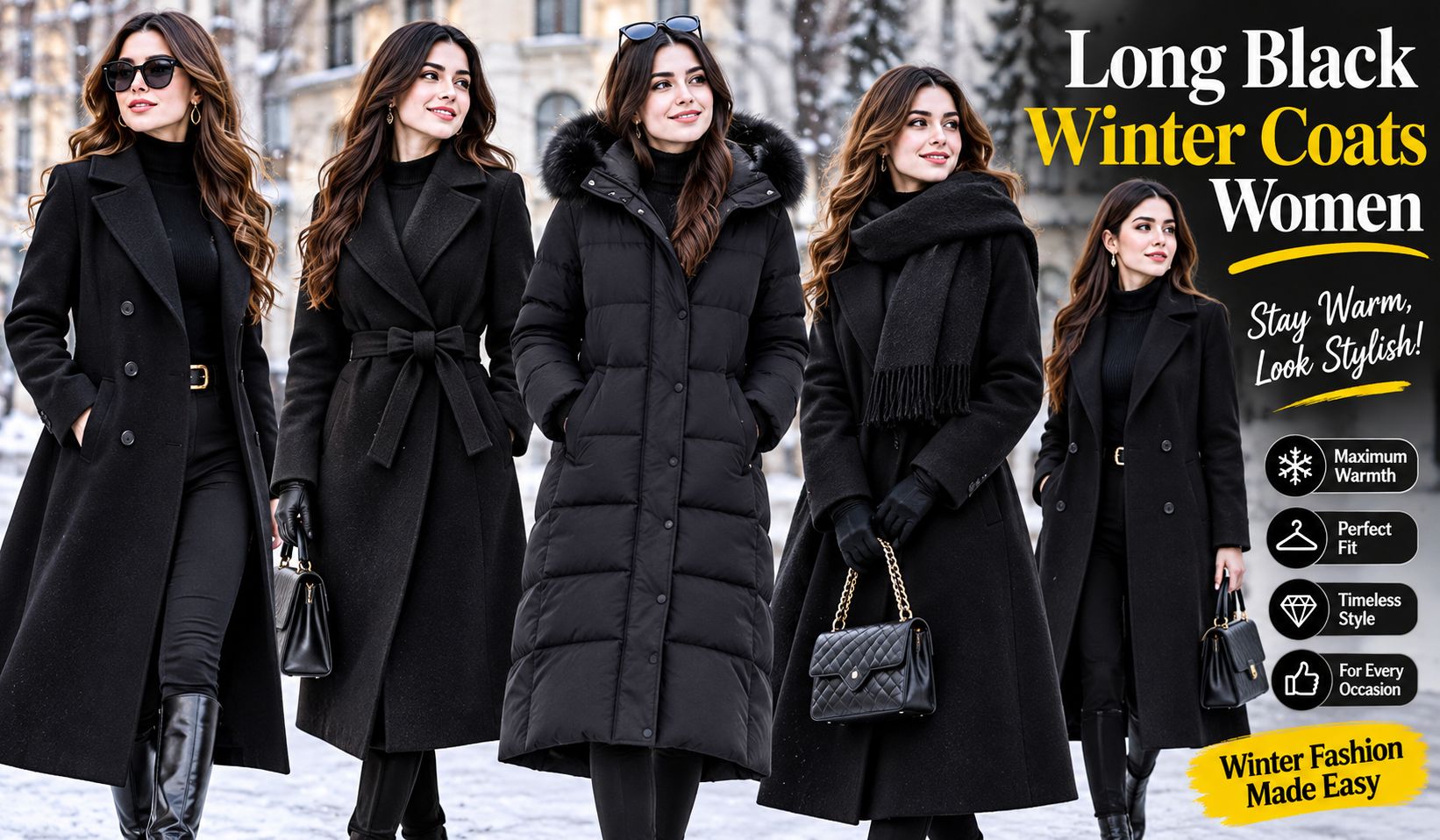
For most people, a wool-blend coat in a knee-to-midi length is the best all-round choice for cold city weather, work, and dressier occasions. If your winters are severe or you spend long periods outside, a long puffer with solid insulation is warmer. A wrap or belted style adds shape, and a hooded parka suits wet, windy days.
One point from a long-coat buying guide is worth remembering: “long winter coat” describes the length, not the quality of insulation. A coat can reach your calves and still leave you cold if the fabric is thin or the lining is minimal.
Quick picks by situation
- Office and city: wool-blend overcoat or wrap coat
- Severe cold: long down or synthetic puffer
- Rain and wind: hooded parka with water-repellent fabric
- Dressy events: tailored double-breasted wool coat
- Budget-friendly warmth: a lined puffer from a mainstream brand
Why Black Is the Smart Choice (and Its Small Drawbacks)
Black is the color that works with almost everything. It suits denim, dresses, suits, and workout gear, and it hides small marks that would show on a camel or cream coat. It also reads as formal or casual depending on how you style it.
There are trade-offs worth knowing:
- It shows lint, pet hair, and dust. A lint roller becomes part of your routine.
- It can fade. Repeated sun and washing can turn deep black to a dull charcoal.
- Salt marks stand out. White streaks from winter roads show clearly on dark fabric.
- It absorbs heat in the sun. On bright, mild days, it can feel warmer than lighter colors.
None of these are reasons to avoid black. They are just reasons to care for it properly.
The Main Styles of Long Black Coats
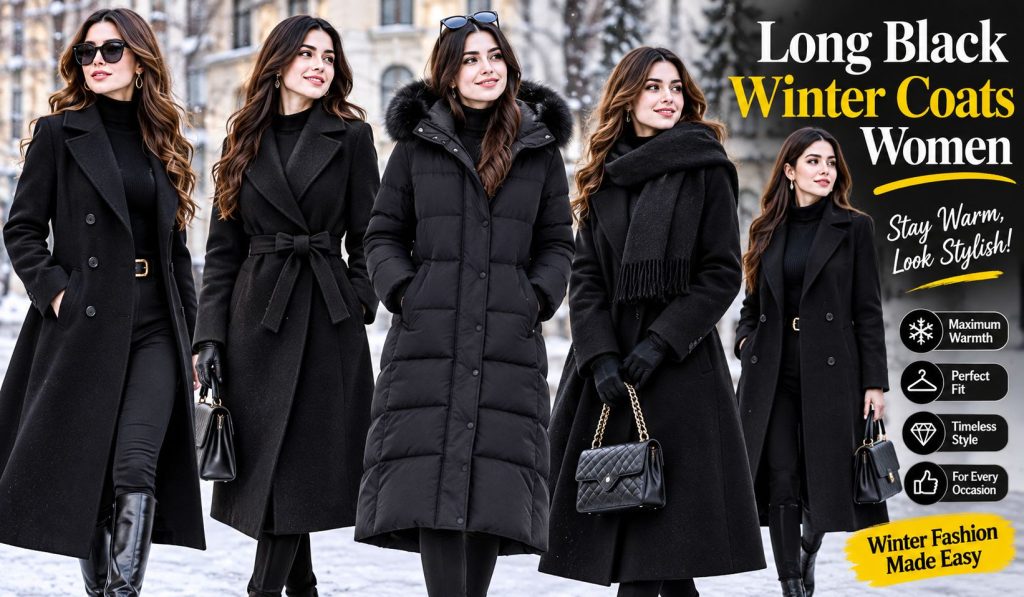
Tailored Wool Overcoat
This is the classic. Structured shoulders, notch lapels, and a straight or slightly fitted line make it polished and versatile. Editors suggest wearing a long wool coat over a tailored blazer, a classic sweater, culottes, and ankle boots. A double-breasted version looks sharp and adds an extra layer across the chest.
Wrap or Belted Coat
Wrap coats close with a tie instead of buttons, which makes them easy to adjust and flattering on many body types. One roundup notes that wrap coats can easily be dressed up or down. They are also forgiving if your weight changes through the winter, because the belt lets you tailor the fit.
The Scarf Coat
This one is a trend worth knowing. A scarf-wrap coat has an attached scarf you throw over your shoulder, giving you a finished outfit in an instant. One high street example from M&S was listed at £75. The built-in scarf adds warmth around the neck without needing a separate accessory.
Long Puffer Coat
A long puffer is the warmest practical option. Retailers sell extra-long black puffer coats with water-repellent insulation and adjustable hoods. They look casual but are unbeatable in real cold. Some budget-friendly versions also exist, such as a black cocoon puffer that was listed at $74 in one roundup, while premium versions cost several hundred dollars.
Hooded Parka
Parkas combine length, a hood, and often a windproof outer shell. They are practical for commuting in rain, snow, or wind, and the hood reduces the need for a separate hat.
Teddy or Faux Fur Coat
Soft, textured coats add visual interest and can be quite warm. They are more of a style choice and may need extra care to keep the texture neat.
How to Judge Warmth Beyond the Label
You cannot always tell warmth from a photo, so check these details.
Fabric Content
- Wool and wool blends: Look at the percentage. A coat with a low wool content may feel less warm and wear differently from a high-wool one.
- Cashmere blends: Soft and warm but usually pricier and more delicate.
- Synthetic blends: Often cheaper and more durable, but may not insulate as well on their own.
Insulation in Puffers
- Down is light and very warm, and fill power indicates quality. A higher number generally means better warmth for the weight. One review lists a 700-fill down coat with a fleece-lined torso, which is a good sign of serious insulation.
- Synthetic fill holds up better when damp, usually costs less, and is easier to care for.
Lining and Construction
A full lining adds warmth and helps the coat hang properly. Look for storm flaps, snug cuffs, and a collar that closes well around your neck.
Water and Wind Resistance
Water-repellent finishes help in light rain or snow, while a windproof layer makes a huge difference on exposed days. A thick wool coat can feel cold if the wind blows straight through it.
How to Check Fit Before You Buy
Fit is where most coat purchases go wrong. A beautiful coat that restricts your arms or hangs awkwardly will stay in the closet.
- Shoulders: The seams should sit at the edge of your shoulder bone, not drooping or pulling.
- Sleeve length: With your arms relaxed, the sleeve should reach your wrist bone or just beyond, leaving room for gloves.
- Chest and arms: Try the coat with the thickest layer you plan to wear underneath. Some coats are cut slim in the sleeves, and one tested puffer was criticized for narrow arms that limit thick sweater layering.
- Length: Knee-length suits most people and is easier to walk in. Midi and maxi lengths give more warmth but can drag on stairs or look overwhelming on a petite frame.
- Movement test: Sit down, reach forward, and raise your arms. If it pulls or bunches, try the next size.
- Closure: Do the buttons or zip close comfortably without straining?
Fit Tips by Height
- Petite: Look for knee-length or just below, with a defined waist, and avoid heavy fabrics that overwhelm your frame.
- Tall: Midi lengths and longer sleeves are easier to find in specialist ranges.
- Curvy or plus-size: Wrap styles and structured shoulders tend to be forgiving.
What Does a Good Coat Cost?
You do not need to spend heavily, but quality usually shows in fabric and construction.
Published roundups show a wide spread. One list included a Gap puffer at $298, a Levi’s extra-long parka at $328, and a Rudsak oversized wool coat at $1,195, with the Rudsak discounted to $700 at the time. Another list priced a wool wrap coat from Gap at $320.
Rough guides:
- Budget: basic puffers and blends for light winter use
- Mid-range: better wool blends, down-alternative puffers, and parkas
- Premium: high-wool content, cashmere blends, and technical outdoor coats
Think in terms of cost per wear. A coat you wear several times a week through a long winter can be worth a higher price than one you wear a few times.
How to Style a Long Black Coat
A long black coat is one of the easiest pieces to style because it simplifies everything underneath.
For Work
- Tailored trousers, a knit top, and ankle boots
- A scarf in a muted color
- A structured tote bag
For Weekends
- Jeans, a chunky sweater, and sneakers or boots
- A beanie and warm gloves
- A crossbody bag
For Evenings
- A dress, tights, and heeled boots under a wool coat
- A bold lipstick or statement earrings
- A clutch or small shoulder bag
Simple Styling Rules
- Wear texture against black. Knits, corduroy, and leather add interest.
- Add one color. A red scarf or camel bag lifts the whole look.
- Match the length to your shoes. Ankle boots work with midi coats, and tall boots suit knee-length styles.
- Keep layers thin. Fine knits and thermal tops keep you warm without bulk.
For more outfit ideas, you can browse more fashion and style guides on our site.
Common Mistakes When Buying a Long Black Coat
- Choosing only on looks. A coat that photographs well may not keep you warm.
- Ignoring the fabric label. Check the wool percentage and lining before buying.
- Buying the wrong length for your climate. A short coat may not protect you in severe cold, while a maxi may be too heavy for mild winters.
- Skipping the sweater test. Try it with the layers you actually plan to wear.
- Overlooking care instructions. Some coats need dry cleaning, and a few puffers can be washed at home.
- Buying too tight. A coat that restricts movement will be uncomfortable all day.
How to Care for a Long Black Coat
A little care keeps black looking rich and deep.
- Brush after wearing. A soft clothes brush removes dust and lint from wool.
- Use a lint roller. Keep one by the door.
- Hang it properly. Use a wide, sturdy hanger to maintain shoulder shape.
- Spot clean first. Treat small stains gently before considering a full clean.
- Follow the label. Dry clean wool when needed, and wash puffers only if instructed.
- Store with care. At the end of the season, keep the coat in a breathable garment bag, not plastic.
Frequently Asked Questions
What is the best fabric for a long black winter coat?
Wool and wool blends are the most versatile for city wear, while down or synthetic-filled puffers are warmest for severe cold. Check the actual wool percentage and the lining quality, not just the label.
What length should a long winter coat be?
Knee-length suits most people and is easiest to move in. Midi and maxi lengths offer more warmth but can be harder to wear if you are petite or walk a lot.
Is a puffer or a wool coat warmer?
A well-insulated puffer is usually warmer, especially in very cold or damp weather. A good wool coat is warmer than it looks and works better for dressier outfits.
How do I stop a black coat from fading?
Avoid prolonged direct sun, follow the care label, and clean only when needed. Brushing helps remove dust that can dull the color.
Can I wear a long black coat in mild winters?
Yes. Choose a lighter wool blend or an unlined style, and layer thin knits underneath instead of heavy sweaters.