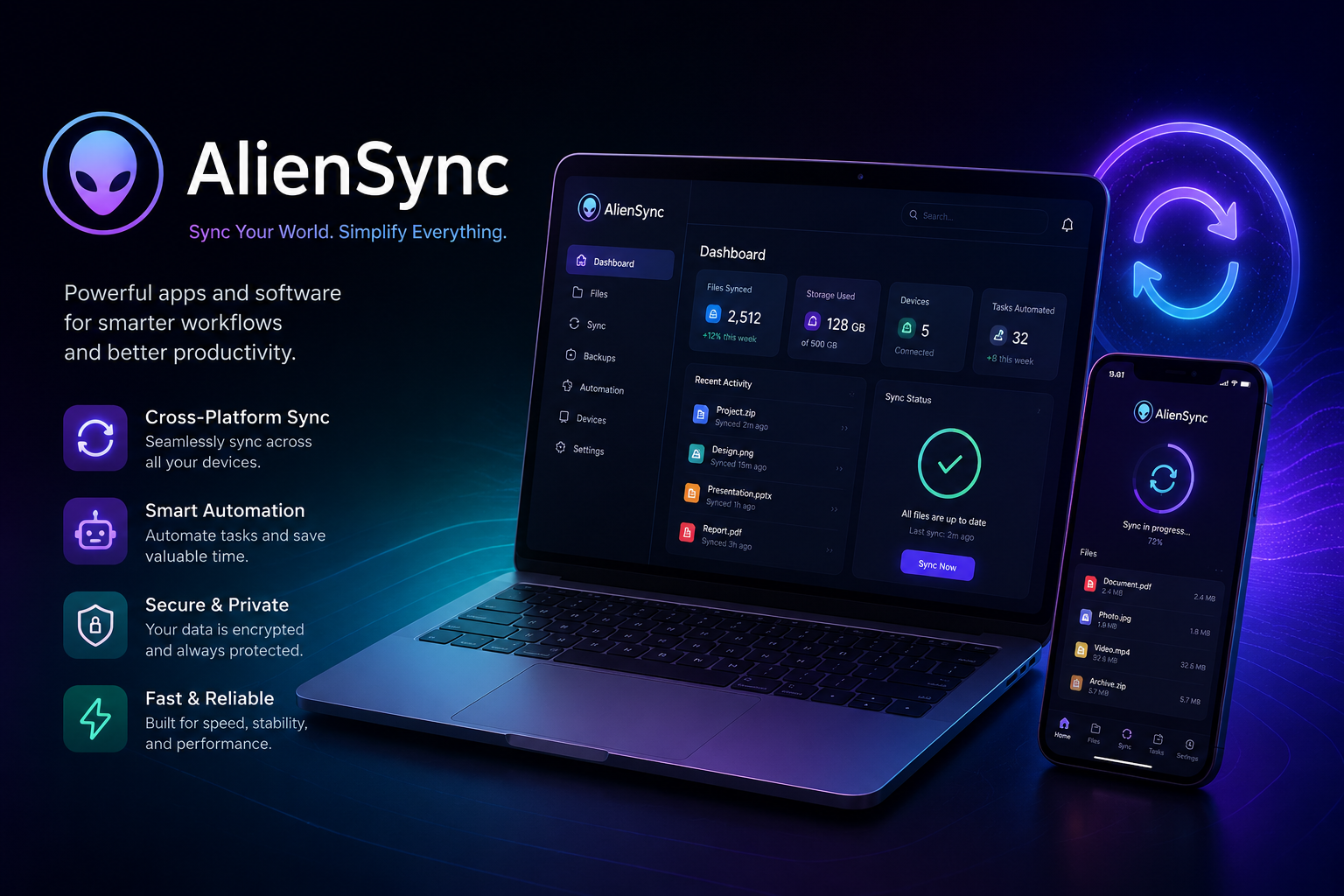
Search for “AlienSync” and you will land in the middle of a strange little corner of the internet. Article after article calls it a game-changing hub for your apps and social accounts. The language is big: unified ecosystems, digital command centers, seamless synchronization. What is much harder to find is a straight answer to a simple question. What does this thing actually do, and can you trust it with your accounts?
If you clicked through a few of those articles hoping for clarity and came away more confused than when you started, you are not imagining it. This piece takes a step back from the marketing copy and looks at what is actually going on with AlienSync, why the coverage is so inconsistent, and how to protect yourself before connecting anything to a platform like this.
Table of Contents
ToggleWhy AlienSync Keeps Showing Up In Your Searches
A cluster of articles about AlienSync has appeared over a fairly short stretch of time, all built around the same pitch: too many apps, too many logins, too much digital clutter, and AlienSync as the answer. On the surface that sounds like a reasonable product story. Plenty of legitimate tools solve exactly that problem.
What stands out once you read past the headlines is how much the descriptions shift from one article to the next, and how many of them are published on the same handful of websites, sometimes multiple versions of the same pitch. That is not typical for a single, well-documented product. It is typical of content written quickly to rank for a trending search term rather than reported from firsthand use.
The Different Versions Of What AlienSync Supposedly Does
Read enough of the coverage and you will notice AlienSync gets described as several different things depending on which article you land on.
A social media management dashboard
Some articles describe AlienSync as a scheduling and analytics tool, letting users connect Instagram, YouTube, Facebook, and other platforms to post content, track engagement, and manage a content library from one dashboard, similar to established social media management tools already on the market.
A messaging and notification hub
Other coverage describes something closer to a unified inbox, pulling message summaries from apps like WhatsApp, Telegram, and Messenger into one place, with AI features that supposedly sort and prioritize notifications automatically.
A business software integration platform
A third version drops the social media angle almost entirely and instead frames AlienSync as an automation tool for businesses, connecting CRMs, project management software, and other business systems using “triggers and actions” in a no-code interface. Some of this coverage even goes by the exact label apps and softwares aliensync, framing it purely as workflow software rather than anything social media related.
Each of these is a plausible product on its own. Tools like this genuinely exist and genuinely help people. The problem is that a single company rarely builds and markets three meaningfully different products under identical branding at the same time, especially without a consistent website, pricing page, or feature list tying them together.
Red Flags Worth Taking Seriously
A few details in the current coverage are worth flagging directly, because they go beyond ordinary inconsistency.
Vague, repetitive marketing language. Phrases like “unified ecosystem,” “digital command center,” and “bridging the gap” show up across nearly every article, often in nearly identical sentence structures. That kind of repetition usually points to content built from a shared template rather than independent reporting on a real product.
Unrelated affiliate links buried in the text. At least one piece of coverage includes a link to an unrelated betting platform dropped into the middle of a paragraph about app integration. That has nothing to do with productivity software and is a common sign of low-quality content built purely to earn clicks and affiliate commissions, not to inform readers.
No consistent company information. None of the articles link to verifiable details about who runs AlienSync, where the company is based, or how long it has actually existed as a real product with real users, beyond vague claims of a growing community and active knowledge base.
Claims of broad social account access without matching security detail. Several versions describe connecting Instagram, WhatsApp, Facebook, and other accounts directly to the platform. Any tool asking for that level of access to your accounts should offer far more transparency about data handling than a marketing blog post provides.
None of this proves AlienSync is fraudulent or unsafe on its own. It does mean the confident claims currently circulating about its features should not be taken at face value, especially before connecting anything as sensitive as your social media logins.
Why This Matters More For A Social And App Hub Than For Most Tools
A simple note-taking app asking for your trust is one thing. A tool asking to connect directly to your Instagram, WhatsApp, and business software is a different level of risk entirely. If a platform like that turns out to be poorly secured, or not what it claims to be, the potential downside is not just wasted time. It could mean exposed messages, compromised accounts, or business data ending up somewhere it should not.
That is exactly why it is worth slowing down here rather than following the enthusiastic tone of the marketing content at face value.
How To Actually Check A Tool Like AlienSync Before Connecting Anything
Visit the official site directly and read the privacy policy in full. Look specifically for what data is collected when you connect a social account, how long it is stored, and whether it is shared with third parties. Vague or missing answers here are a serious warning sign given the level of access being requested.
Search for independent reviews outside the promotional cluster. App store listings, Reddit threads, and established tech review sites tend to be far harder to manufacture in bulk than a wave of blog posts and usually reflect real user experience rather than marketing copy.
Check whether the company is traceable. A legitimate business asking for access to your social accounts should have a findable, consistent identity: a registered company name, a support contact, and documentation that stays the same across every mention of the product rather than shifting from article to article.
Start with the minimum access necessary. If you do decide to try a platform like this, connect a single, lower-stakes account first rather than granting access to your primary business or personal profiles right away.
Use unique passwords and two-factor authentication. This applies to any third-party tool requesting account access, but it matters even more when the tool itself is not yet well documented or independently verified.
Frequently Asked Questions
Is AlienSync a real, working product?
There does appear to be a live website behind the name, but the specific features being promoted vary considerably depending on the source, so it is worth confirming exactly what the current live version offers before assuming any particular description is accurate.
Is it safe to connect my social media accounts to AlienSync?
There is not enough independently verified information available right now to answer that with confidence. Treat it the way you would treat any tool requesting broad account access from an unfamiliar company: read the privacy policy carefully, start with a lower-stakes account, and watch for unusual activity afterward.
Why does every article describe AlienSync differently?
The most likely explanation is a wave of search-optimized content published quickly around a trending name, sometimes without firsthand testing of the actual product, which leads to shifting and occasionally contradictory descriptions.
Are there established alternatives that do something similar?
Yes. Social media scheduling, unified inbox tools, and workflow automation platforms are all established categories with well-documented, independently reviewed options. If the concept behind AlienSync appeals to you, comparing it against a known tool in the same category is a reasonable way to judge whether it is worth the risk.
What should I do if I already connected accounts to it?
Review exactly what permissions you granted, revoke access if you are uncertain about it, change your passwords on the connected accounts, and enable two-factor authentication if you have not already. Keep an eye on account activity for anything unexpected over the following weeks.
Should I trust an article that praises AlienSync without any caveats?
Be cautious of any single source that presents uniformly positive claims without acknowledging the inconsistencies across other coverage or addressing data privacy directly. That pattern is common in promotional content designed to drive clicks and signups rather than inform readers.
The Real Takeaway
The idea behind AlienSync, one place to manage your apps and social accounts, is genuinely appealing, and it is easy to see why the pitch spreads quickly. But appeal is not the same as verification. Before connecting anything as sensitive as your social media or business accounts to a platform surrounded by inconsistent claims and thin documentation, take the time to check its privacy practices, look for independent reviews, and confirm who is actually behind it. A tool worth using will hold up to that scrutiny. One that does not is better identified before you hand over access, not after.
Spotting This Pattern Beyond AlienSync
AlienSync is a useful example precisely because it is not unusual. Any time a name starts trending in search results, a wave of quickly produced articles tends to follow, and not all of them are written from genuine hands-on use of the product. Recognizing the shape of that pattern helps far beyond this one case.
A few signals repeat across situations like this. Several articles appear within a short window, all covering the same obscure or newly popular term. The described features shift noticeably from one source to the next. Sentences and structure feel oddly similar across supposedly independent websites, as though built from a shared outline. And confident claims about growing user numbers, active communities, or advanced features arrive without any link back to something verifiable.
None of that guarantees a product is unsafe. Some genuinely good tools start out with thin documentation before building a real track record. The meaningful difference is that a legitimate product usually becomes easier to verify over time, with consistent branding, real user reviews, and a stable feature set. If a name is still surrounded by contradictory claims well after it first appeared, that pattern is worth paying attention to rather than brushing aside.
A Short Checklist For Any App Asking For Account Access
Since tools like AlienSync are specifically asking to connect to your social media and business accounts, a slightly stricter checklist is worth applying compared to lower-stakes software.
Confirm the permissions being requested. Look at exactly what access an app is asking for when you connect an account, such as posting on your behalf, reading private messages, or accessing contact lists, and question anything that seems broader than the tool’s stated purpose requires.
Check for a security or trust page. Established platforms in this space usually publish details about encryption, data retention, and how they handle a security incident if one occurs. Its absence is a gap worth noting.
Look at how long the company has existed. A quick domain lookup or a search for the company’s registration history can reveal whether a product is genuinely new or has been quietly operating, and being reviewed, for longer than the current wave of articles suggests.
Read a handful of user reviews from outside the promotional cluster. App store reviews, Reddit discussions, and independent tech forums are far harder to manufacture at scale and often surface real complaints or praise that a marketing blog post would leave out.
Set a personal rule about waiting. Giving a new tool a few weeks before connecting your most important accounts allows time for independent reviews, security research, or user complaints to surface, all of which are far more useful than a single glowing article published the same week the product started trending.
Applying that same approach to AlienSync, or to whatever similarly hyped name shows up in your search results next, is a more reliable way to decide what deserves your trust than taking any one article’s word for it, including this one.