If you have typed “best asado negro near me” into your phone late on a Friday night, you already know something most people don’t. This is not just another beef dish. It is the kind of food that fills a kitchen with the smell of someone’s grandmother cooking, even if you have never met her.
Asado negro is a Venezuelan beef roast, slow cooked until it falls just short of falling apart, wrapped in a dark, almost black sauce that tastes sweet, savory, and a little smoky all at once. Once you understand what makes it special, finding the Best Patacon Con Todo Near Me becomes a lot easier.
This guide walks through what the dish actually is, what separates a great plate from an average one, and how to track down a kitchen that treats it with the care it deserves.
Table of Contents
ToggleWhat Is Asado Negro, Really?
Asado negro translates to “black roast” in English. The name comes from the color of the sauce, not from a burnt flavor, so do not let the dark color scare you off.
The color comes from papelón, an unrefined cane sugar that is melted down and caramelized in a hot pan before the beef ever touches it. As the sugar darkens, it forms the base of a papelón sauce that turns almost black as it reduces over the stove.
That dark color can be misleading at first glance. A well made asado negro never tastes burnt. Instead, it carries a rounded sweetness that settles into something savory and warm by the time it hits your plate.
Where the Dish Comes From
Most food historians trace asado negro back to Caracas, where it became a staple of family Sunday lunches and holiday tables. Spanish roasting traditions mixed with local Venezuelan ingredients, and over generations, home cooks shaped it into something entirely their own.
Every household seems to have its own twist on the same idea. Some recipes lean on red wine, some stir in Worcestershire sauce, and some add a splash of Malta, the sweet malt drink found in almost every Venezuelan pantry.
What Does Asado Negro Taste Like?
Asado negro tastes like a beef roast with a caramel edge. The sauce opens with a gentle sweetness from caramelized papelón, then moves into savory notes from garlic, onion, and slow simmered broth.
The beef itself should taste rich and tender, soaking up the sauce rather than sitting next to it. Nothing about a properly cooked plate should taste burnt, bitter, or one note.
Why the Papelón Sauce Matters Most
Ask any Venezuelan cook and they will tell you the same thing. The beef matters, but the sauce is the soul of the dish.
A proper sauce should be glossy and thick enough to coat the back of a spoon. It should taste layered, starting with a touch of caramel sweetness before settling into garlic, onion, and broth that ties everything together.
What Makes the Best Asado Negro Near Me Stand Out
Not every plate labeled asado negro lives up to the name. Some kitchens rush the caramelizing step to save time. Others skip the long marinade that gives the beef its character in the first place.
Here is what separates a forgettable plate from one worth driving across town for.
The Sauce Test
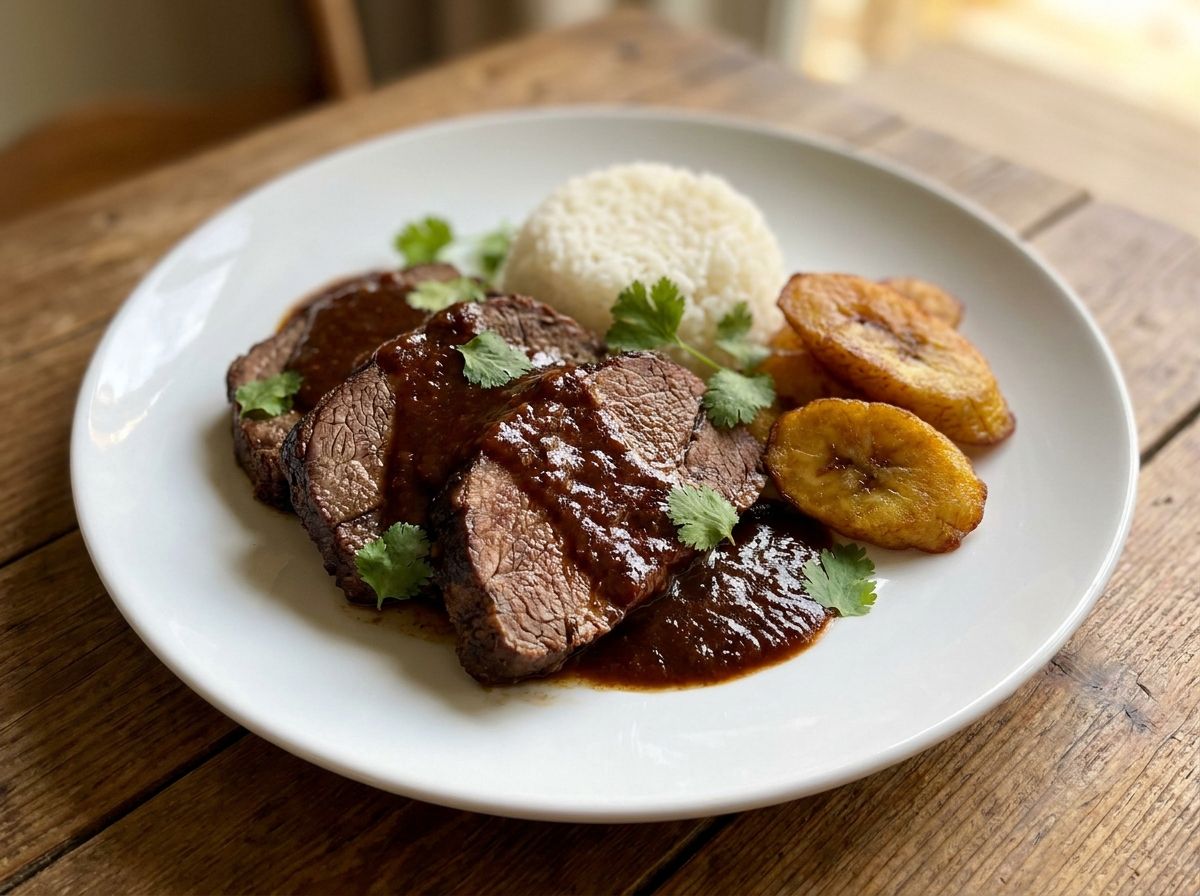
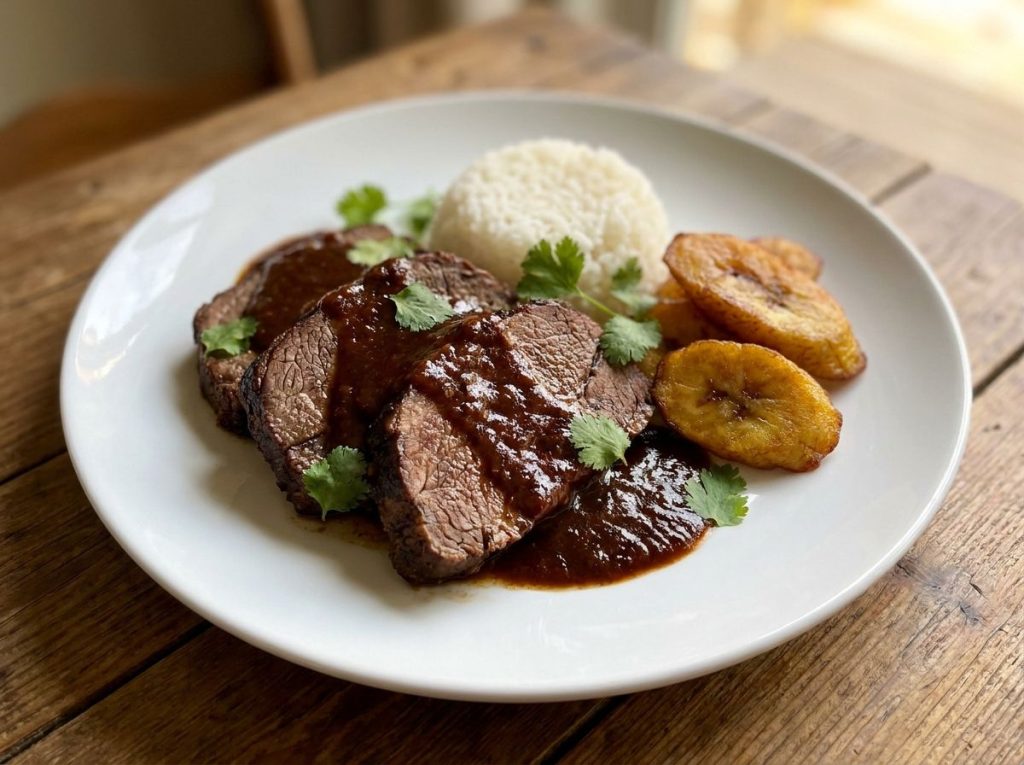
Before you even taste it, look at the sauce. It should be dark brown, almost black, with a shine that tells you it has been reduced properly over low heat.
If the sauce looks thin, watery, or pale brown instead of nearly black, the kitchen likely cut a corner somewhere in the cooking process. A rushed sauce is usually the first sign of a rushed dish.
The Beef Texture Test
The meat should be tender enough to cut with a fork but still hold its shape on the plate. It should not fall apart into shreds, and it should not fight back against your knife either.
That balance only comes from hours of low, slow cooking. There is no shortcut that gets a kitchen there, no matter how good the seasoning is.
A Quick Checklist Before You Order
Use this short list the next time you are scanning a menu or reading reviews for the best asado negro near me.
- The sauce looks dark and glossy, not watery or pale
- The beef is tender but still sliceable, not shredded
- The flavor balances sweet and savory, with no burnt taste
- The menu includes other authentic Venezuelan food like arepas or pabellón criollo
- Reviews mention the sauce by name, not just “the beef was good”
How to Find the Best Asado Negro Near Me in Your Area
Search engines are a good starting point, but they are not the whole story. A few extra steps will save you from a disappointing plate and a wasted trip.
Look Beyond the Star Rating
A high star rating only tells you that people liked their meal overall. It does not tell you whether the asado negro itself was any good.
Read a handful of reviews and look for specific mentions of the sauce, the tenderness of the beef, or comparisons to homemade versions. Vague praise like “great food” does not carry much weight on its own.
Ask the Right Questions
If you are trying a Venezuelan restaurant near me for the first time, it is completely fine to ask a few questions before ordering. Ask if the asado negro is made in house and how often it is prepared.
Some kitchens only make it in small batches because the cooking process takes so long. That is usually a good sign, not a bad one, since it means the kitchen is not cutting the cooking time short.
Search Like a Local
Beyond a general search, try terms like “Venezuelan restaurant near me,” “authentic Venezuelan food,” or the name of your city paired with “pabellón criollo.” Restaurants that proudly list several Venezuelan staples tend to take the rest of their menu just as seriously.
Food festivals, local Latin American markets, and Venezuelan owned catering businesses are also worth checking. They often serve versions of the dish that never make it onto a typical menu.
Traditional Sides That Complete an Asado Negro Plate
Asado negro rarely shows up alone. The sides are part of what makes the meal feel complete rather than just a plate of beef.
Rice and Fried Plantains
White rice is the most common pairing because it soaks up the sauce so well. Tajadas, which are sweet plantains sliced and fried until golden on the outside, add a light contrast to the rich beef.
Mashed potatoes show up often too, especially in more formal settings or during the holidays, since the sauce works just as well soaked into a fork of mashed potato.
Pabellón Criollo and Other Venezuelan Staples
If a restaurant also serves pabellón criollo, a plate built around shredded beef, black beans, rice, and sweet plantain, that is usually a good sign the kitchen takes Venezuelan cooking seriously. The same goes for arepas, cachapas, and tequeños.
A menu full of these staples often points to cooks who grew up eating this food rather than ones who picked up an asado negro recipe from a card. That kind of background tends to show up in every dish they serve.
Caracas Style Asado Negro Versus Regional Variations
Caracas is widely considered the home of asado negro, but the dish has traveled well beyond the capital. Families in Maracaibo and other regions have built their own versions, sometimes leaning sweeter, sometimes leaning more heavily on garlic and spice.
Caracas style asado negro tends to favor red wine and Worcestershire sauce in the marinade, while other regions might swap in Malta or a heavier hand with citrus. None of these versions are wrong.
Venezuelan cooking has always been shaped by whatever ingredients were on hand and whatever a grandmother decided tasted right. That is part of why two restaurants a few miles apart can serve plates that taste completely different from each other.
Trying an Asado Negro Recipe at Home
Some weeks, the closest thing to the best asado negro near me is your own stove. If you want to try an asado negro recipe at home, papelón is the one ingredient worth tracking down at a Latin market before you start.
A round roast, garlic, onion, and a patient afternoon will get you most of the way there. The beef needs hours, not minutes, so this is a weekend project rather than a weeknight dinner.
Even a home cooked version will not match a restaurant that has made the dish for decades. But it gives you a clearer sense of what to look for the next time you are out searching for a plate someone else made for you.
A Final Word on Finding the Best Asado Negro Near Me
Good asado negro is not flashy. It does not need fancy plating or garnish it was never built to wear.
What it needs is patience in the kitchen and care in how it reaches your table. When you find a place that gets the sauce right, the beef tender, and the sides traditional, you have found something worth coming back to.
The next time you search for the best asado negro near me, you will know exactly what to look for. And when you find that plate with the dark, glossy sauce and the fork tender beef, you will understand why this dish has stayed close to Venezuelan hearts for generations.