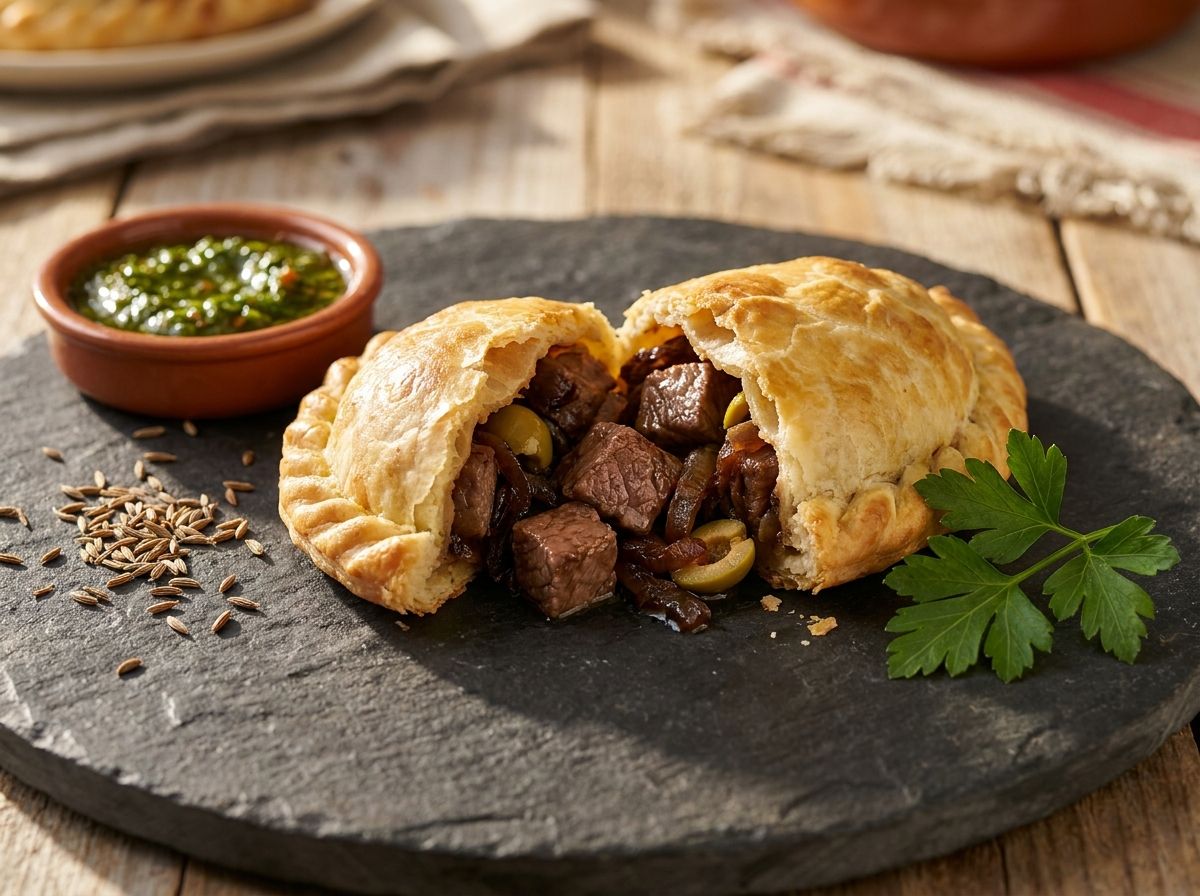
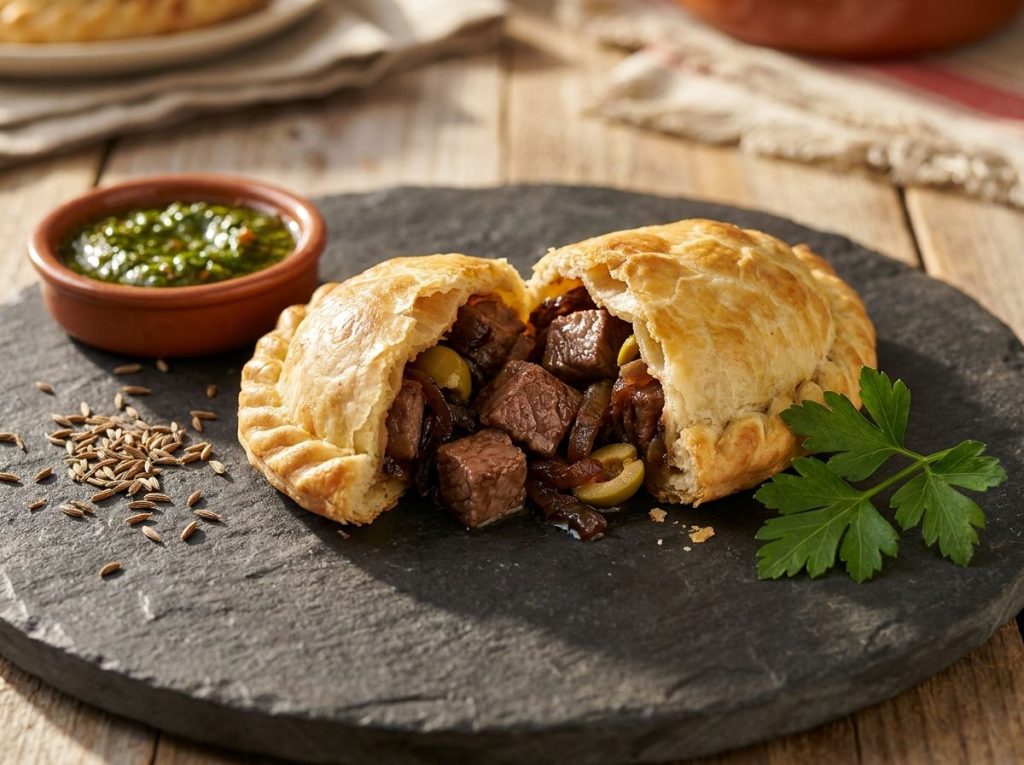
Few dishes in Latin American cuisine carry the same combination of cultural weight and pure eating pleasure as a properly made empanada de carne cortada a cuchillo. Built around a single defining technique, this Argentine pastry uses beef that has been hand-cut with a knife rather than passed through a meat grinder. The difference in the final result is not subtle. The filling is juicier, more textured, and far more satisfying than anything produced from machine-minced meat. For anyone searching to find this dish at its best, understanding what it involves and what genuinely sets one preparation apart from another is the most useful place to start.
Table of Contents
ToggleWhat Is Empanada de Carne Cortada a Cuchillo?
The phrase translates directly from Spanish as “knife-cut beef empanada,” and that translation tells you most of what you need to know. Empanadas appear across Argentina, Chile, Colombia, Bolivia, and beyond, each with distinct regional identities. The carne cortada a cuchillo version is most strongly associated with Argentine cooking, particularly the northern provinces of Tucumán and Salta, where hand-dicing the beef is considered the only acceptable approach.
In Buenos Aires, the more commonly found version uses ground beef, which is faster to prepare and more consistent in texture. In the north, the knife-cut method is not simply a stylistic option. It is a matter of cultural pride and culinary identity. Each small cube of beef is cut by hand, cooked with care, and seasoned to reflect the traditions of the family or cook preparing it. This attention to the raw material, before anything else happens in the kitchen, is what defines the dish.
A Tradition Rooted in Argentine Culture
The empanada has been a staple of Argentine life since at least the 19th century, when it served practical purposes in provinces where beef stretched inside pastry dough allowed families to feed more people at lower cost. Each region developed its own approach over time, shaped by local produce, cooking infrastructure, and inherited habits passed between generations. These regional variations became sources of deep local pride and, in certain cases, friendly competition between neighbouring provinces that continues to this day.
The knife-cut preparation became central to the food identity of the northern provinces. Families in Tucumán and Salta passed their recipes down through generations, each with specific ratios of meat to onion, particular spice combinations, and a distinct style of repulgue. The repulgue is the folded and crimped edge used to seal the pastry, and it was so personal in some communities that the number of folds indicated the filling type, allowing diners at family gatherings to identify their preferred empanada without needing to open or ask about it.
This level of craft and intentionality is what distinguishes the carne cortada a cuchillo tradition from a more industrialised approach to the same dish. It was never designed for speed. It was designed for quality, texture, and a connection to the ingredients being used.
How Knife-Cut Beef Changes the Eating Experience
The most important distinction between an authentic carne cortada a cuchillo empanada and a standard ground beef version comes down to texture, and that quality alone changes everything about the eating experience.
Ground beef blends into itself when cooked. It produces a smooth, relatively uniform filling that, while flavourful, feels flat in terms of texture. Knife-cut beef behaves differently at every stage of the process. Because the meat is diced rather than minced, each cube retains its shape during cooking. The pieces absorb the surrounding aromatics and spice blend while keeping their individual character. Natural beef juices accumulate inside each cube rather than escaping into the pan, and when you bite into a properly made empanada, those juices release with every piece of meat in a way that a ground version simply cannot replicate.
This method also gives cooks greater practical control during the preparation process. With every cube of meat clearly visible in the pan, monitoring the cook and adjusting seasoning becomes more accessible and precise. Many experienced Argentine cooks point out that knife-cut meat is more difficult to oversalt for exactly this reason, because each piece remains individually visible and assessable throughout.
The Ingredients Behind an Authentic Empanada
Understanding what goes into a quality preparation is the clearest way to evaluate any restaurant, bakery, or food vendor making this dish.
Choosing the Right Cut of Beef
Cuts like cuadril (rump), nalga (topside), and rosbif are commonly used in traditional Argentine kitchens for the balanced ratio of leanness and natural moisture they provide. The beef is diced into small, even cubes, roughly the size of a chickpea, before being seared over high heat. This initial sear locks the juice inside each piece rather than allowing it to escape during the longer cooking stage that follows. A cook who skips this step is almost certainly working from a simplified or adapted recipe rather than a traditional one.
Aromatics, Spices, and Traditional Add-Ins
Onions are central to the filling and used in quantities that may surprise anyone unfamiliar with Argentine cooking. The traditional ratio is roughly equal parts onion to beef by weight, with approximately one large white onion per 500 grams of meat. During cooking, the onions reduce significantly and release their natural sweetness into the filling, creating the savoury, moist interior that defines a well-made empanada without any need for added stock or liquid. Spring onions, known locally as cebolla de verdeo, are often included alongside the main onion base for a milder, fresher secondary note.
The classic spice combination features smoked paprika, ground cumin, ají molido (a mild crushed Argentine red pepper), and freshly ground black pepper. These four elements form the aromatic backbone of the dish. Green olives and chopped hard-boiled eggs are traditional additions that bring brininess and richness to the filling. A perfectly made empanada balances all of these components so that none of them overpower the others or compete with the beef.
The Dough and Its Importance
Argentine empanada dough is firmer than standard pastry but thinner than bread. It is built to hold a generous and moist filling without collapsing or becoming saturated from the inside. Traditional dough is made with wheat flour, beef fat or lard, and salmuera, a light brine solution that contributes subtle savouriness and keeps the dough supple during assembly. Baked at high heat, the crust should emerge uniformly golden, lightly firm, and flaky enough to contrast pleasantly with the juicy filling inside. A pastry that is thick, pale, or doughy is a clear signal that shortcuts have been taken somewhere in the process.
Regional Styles Worth Knowing
Empanadas Tucumanas
The province of Tucumán is widely regarded as the spiritual home of the knife-cut beef empanada. The tucumana style uses matambre, a cut from the flank of the animal, which is hand-diced and seasoned with cumin, black pepper, and paprika. This style does not include potato or olives, keeping the focus entirely on the beef and its seasoning. Traditional preparation uses a horno de barro, a clay wood-fired oven that imparts a light smokiness and exceptional crispness to the crust. These empanadas are classically served with a wedge of fresh lemon, squeezed over each one just before eating to brighten the flavour of the beef and spice combination.
Empanadas Salteñas
From the neighbouring province of Salta comes a version with greater filling complexity. Salteñas incorporate knife-cut beef alongside boiled potato cubes, red bell peppers, spring onions, and ají molido, all slow-cooked together in beef fat. The dough itself is coloured with paprika, giving it a distinctive warm golden hue before it even enters the oven. At 5ive Magazine, the salteña is regularly discussed as one of the most complex and rewarding regional expressions of the empanada tradition, appreciated for its layered flavour and beautifully coloured pastry that stands out immediately on any plate.
Where to Find the Best Empanada de Carne Cortada a Cuchillo Near You
Argentine restaurants that specialise in traditional cuisine are the most reliable starting point when searching for the best empanada de carne cortada a cuchillo near you. Establishments that describe their empanadas as cortada a cuchillo, artesanal, or note a specific regional provenance such as tucumana or salteña on the menu are generally committed to authentic preparation rather than commercial shortcuts. If this information is absent from the menu, asking directly whether the beef is hand-cut or machine-ground takes only a moment and can prevent a disappointing experience.
Latin American bakeries, panaderías, and specialty delis are another strong option worth exploring. These smaller businesses typically prepare their empanadas fresh in small batches each day. Because the product cycle is faster, the filling and pastry are rarely sitting for long before being served. The quality of ingredients in these settings tends to be higher, and the people preparing the food are often working from family recipes rather than standardised commercial formulas.
Community food markets, Latin American cultural festivals, and local food events that celebrate South American cuisine are also valuable hunting grounds. Vendors at these gatherings are frequently passionate about their food in ways that larger establishments find difficult to replicate consistently at scale. Some of the most memorable examples of this dish appear in exactly these kinds of settings, made by home cooks who have been preparing it for decades.
What Separates a Great Empanada from an Average One
A reliable sign of authenticity is the filling itself. When you open or bite into an authentic knife-cut beef empanada, the interior should present visible, distinct chunks of beef rather than a smooth or blended texture. The crust should be golden, firm to the touch, and hold its structure without crumbling or softening from internal moisture. Seasoning should feel warm and layered rather than sharp, flat, or dominated by a single spice.
Customer feedback and online reviews are also useful. Comments that specifically discuss the texture of the beef, the freshness of the pastry, or the juiciness of the filling are considerably more informative than general positive comments. A busy local spot that consistently draws returning customers is typically maintaining a standard worth investigating directly the Best Juane Near Me.
The repulgue itself is a subtle but reliable quality signal. A well-formed, evenly crimped seal along the edge of the pastry indicates that care has been taken during the assembly process, and that level of attention rarely stops there.
Pairing and Serving Suggestions
Empanadas de carne cortada a cuchillo pair naturally with chimichurri, the Argentine herb sauce made from flat-leaf parsley, garlic, fresh oregano, red wine vinegar, and olive oil. Its bright and herbaceous character provides a contrast to the richness of the beef filling that works particularly well with baked versions. Salsa criolla, a simple preparation of finely diced tomato, white onion, and bell pepper dressed with vinegar, brings a lighter, more acidic balance to the meal.
For a beverage pairing, Argentine Malbec from the Mendoza wine region is a natural companion. Its smooth, fruit-forward character and earthy undertones complement the paprika and cumin notes in the filling without competing with them. Those who prefer a non-alcoholic option will find that chilled sparkling water with lemon or a traditional mate suits the flavour profile of the dish comfortably.
Finding a local spot that prepares these empanadas with care is a small investment of time that rewards well. Once the difference between a hand-cut filling and a machine-ground one has been experienced directly, returning to anything less becomes a noticeably different and less satisfying proposition.