When you search for the best pollo al chilindron near me, you are not just looking for a meal. You are looking for something real, something rooted in tradition, and something that tastes like it was made with patience and care. That craving you feel is valid, and it is becoming more common. As food culture continues to grow and people seek deeper dining experiences beyond the ordinary, regional Spanish dishes like pollo al chilindron are drawing serious attention from curious eaters everywhere.
This guide is built for exactly that kind of reader. Whether you are exploring Spanish food for the first time or already know what authentic Aragonese cuisine tastes like and simply want to find the best version near you, the following sections will walk you through everything you need to know. From understanding the dish itself to spotting red flags in restaurants and even making it at home, consider this your complete handbook for finding a genuinely satisfying plate of this classic Spanish chicken stew.
Table of Contents
ToggleWhat Is Pollo al Chilindrón and Where Does It Come From
Pollo al chilindrón is a traditional Spanish chicken stew with deep roots in the northern regions of Spain, particularly Aragón and Navarra. The dish is believed to have originated in the city of Zaragoza, where farmers and rural families relied on simple, locally grown ingredients to create meals that were filling, flavorful, and long-lasting. Over centuries, the recipe spread across the Ebro Valley and into neighboring regions including La Rioja and the Basque Country, each adding their own small variations while honoring the same core preparation.
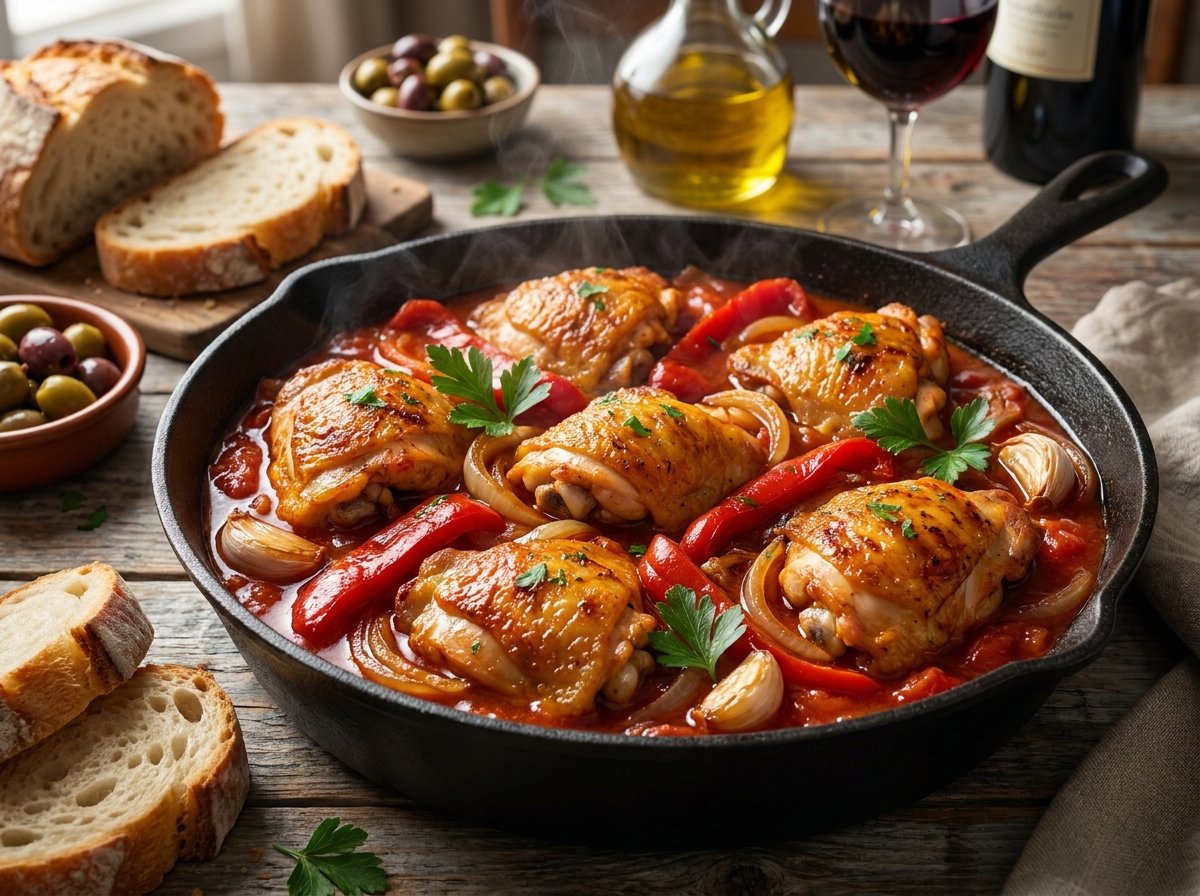
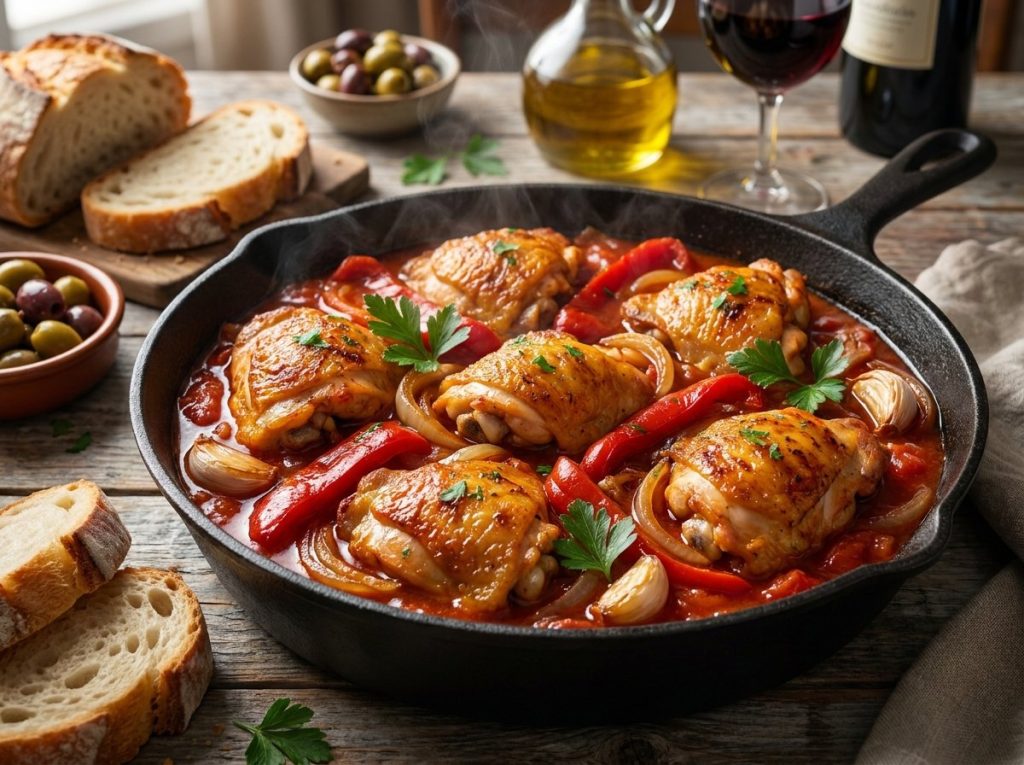
The name chilindrón refers to the sauce itself, a rich, slowly reduced mixture of roasted red peppers, vine-ripened tomatoes, garlic, and onion. What elevates this sauce beyond ordinary tomato-based preparations is the addition of jamón serrano, a dry-cured Spanish ham that brings depth, saltiness, and a savory richness that ties everything together. Many cooks also incorporate pimentón, the Spanish smoked paprika that adds a subtle warmth and a characteristic dark red color to the finished sauce.
The chicken, typically bone-in thighs or drumsticks, is first browned in olive oil to develop a golden crust, then slowly braised in the chilindrón sauce until tender. The result is a dish where every element has merged into something greater than its individual parts. It is not a spicy dish. It is warm, savory, and deeply comforting in the way that only traditional home cooking can be.
This is a very different experience from paella or tapas, which are the Spanish dishes most international diners encounter first. Pollo al chilindrón is more regional, more quietly beloved, and precisely because of that, more rewarding to seek out.
Why So Many People Are Searching for Authentic Spanish Chicken Near Me
The rise in searches for traditional Spanish chicken near me and similar location-based food queries is not accidental. It reflects a meaningful shift in how people approach dining. More and more diners are moving away from broad international menus and seeking out restaurants that specialize in the specific flavors of a particular region or culture. They want to taste the food as it was intended, not a simplified version created for mass appeal.
Pollo al chilindrón sits right at the center of that desire. It is not widely available in chain restaurants. It does not appear on every Spanish-themed menu. Because of its regional specificity and the care required to prepare it properly, it tends to be found only in kitchens that genuinely understand Spanish cuisine. That scarcity is part of what makes it so exciting to find.
There is also the element of cultural connection. Food tourism has expanded well beyond physical travel. People want to experience the warmth of Aragonese cuisine restaurants without necessarily booking a flight to Zaragoza. Finding a restaurant nearby that serves a faithful version of this dish is a small but meaningful form of cultural discovery.
What Separates a Truly Authentic Version from a Mediocre One
Knowing how to identify a well-prepared pollo al chilindrón is just as important as knowing where to look. There are several clear markers of quality that experienced diners and food writers consistently highlight.
The sauce is where everything begins. A proper chilindrón sauce is thick and deeply colored, a rich red that coats the back of a spoon and clings to the chicken. If the sauce appears thin, watery, or pale, that is a sign the dish was rushed or the tomatoes were not properly reduced. The natural sugars in the peppers and tomatoes should concentrate during slow cooking, creating a sauce that is sweet, savory, and slightly smoky all at once.
The chicken itself should be tender and juicy without falling completely apart. Bone-in pieces that have been braised slowly will absorb the surrounding flavors while retaining their own character. If the chicken is dry or tastes bland despite sitting in the sauce, the dish was likely cooked at too high a temperature or for too short a time.
The peppers deserve attention as well. They should still hold a subtle texture rather than dissolving entirely into the sauce. Their sweetness should be present but balanced, not overwhelming.
Look for the presence of jamón serrano on the menu description. Authentic versions of this dish rely on cured ham for its distinct umami contribution. If the restaurant omits it or substitutes it with a generic ingredient, the flavor profile will be noticeably different.
Chef-driven kitchens where the menu reflects a genuine knowledge of Spanish cooking are far more likely to deliver a faithful version than restaurants that offer pollo al chilindrón as one item in a long list of vaguely European dishes. Ingredient transparency is also a positive sign. Menus that mention specific ingredients, cooking methods, or regional origins show pride in the preparation.
Red flags to watch for include pre-made sauce (which often has a flat, uniform flavor), dishes that are described as spicy when the traditional version is not, and versions that arrive without any visible cured ham or its contribution to the sauce.
How to Find the Best Spanish Restaurants Near You
Finding a restaurant that serves authentic Mediterranean chicken dishes like this one requires a slightly more targeted approach than a standard restaurant search.
Start with Google Maps and use search terms like “authentic Spanish restaurant” combined with your city or neighborhood name. Then go further by adding qualifiers such as “traditional,” “Aragonese,” or “tapas bar” to refine your results. Restaurants that appear in connection with these specific terms are more likely to have menus rooted in genuine Spanish cooking traditions.
Once you have a shortlist, check the photos available on Google and Yelp. A properly made pollo al chilindrón will appear as rich, dark red chicken pieces served in a generous sauce. The visual alone can tell you a great deal about how seriously the kitchen takes the dish.
Reading through reviews with care is equally useful. Pay attention to comments that mention slow cooking, homemade-style flavor, or specific ingredients like pimentón or jamón. Reviewers who describe the sauce in detail are usually the most reliable guides.
Examining the full menu is another reliable method. Restaurants that offer other traditional Spanish staples such as croquetas, tortilla española, and patatas bravas alongside their main dishes are demonstrating a broader commitment to authentic Spanish cuisine. A kitchen confident in all of these preparations is much more likely to handle pollo al chilindrón with the same care.
Platforms like OpenTable and TheFork can help you discover and book at verified Spanish restaurants in your area, often including menus and recent diner reviews that make the evaluation process much easier.
What to Eat Alongside It and How It Is Traditionally Served
In traditional settings, pollo al chilindrón is served with simple accompaniments that let the sauce take center stage. Crusty bread is the most classic pairing, used to scoop up the rich chilindrón sauce from the plate. White rice is another common side, absorbing the sauce beautifully without competing with its flavor. Roasted or fried potatoes are also traditional, particularly in rural Aragonese households where the dish is considered a complete one-pot meal.
Authentic restaurants serve this dish without heavy starch-loaded sides. The goal is always to highlight the sauce and the chicken, not to overwhelm the palate. For wine, a Spanish Garnacha or Tempranillo is a natural match. Both have enough body to complement the richness of the chilindrón sauce while keeping the overall experience balanced and satisfying.
How Pollo al Chilindrón Compares to Similar Dishes
Food lovers familiar with other braised chicken dishes will notice both similarities and important distinctions when trying pollo al chilindrón for the first time.
Compared to the Italian chicken cacciatore, which also combines chicken with tomatoes and aromatics, the chilindrón version is less acidic and leans more heavily on the sweetness of slow-cooked peppers and the savory depth of cured ham. The flavor profile is distinctly Spanish rather than Italian in its balance.
Pollo en salsa, a more generic Spanish chicken in sauce, lacks the specific chilindrón sauce identity and the regional character that makes this dish memorable. Ropa vieja, the Cuban and Spanish slow-cooked shredded beef dish, shares a similar slow-cooking philosophy but uses different proteins and a somewhat different spice profile.
What sets pollo al chilindron apart is the unity of its specific ingredients and the tradition behind them. Every element has a purpose, and that purposeful simplicity is what makes it so satisfying.
Read More Information: 5ivemagazine
Making It at Home When You Cannot Find It Nearby
If your search for the best pollo al chilindron near me comes up short, making it at home is a genuinely rewarding alternative. The ingredient list is accessible, and the process, while unhurried, is straightforward.
You will need bone-in chicken thighs or drumsticks, red bell peppers, vine-ripened tomatoes, white onion, garlic cloves, olive oil, and white wine. The essential flavor additions are Spanish pimentón, preferably the smoked variety, and thinly sliced jamón serrano. Both of these ingredients are available at specialty grocery stores, Mediterranean markets, and many online retailers.
Brown the chicken first in good olive oil, then slowly cook down the onions and peppers before adding the tomatoes and wine. Return the chicken to the pan, cover, and let everything simmer together over low heat for at least forty-five minutes. The patience you invest directly translates to flavor in the finished dish.
A Dish Worth Seeking Out
Whether you find it at a neighborhood Spanish restaurant or cook it yourself on a quiet evening, pollo al chilindrón is a dish that rewards the effort. At 5ive Magazine, we believe great food experiences are worth pursuing, and this traditional Spanish chicken stew is a perfect example. Bookmark this guide, share it with fellow food lovers, and explore more of our content on travel, dining, and the world’s most compelling culinary traditions.