Norway has long maintained a deep and meaningful relationship with its natural environment. Vast forests, open mountain terrain, river valleys, and coastal wilderness form the backdrop of everyday life for millions of Norwegians. Within this landscape lives an extraordinary range of wild species, from moose and red deer to lynx, wolverine, and reindeer. Managing these populations in a way that is sustainable, fair, and ecologically sound requires more than general national rules. It requires localised governance that understands the terrain, the communities, and the wildlife that share the same space. This is the foundation upon which Norway’s municipal wildlife board system rests.
Table of Contents
ToggleWhat Viltnemnda Means and Where It Comes From
The word itself is rooted in Norwegian and breaks down into two clear components. “Vilt” refers to wild game or wildlife in a broad sense, while “nemnda” means committee or board. Together, the term describes an official local committee responsible for overseeing wild animals and the management decisions that directly affect them. These boards exist across every municipality in Norway, making them one of the most widespread forms of decentralised environmental governance in Scandinavia.
For much of Norway’s history, hunting and wildlife management were handled informally by local communities or regulated directly by the central government. That changed significantly in 1993 when responsibility was formally transferred to the municipality level. This shift brought decision-making closer to the communities that lived alongside wildlife daily, creating a more responsive and locally grounded system. What had once been managed from afar was now placed in the hands of people who understood the specific landscapes, animal behaviour patterns, and community needs of their area.
How the Municipal Wildlife Board Is Structured
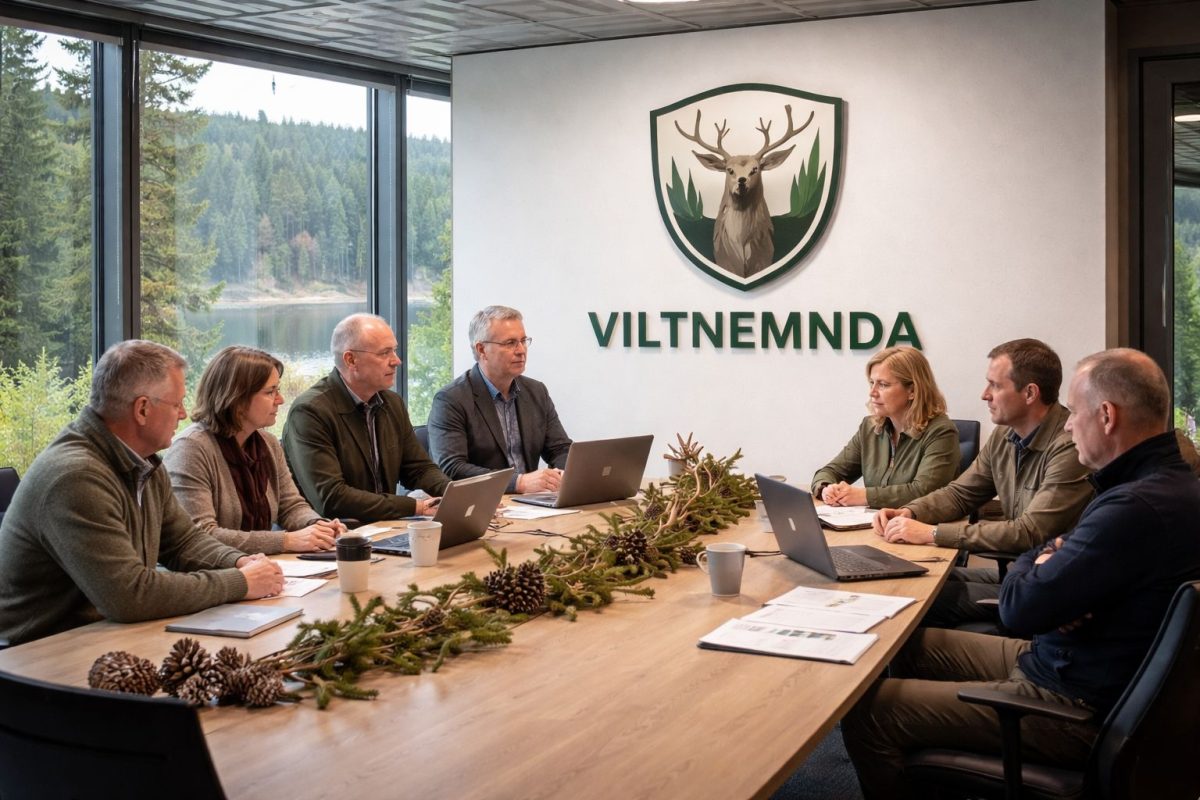
Each wildlife committee typically consists of five to nine members who are appointed by the local municipal or county council. Members serve fixed terms, often lasting four years, and are selected to represent a range of local interests. A standard board might include farmers, hunters, landowners, conservationists, and representatives of the broader public. In addition to these community figures, boards have access to professional expertise including wildlife biologists, foresters, and legal advisors who ensure decisions align with scientific data and national legislation.
This structure reflects a commitment to democratic representation and practical knowledge. The committee operates not as a single-interest body but as a meeting point for different community stakeholders who all have a relationship with the natural environment. By bringing these voices together into one decision-making space, the board creates outcomes that tend to be better accepted and more effectively implemented at the ground level.
Core Responsibilities in Wildlife Governance
The scope of work carried out by local wildlife boards is broader than many people realise. While hunting regulation is one of the most visible tasks, the responsibilities extend into habitat monitoring, human-animal conflict resolution, damage compensation, and public education.
Some of the key areas of responsibility include:
- Setting annual hunting quotas for species such as moose, red deer, roe deer, and reindeer based on population surveys and ecological data
- Administering and reviewing hunting permit applications to ensure they remain within sustainable limits
- Monitoring wildlife populations through field observations, reporting systems, and collaboration with wildlife biologists
- Responding to incidents involving injured animals or wildlife found on or near roadways
- Managing complaints and compensation claims from landowners and farmers who have experienced crop destruction, livestock loss, or property damage caused by wild animals
- Advising municipalities on land-use planning that could affect wildlife habitats and migration corridors
- Coordinating with national agencies such as the Norwegian Environment Agency and the Ministry of Climate and Environment to ensure local decisions align with broader conservation goals
- Educating local hunters, residents, and landowners about changes in wildlife legislation, seasonal regulations, and coexistence strategies
Each of these responsibilities requires not only a sound understanding of ecological principles but also the kind of local knowledge that can only come from people who live and work in the area.
Hunting Regulation and Sustainable Quotas
One of the most important functions of any local wildlife committee is the careful regulation of hunting. Norway has a strong and well-established hunting culture, particularly for cervids such as moose and red deer. Without structured oversight, unrestricted hunting would quickly destabilise animal populations and damage ecosystems that depend on those species for balance.
Quota-setting is a science-driven process. Population data is gathered through systematic surveys, field counts, and information submitted by hunters and landowners. Breeding rates, habitat quality, food availability, and predator presence are all factored into the final numbers. The goal is not to limit hunting for its own sake but to ensure that the harvest remains within a level the local population can sustain year after year. Seasonal restrictions are also established to protect breeding periods and juvenile animals, ensuring that populations can recover naturally between hunting seasons.
Hunters wishing to operate within a municipality must apply for permits through the appropriate channels, and the committee reviews those applications against the established quotas. This process keeps the system transparent, fair, and ecologically responsible.
Managing Human-Wildlife Conflicts
As human settlements expand and land use changes, encounters between people and wild animals become more frequent. Moose and red deer wandering into farmland, predators threatening livestock, or large animals creating road hazards are all situations that local wildlife boards are called upon to address. These are not abstract policy problems but real challenges that affect livelihoods and public safety.
When a large animal is struck by a vehicle or found injured near a road, the established procedure is to call the police emergency number 02800 without delay. The police then coordinate with the local wildlife response team or fallvilt team to handle the situation appropriately. The municipal wildlife board plays a critical role in this system by ensuring that trained responders are available and that proper protocols are followed.
For farmers dealing with damage to crops or fencing caused by deer, boar, or other game species, the board provides a formal process for reporting damage and seeking compensation. It also advises on preventive measures that reduce the likelihood of repeat incidents, helping landowners and wildlife populations coexist with less friction over time.
The Legal Framework Supporting Local Wildlife Management
Local wildlife boards do not operate without legal direction. Two pieces of national legislation form the core of their authority. The Wildlife Act, known in Norwegian as Viltloven, regulates hunting practices across the country, defines which species may be hunted and under what conditions, and emphasises the importance of sustainable wildlife use. The Nature Diversity Act, or Naturmangfoldsloven, takes a broader ecological view, focusing on the protection of biodiversity and the long-term health of natural ecosystems.
Together, these laws give local boards the framework within which all of their decisions must operate. They cannot issue quotas, grants, or permits that contradict national policy, but within those boundaries they have meaningful authority to adapt management approaches to their specific local conditions. This balance between national oversight and local flexibility is one of the defining strengths of the Norwegian system.
Viltnemnda in Oslo and Urban Municipalities
Wildlife governance is not limited to rural areas. Even in urban and peri-urban municipalities, including the Oslo region, local wildlife boards carry out important work. The interface between urban development and natural green corridors creates specific challenges around species management, habitat fragmentation, and increased human-wildlife contact. In Oslo and its surrounding boroughs, the committee works to manage populations of species that have adapted to urban-adjacent environments, including roe deer and various bird species, while also responding to the movement of larger animals through forested corridors near the city.
For residents of Oslo who need to reach the relevant authority regarding a wildlife-related matter, the standard approach is to contact the municipality’s environmental services department. Inquiries about viltnemnda telefon contact numbers, permits, hunting matters, or wildlife incidents can be directed to the local municipality or the relevant administrative body within Oslo kommune. The authority operates within the city’s planning and environment structure and can be reached through standard municipal contact channels.
Visit For More Information: united airlines flight ua770 emergency diversion
Why the Local Governance Model Works
What makes Norway’s approach to wildlife governance distinctive is the trust it places in local knowledge. National environmental agencies set the overall direction and legal framework, but the people who actually know whether a moose population is growing too fast, which forests are used as calving grounds, or where deer are most likely to cross a busy road are the ones making the decisions on the ground. Wildlife biologists and legal advisors support the process with data and compliance guidance, but the core of the system is community-rooted.
5ivemagazine.co.uk has covered aspects of environmental governance and community-led conservation in various contexts, and Norway’s municipal wildlife model represents one of the more thoughtful examples of how governance can be designed to serve both people and nature simultaneously.
Challenges and the Future of Wildlife Management
The pressures on local wildlife boards are growing. Climate change is altering the distribution and behaviour of many species. Wolves, bears, lynx, and wolverines are recovering in numbers across Norway, which is a conservation success but also creates ongoing tension with farming communities that experience livestock losses as a result. Invasive species are beginning to affect native ecosystems in new ways. And the ongoing expansion of infrastructure creates new barriers and hazards for animals moving through their natural ranges.
Local wildlife boards are adapting to these challenges by strengthening their data collection processes, investing in collaboration with research institutions, and working more closely with national agencies to align local decisions with long-term conservation goals. The committee model remains relevant precisely because it combines the flexibility to respond to local conditions with the credibility that comes from formal legal authority and scientific grounding.