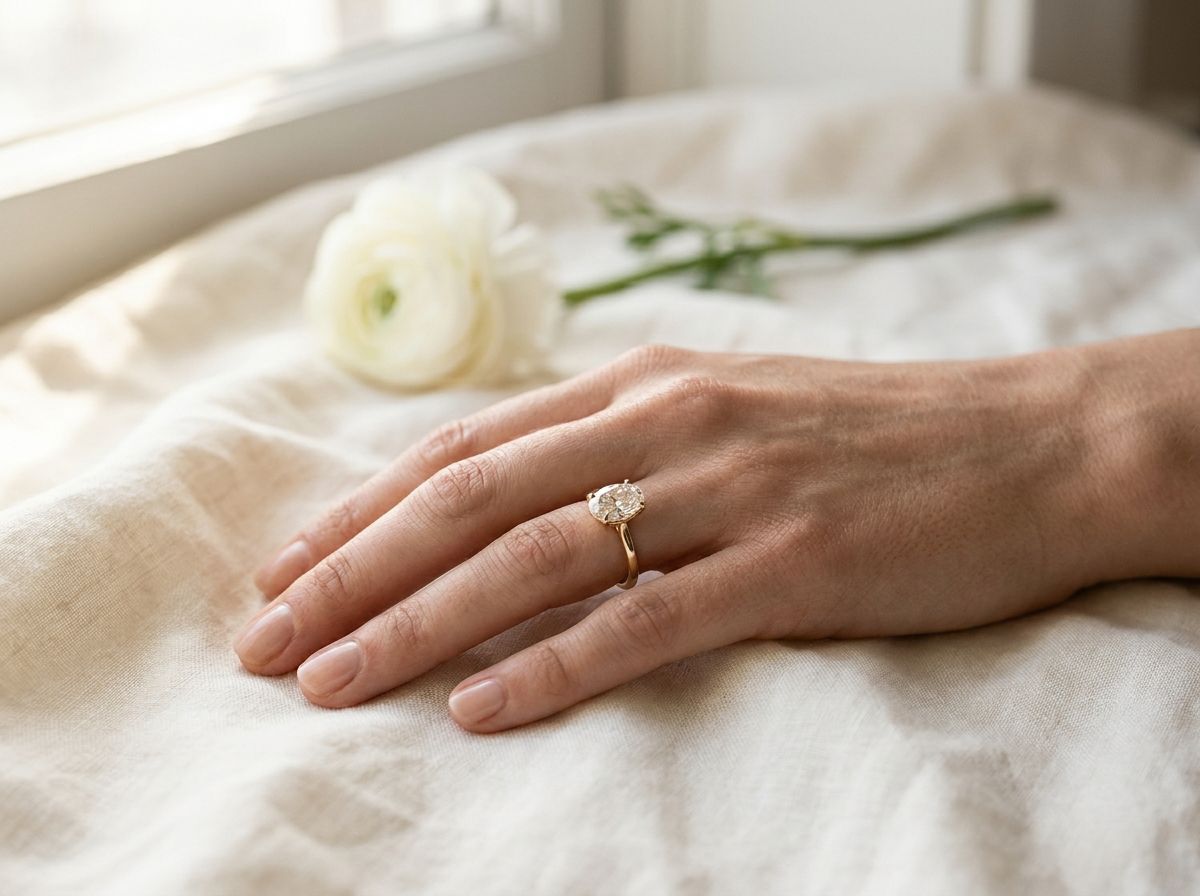
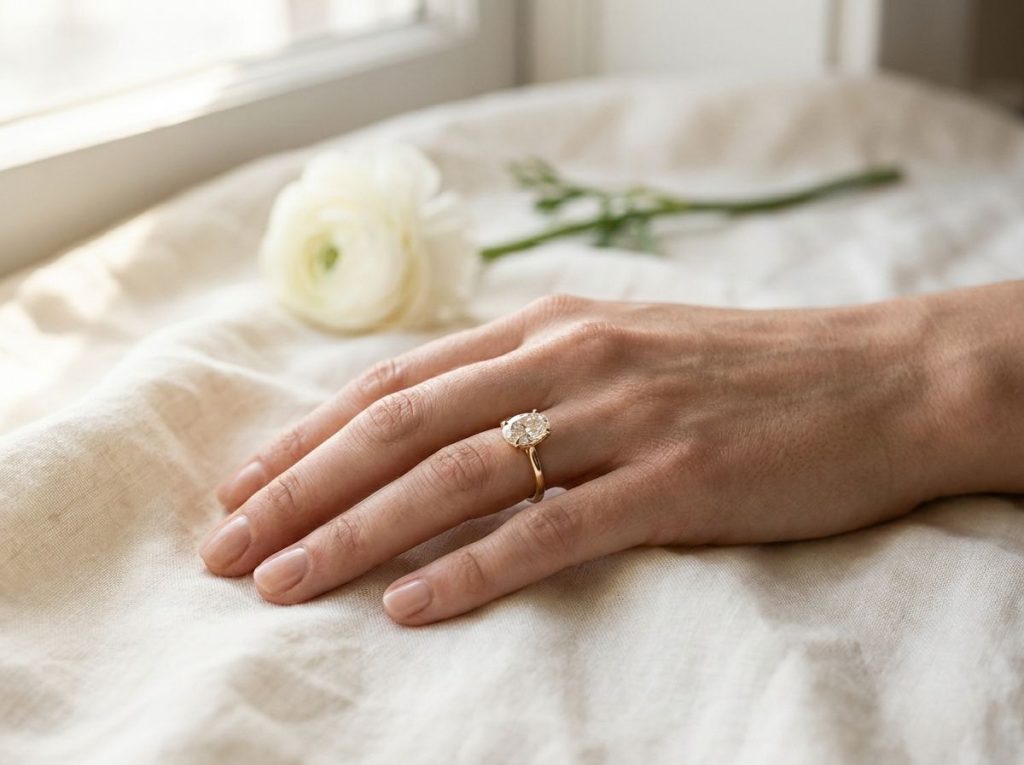
There is a reason the elongated brilliant cut has become one of the most requested diamond shapes for a modern engagement ring. It shares the same soft curves and lively sparkle as a round stone, stretched into a longer silhouette that sits beautifully across the finger and looks larger than its actual weight suggests. The appeal usually comes down to a blend of timeless elegance, everyday wearability and a quiet sense of individuality that a perfectly round stone does not always offer.
This guide, brought to you by 5ive Magazine, walks through what makes this shape distinctive, the proportions worth understanding before buying, the settings that suit it best, and how to judge the materials and craftsmanship behind a well made ring.
Table of Contents
ToggleWhat Is an Oval Cut Diamond?
An oval diamond belongs to the same family as the round brilliant. Technically a modified brilliant cut, it uses a similar arrangement of facets, usually 57 or 58, to bend and return light, which is why a well cut oval can rival a round stone for sparkle and fire. The difference lies in geometry alone. Instead of a circular outline, the stone is drawn out along one axis into a soft, symmetrical ellipse with two gently rounded ends.
This shape has been refined over generations of diamond cutting, with today’s version taking form in the middle of the twentieth century, as cutters combined the brilliance of a round stone with a longer, more flattering outline. It has since grown into one of the most popular fancy shapes on the market, second only to the round brilliant itself.
Why This Diamond Shape Continues to Win Hearts
Part of the charm comes down to proportion. Because its mass is spread across a longer surface, an oval diamond typically looks noticeably larger than a round diamond of the same carat weight, a useful advantage for couples working to a particular budget.
There is also a practical, flattering quality to the shape. The elongated outline draws the eye along the length of the finger, which many wearers find softening and elegant regardless of hand size. Its popularity has grown steadily, helped along by a number of high profile engagements, but rooted just as much in how beautifully it photographs and how easily it pairs with almost any band style.
Unlike shapes with sharp corners, such as a princess or marquise cut, the rounded contour of an oval also holds up well to daily life, with no vulnerable points to catch on fabric or knock against a hard surface. That makes it a sensible choice for anyone who prefers not to take their ring off for everyday tasks.
Length-to-Width Ratio and the Bow-Tie Effect
Two technical details separate an average oval from a genuinely beautiful one, and neither shows up clearly on a certificate.
The first is the length-to-width ratio, simply the stone’s length divided by its width. Most jewellers consider a ratio between 1.30 and 1.50 to be the sweet spot: lower and the stone looks rounder, closer to a stretched circle; higher and it becomes noticeably slimmer and more dramatic, though very high ratios are rare and harder to source. Many buyers settle around 1.35 to 1.40 for a shape that feels classic without veering into either extreme.
The second is the bow-tie effect, a shadow that can appear across the centre of the stone, caused by the way light is blocked by the viewer’s own head and shoulders combined with the angle of the facets in that central area. Almost every oval shows some trace of it, and a subtle version can add depth and character rather than detract from it, though a poorly proportioned stone can show a dark, heavy band that dulls its sparkle. Because this cannot be measured from a grading report alone, it is worth viewing a stone in person, or asking for a video showing how it catches light, before committing.
Carat, Cut, Colour and Clarity for an Oval Diamond
The familiar four Cs still apply here, though a couple of them work slightly differently for a fancy shape.
Carat weight measures size, but an oval tends to wear larger than its number suggests, so it is worth trying stones on rather than shopping by carat alone.
Cut is where things differ most. Grading laboratories issue an official cut grade only for round brilliant diamonds, since their proportions are standardised. Oval and other fancy shapes are instead assessed on polish and symmetry, which speak to the finish and precision of the cutting rather than a single overall score, which is exactly why the proportions covered above matter so much when judging quality.
Colour is largely a matter of personal taste and budget. Many buyers are happy in the near colourless range, since a well chosen setting and metal tone can soften any warmth within a stone.
Clarity tends to be more forgiving here than with a step cut such as emerald, because the brilliant faceting is good at disguising small inclusions. A grade in the eye-clean range often looks flawless to the naked eye, freeing up some of the budget for better cut quality or a slightly larger stone.
Popular Ring Settings for an Oval Centre Stone
The right setting can flatter the shape further, or work against it if chosen poorly. Some of the most popular options at the moment include:
- Solitaire: a single stone on a plain band, letting the shape and brilliance of the diamond do all the talking, and the most timeless choice of all.
- Pavé band: small diamonds set along the band that add extra sparkle without competing with the centre stone.
- Hidden halo: a discreet circle of tiny diamonds sits beneath the main stone, visible mostly from the side, adding brilliance with a cleaner look from above.
- Three-stone or trilogy: a centre stone flanked by two smaller accent stones, often chosen for its symbolic nod to past, present and future.
- East-west: the stone sits horizontally across the finger rather than vertically, a striking, slightly vintage-inspired look that has come back into favour.
- Bezel: a thin rim of metal wraps around the stone’s edge, offering extra protection and a smooth, modern profile.
Gold, Platinum and Hallmarks: What Quality Really Means
Once the stone itself is chosen, the metal and workmanship behind it matter just as much for long term satisfaction.
Platinum and 18 carat gold remain the two standards most trusted for engagement rings, and for good reason. Platinum is dense, naturally hypoallergenic and develops a soft, satin like patina over years of wear rather than losing its shine. Eighteen carat gold, in yellow, white or rose tones, contains seventy five percent pure gold alloyed with other metals for strength, giving it a rich colour and genuine durability for daily wear.
In the UK, any ring made from these metals above a small weight threshold must, by law, carry a full hallmark from one of the country’s Assay Offices, confirming through independent testing, rather than the seller’s word alone, exactly what the metal is and how pure it is. It is a small stamp that carries real reassurance, worth checking for on any ring before it leaves the shop. The diamond itself should ideally come with a report from a recognised grading laboratory, confirming its carat weight, colour, clarity and other characteristics in writing.
A knowledgeable jeweller can also make a genuine difference. Good, honest guidance and ongoing aftercare matter just as much as the materials themselves when a purchase is meant to last a lifetime.
Caring for Your Ring for Years to Come
A well made ring is built to be worn every day, but a little routine care keeps it looking its best. Clean it gently every few weeks with warm water, a little mild soap and a soft brush, to clear away the lotion and soap residue that dulls sparkle, and avoid harsh chemicals, chlorine and abrasive cloths, which can wear down softer metals or damage certain gemstones.
It is also worth having the setting checked by a jeweller roughly once a year. Claws or prongs can loosen slightly with wear, and catching this early is far cheaper and less stressful than dealing with a lost stone later. Many jewellers include this as a standard part of their aftercare, so it is worth asking what is included at the point of purchase.
Choosing the Right Diamond Shape for You
The right choice ultimately comes down to what feels personal rather than what is simply popular this year. This elongated, brilliant sparkle has earned its place among the most loved diamond shapes for good reason, offering a rare balance of classic romance, everyday practicality and real visual presence on the hand.
Whether the final decision lands on a simple solitaire or something more elaborate, taking time to understand proportion, setting and the quality of materials and service behind a ring makes both the choosing and the wearing far more rewarding. 5ive Magazine will keep exploring the small details that make jewellery worth holding onto, because a ring chosen thoughtfully tends to stay loved for a lifetime. Done well, oval engagement rings are simply timeless.