There is a particular kind of disappointment that comes from buying a loaf labeled “fresh baked” and finding it pale, soft in all the wrong places, and strangely tasteless by the second day. Then there is the opposite: a warm, crackling loaf from a small bakery that fills the whole kitchen with its smell before you have even cut it.
The difference between those two experiences has very little to do with luck. It comes down to knowing where to look, what to ask, and how to read the signs.
This guide shows you how to find fresh bakery bread near you, how to tell a truly fresh loaf from a convincing imitation, what to buy at different times of day, and how to keep it good once you get it home.
Table of Contents
ToggleThe Short Answer: How Do You Find Fresh Bakery Bread Near You?
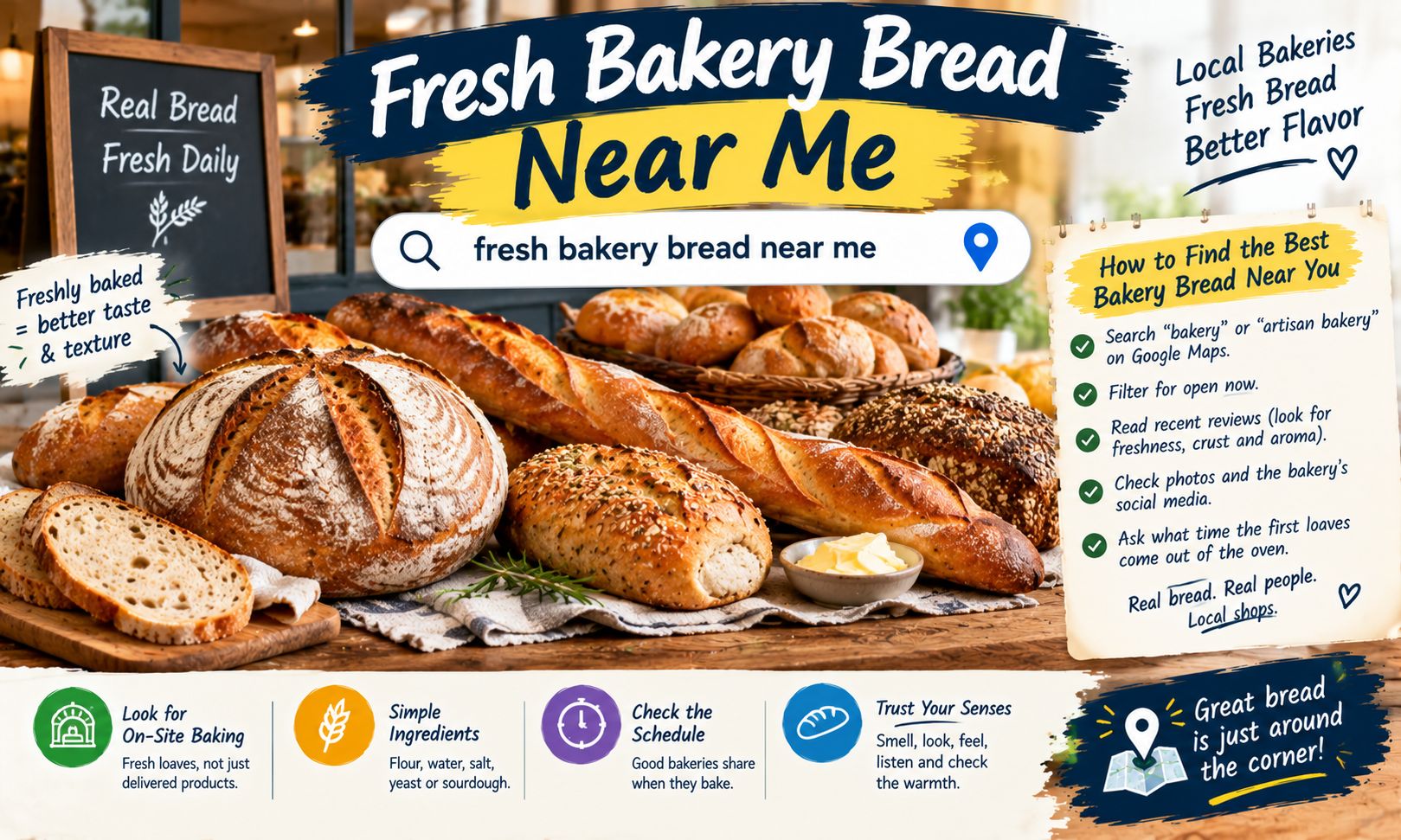
The fastest way is to search a map app for “bakery” or “bread,” filter for places that are open now, and read recent reviews that mention freshness, baking times, and crust. Then confirm with the bakery directly: ask what time the first loaves come out of the oven.
Look for three things:
- Baking on the premises. The bakery should have an oven and a bakehouse, not just a display of delivered products.
- A short ingredient list. Flour, water, salt, and yeast or a sourdough starter cover most traditional loaves.
- A clear schedule. Good bakeries are proud of when their bread is baked and will tell you.
That quick routine solves most of the problem. The sections below explain how to do it well.
What “Fresh” Really Means in Bread
The word gets stretched by marketing, so it helps to know what it should mean.
Freshly baked bread was baked recently, usually the same morning or the previous night. Baked on-site means the bakery produces the loaves itself. Bake-off or par-baked bread arrives partly baked and frozen, then finished in a local oven. It still comes out warm, but it is a different product from a loaf made from scratch.
None of these is automatically bad. A supermarket’s in-store bakery can produce perfectly decent bread, and a bake-off roll straight from the oven is hard to resist. The point is to know what you are paying for.
Why Freshness Changes the Taste
Bread begins to go stale soon after it cools. The starch in the loaf slowly firms up, which dries the crumb and dulls the flavor. The crust, which is crisp when freshly baked, softens as moisture moves from the inside out.
That is why the first few hours after baking matter so much. A baguette is at its best within hours, while a dense sourdough can taste wonderful for a couple of days.
How to Search Smarter Than Just Typing “Near Me”
Most people type the phrase and take the first result. A few small tweaks get better results.
Use Map Searches Properly
- Search “bakery,” “artisan bakery,” or “sourdough” rather than only “bread.”
- Filter by “open now” so you do not drive to a closed shop.
- Sort by recent reviews, since bakeries can change owners or standards.
- Scan photos. Customer photos show real loaves, not stock images.
Read Reviews Like a Detective
A review that says “great bread” tells you little. Look for specific details:
- Mentions of crust, crumb, aroma, or warmth
- Comments about selling out early, which often signals a busy, fresh-baking shop
- Notes on opening times and the best time to visit
If you see several reviewers saying the loaves are warm in the morning, you have probably found a real bakery.
Ask Locals and Check Social Pages
Neighborhood groups and community pages often recommend places chain listings miss. Many small bakeries post daily menus and sellout notices on social media, which is a reliable sign of fresh production.
The Hands-On Freshness Test: What to Check at the Counter
Once you are in the shop, you do not need to be an expert. Use your senses.
Smell
A good loaf smells toasty, slightly sweet, and yeasty. If there is little aroma, the bread may have been baked earlier or delivered.
Sound and Feel
Gently squeeze the loaf if the bakery allows it. A fresh crust crackles under light pressure. The loaf should feel light for its size, not heavy and damp.
Look
- Color: A deep golden-brown crust usually means better flavor than a pale one.
- Crust condition: Blisters and small cracks are normal on artisan loaves.
- Cut face: If you can see inside, the crumb should look moist and springy, not gummy or dry.
Warmth
Warm bread is a sign of recent baking, though some bakeries let loaves cool before selling. If it is cool but the crust is crisp and the aroma is strong, it can still be excellent.
Choosing the Right Bread for the Time of Day
Different breads peak at different moments, so timing your visit helps.
Early Morning
This is when many bakeries have the widest selection, especially of baguettes, croissants, and soft rolls. If you want something warm, this is your window.
Late Morning to Lunchtime
Sourdough, rye, and seeded loaves often shine here. They have cooled enough to slice cleanly and still taste fresh.
Afternoon and Evening
Popular items may be sold out, but this is when some bakeries discount day-old loaves. Day-old bread is perfect for toast, sandwiches, breadcrumbs, and French toast.
Flatbreads Are a Special Case
If your local area has a place making naan, roti, pita, or other flatbreads to order, those are best eaten almost immediately. A flatbread straight from the tandoor or griddle is hard to beat, and it loses much of its charm within hours.
Which Type of Bread Should You Buy?
A quick guide helps if you are standing at a counter with a long list of options.
| Bread type | Best for | Freshness window |
| Baguette | Same-day meals, sandwiches | A few hours |
| Sourdough loaf | Toast, sandwiches, dipping | Two to three days |
| Rye or dense wholegrain | Slicing thin, long keeping | Three or more days |
| Soft rolls and buns | Burgers, breakfast | One day |
| Flatbreads (naan, roti, pita) | Curries, wraps, dips | Hours; reheat later |
| Enriched loaves (brioche, milk bread) | Sweet toast, French toast | One to two days |
Those windows are general guidelines, not fixed rules. Storage and climate change them.
Craft Bakery, Supermarket, or Bake-Off Shop?
Here is a quick comparison to help you decide where to go.
Craft or artisan bakery. Usually the best flavor and variety, often with sourdough and specialty loaves. Prices are typically higher, and opening hours can be shorter.
Supermarket in-store bakery. Convenient and often open long hours. Quality varies, so check whether loaves are baked on-site or finished from par-baked dough.
Neighborhood bakery or café. Often a happy middle ground, with simple, reliable loaves and friendly staff.
If you care mostly about flavor, a craft bakery is usually worth the extra few minutes. If you need convenience, a good in-store bakery can still deliver decent bread when you shop at the right time.
For more everyday tips like these, browse our more food and kitchen guides.
How to Keep Fresh Bread Fresh at Home
You found the perfect loaf. Now do not ruin it.
Do
- Store at room temperature in a paper bag, bread box, or clean cloth.
- Freeze extra bread if you will not finish it in a couple of days. Slice first so you can take out only what you need.
- Toast from frozen. It works well and tastes fresh.
Don’t
- Do not refrigerate bread. Cold temperatures speed up staling, which dries out the crumb.
- Do not seal a crusty loaf in plastic right away. It traps moisture and softens the crust.
- Do not wait until the loaf is rock hard before deciding what to do with it.
Reviving a Slightly Stale Loaf
A quick trick works surprisingly well. Lightly dampen the crust with water and bake the loaf in a hot oven for about ten minutes. The crust crisps up and the inside softens. It will not last, so eat it the same day.
Common Mistakes When Buying Bakery Bread
- Going too late in the day and finding the best items gone.
- Trusting the word “fresh” on a label without checking where the bread was baked.
- Judging only by the price. The cheapest loaf is not always the best value, and the most expensive is not always the best bread.
- Skipping the question. Simply asking “When did these come out of the oven?” often gets a useful answer.
- Ignoring seasonal or limited items. Bakeries often make small batches of special breads that sell out quickly.
Frequently Asked Questions
How can I tell if bread is truly fresh?
Check the aroma, crust, and weight. A fresh loaf smells toasty, has a crisp crust that crackles when gently squeezed, and feels light for its size. A gummy or dry crumb suggests it is older.
What time do bakeries bake bread?
Many start baking in the early hours of the morning so loaves are ready when the shop opens. Times vary, so it is best to ask your local bakery directly.
Is bakery bread better than supermarket bread?
Often, yes, in flavor and texture, especially from craft bakeries that bake on-site. Some supermarket bakeries also produce good bread, but quality depends on how the loaves are made.
How long does fresh bakery bread last?
It varies. Baguettes are best within hours, soft rolls within a day, and sourdough or rye for two to three days or longer when stored properly.
Should I store bread in the fridge?
No. Refrigeration speeds up staling. Keep it at room temperature for short-term storage and freeze it if you need to keep it longer.