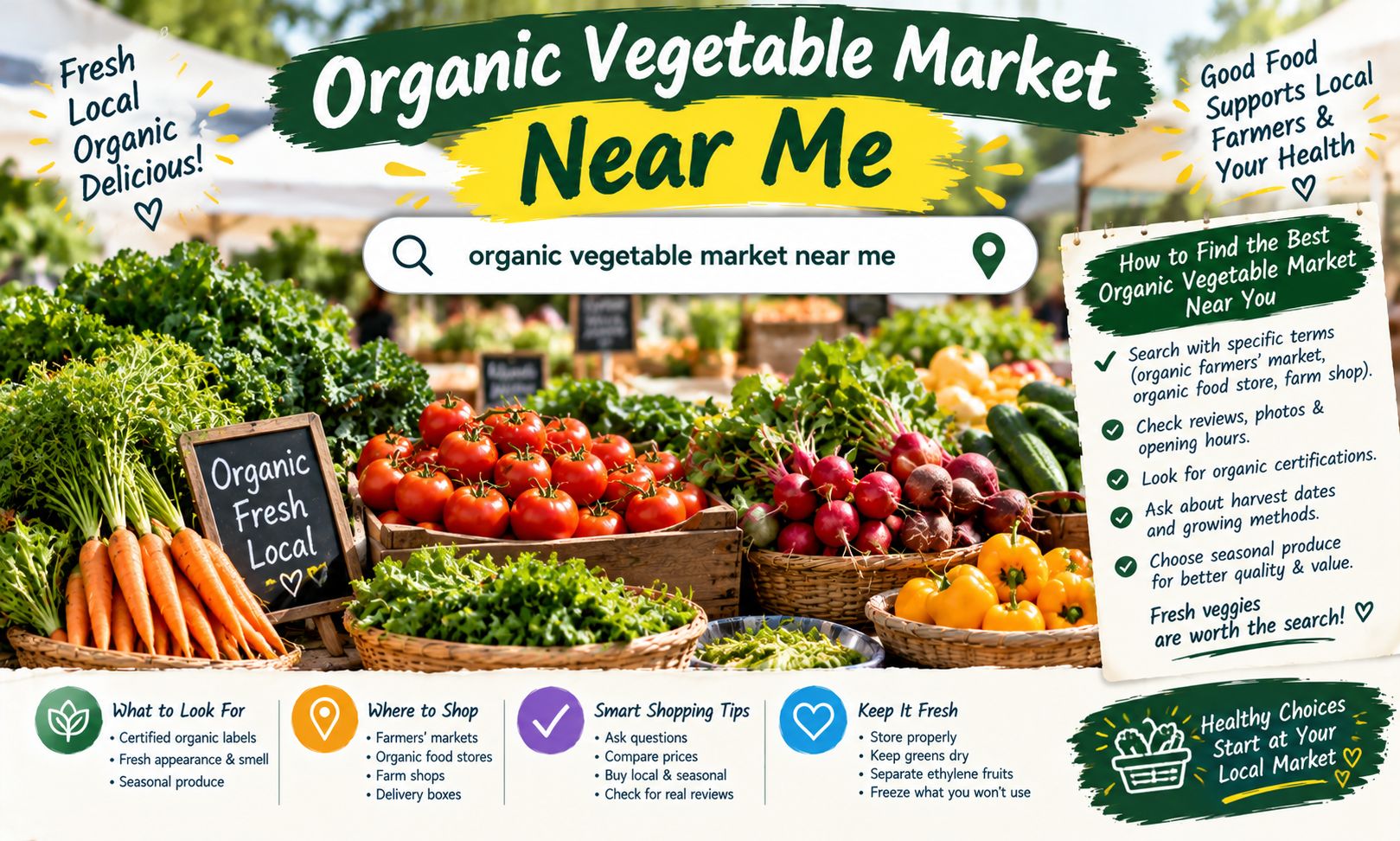
You type “organic vegetable market near me” into your phone, and the results come back as a muddle. A supermarket aisle, a weekend stall, a delivery box, a farm shop forty minutes away. They all claim to sell the real thing.
Which one actually does? And is the extra money worth spending?
This guide walks you through finding a reliable source of fresh organic produce close to home. You’ll learn where to look beyond a basic map search, how to tell genuine organic vegetables from clever marketing, which questions to ask sellers, and how to keep your haul fresh once you get home. Whether you’re buying your first bunch of organic spinach or you’re a seasoned shopper trying to trim the bill, there’s something here for you.
Table of Contents
ToggleWhat “Organic” Actually Means (and What It Doesn’t)
Before you hunt for a market, it helps to know what you’re hunting for. Organic farming follows a set of standards that, in general terms, limit the use of synthetic pesticides and synthetic fertilisers and rule out genetically modified seeds. Farmers rely instead on methods like crop rotation, compost and natural pest control.
Two things about that definition surprise people.
First, organic does not mean “zero pesticides.” Approved natural substances can still be used on organic farms. So washing your vegetables remains a good habit, whatever label they carry.
Second, organic does not automatically mean local, and it doesn’t automatically mean fresher. A bag of organic carrots flown across the world can be less fresh than a regular bunch pulled from a nearby field yesterday. Freshness and organic status are separate questions.
Does Organic Mean Healthier?
The evidence on nutrition is mixed, and honest sellers won’t promise miracles. Many people choose organic for reasons beyond vitamins: farming practices, soil health, less synthetic chemical use, and taste. Decide what matters to you, because that will shape where you shop.
Where to Look When You Search for an Organic Vegetable Market
A basic map search gives you the obvious options. The better ones often hide a layer deeper. Here is where to check.
Farmers’ Markets
A farmers’ market is usually the best place to start. You meet the growers, ask how the vegetables were grown, and often buy produce picked within a day or two. Many markets run weekly or fortnightly, so check the days and opening hours before you go.
The catch is that not every stall at a farmers’ market is organic. Some are, some follow organic-style practices without certification, and some are conventional. You have to ask.
Dedicated Organic Food Stores
A specialist organic food store takes the guesswork out of the label, since everything on the shelf is meant to meet organic standards. Prices are often higher than at a market, but the range tends to be wider, and you can pick up pantry staples in the same trip.
Farm Shops and Pick-Your-Own Farms
If you’re lucky enough to live near one, a farm shop can combine freshness with a clear story about where the food comes from. Pick-your-own farms go a step further. You harvest the vegetables yourself, which is cheaper and surprisingly fun.
Supermarkets
Most large supermarkets now stock an organic range. It’s convenient and often the most budget-friendly option for everyday items like carrots, potatoes and onions. The trade-off is less insight into where the produce came from.
Delivery Boxes and Community Schemes
Organic vegetable delivery boxes bring seasonal produce to your door, often straight from regional growers. Community-supported agriculture, where you pay a farm in advance for a share of the harvest, works on a similar idea. These options suit people who dislike shopping or have no good market nearby.
A Step-by-Step Way to Find the Right Market Near You
Searching blindly wastes time. Try this order instead.
- Search more than one phrase. Use “organic farmers’ market,” “organic food store,” “farm shop” and “organic vegetable delivery” alongside your area name. Each phrase surfaces different results.
- Check the map listings properly. Look at photos, recent reviews and opening hours. A listing with no recent activity may be out of date.
- Look at local community pages. Neighbourhood groups and local social media pages often share which stalls and shops people trust.
- Call or message first. A quick question about what’s in season and whether the produce is certified saves a wasted trip.
- Visit once without a big shopping list. Walk around, compare prices, and notice how the vegetables look and smell before you commit.
If you want more everyday guides on food and shopping, you can browse our Food category for related reads.
How to Tell Real Organic Produce From Marketing Talk
This is where many shoppers lose money. Words like “natural,” “farm fresh,” “pesticide-free” and “chemical-free” sound reassuring, but they aren’t the same as certified organic. Their meaning depends on the seller and, in many places, isn’t tightly regulated.
Look for a Recognised Certification
Certification is the clearest signal. Depending on where you live, that might be a government-backed organic seal or a label from an accredited certifying body. In the UK, for example, you may see the Soil Association symbol. In the US, the USDA Organic seal is common, and the EU uses its own organic logo. Different countries run different systems, so find out which labels apply to your area.
When produce is certified, the seller should be able to show you proof. Don’t be shy about asking.
Ask Better Questions
Honest sellers enjoy being asked. Try these:
- Are these vegetables certified organic, or grown using organic methods without certification?
- Who grew them, and roughly how far did they travel?
- When were they picked?
- What is in season right now?
A confident, specific answer is a good sign. Vague replies or irritation are a reason to be cautious.
Use Your Senses
Fresh vegetables tend to look and feel alive. Leafy greens should be crisp, not wilted or slimy. Carrots and beetroot should feel firm. Tomatoes should smell like tomatoes. Organic vegetables can also look a little irregular, with odd shapes and small blemishes, which is normal and not a sign of poor quality.
Is It Worth Paying More? A Smarter Way to Spend
Organic produce often costs more, because the farming methods can be more labour-intensive and yields can be lower. That doesn’t mean you must buy everything organic or nothing at all.
Where Organic Tends to Be Worth It
Many shoppers prioritise organic for vegetables they eat in large amounts or with the skin on, such as leafy greens, salad ingredients, carrots and tomatoes. It’s a personal call, but starting with the foods you eat most often gives you the biggest impact per pound spent.
Where You Can Save
Vegetables with thick skins that you peel, like onions, can be a sensible place to economise. Buying seasonal produce also cuts costs, since in-season vegetables are plentiful and cheaper.
Quick Money-Saving Tips
- Shop toward the end of a market day, when some sellers lower prices.
- Buy “wonky” or imperfect vegetables, which are often discounted.
- Split a delivery box with a neighbour.
- Buy in bulk when something is in season and freeze or preserve it.
- Compare per-kilo prices, not just the price on the tag.
A Realistic Example: Planning a First Trip
Picture someone who’s never bought organic before. They decide to try a Saturday farmers’ market. They arrive early, walk the whole market first, and spot three stalls selling vegetables. One has a certification sign displayed. Another says “grown without chemicals” but can’t name a certifying body. The third is conventional but cheap.
They buy leafy greens and carrots from the certified stall, tomatoes from the second after asking a few questions, and onions from the cheaper stall. That blended approach costs less than buying everything organic and still covers the items that matter most to them. It’s a good model for beginners.
Common Mistakes to Avoid
A few errors catch people out again and again.
- Trusting buzzwords. “Natural” is not “organic.”
- Assuming every farmers’ market stall is organic. Always ask.
- Buying too much at once. Organic produce often has no preservatives or coatings, so it can spoil sooner.
- Ignoring seasonality. Out-of-season organic vegetables are costlier and usually travelled further.
- Skipping the wash. Rinse everything, even organic produce, to remove soil and surface residue.
How to Keep Your Organic Vegetables Fresh
You’ve done the hard work finding a good market. Don’t lose the benefit at home.
Store leafy greens in the fridge, loosely wrapped in a clean cloth or in a container lined with a paper towel to absorb moisture. Keep root vegetables like carrots and beetroot in the fridge crisper, with any leafy tops removed since they draw moisture out. Onions and potatoes prefer a cool, dark, dry spot away from each other. Tomatoes usually taste better kept out of the fridge until they’re fully ripe.
If you’ve bought more than you can eat in time, freezing is your friend. Many vegetables freeze well after a quick blanching. If you’re curious about how quickly a freezer works, our guide on how long water takes to freeze in a freezer explains the basics of freezing times and why they vary.
Beginner, Intermediate and Advanced Approaches
Beginners should start with one source, such as a nearby supermarket organic range or a weekly farmers’ market, and buy a handful of staples.
Intermediate shoppers can mix sources: a market for greens, a store for pantry items, perhaps a seasonal box delivery.
Advanced shoppers often build direct relationships with growers, join a community farm share, or grow a few herbs and salad leaves themselves. Even a windowsill pot of herbs lowers your bill and teaches you what fresh really tastes like.
Frequently Asked Questions
How do I find an organic vegetable market near me?
Search your area with several terms, such as “organic farmers’ market,” “organic food store,” “farm shop” and “organic vegetable delivery.” Check recent reviews and opening hours, ask local community groups, and confirm with the seller that produce is certified organic before you visit.
How can I tell if vegetables are really organic?
Look for a recognised organic certification label and ask the seller to confirm it. Terms like “natural,” “farm fresh” or “chemical-free” are not the same as certified organic.
Are all vegetables at a farmers’ market organic?
No. Some stalls are certified organic, some use organic-style methods without certification, and others grow conventionally. Always ask each seller how their produce was grown.
Is organic produce always more expensive?
Often, yes, but not always. Seasonal vegetables, imperfect produce, bulk buying and shopping toward the end of the market day can all bring prices down.
Do I still need to wash organic vegetables?
Yes. Rinse all produce under running water to remove soil and surface residue, whether it’s organic or conventional.