You buy a moisturizer with glowing reviews, apply it once, and within minutes your face feels warm, tight, or itchy. Now you have a half-used jar, red cheeks, and a growing suspicion that everyone else’s skin is simply easier.
Sensitive skin is not rare, and it is not your fault. It reacts faster, stings more easily, and punishes products that other people barely notice.
This guide explains what actually makes a moisturizer gentle, which ingredients tend to help, which ones tend to cause trouble, and how to choose and test a formula without gambling with your skin barrier. You will also find a simple routine and answers to the questions people ask most.
Table of Contents
ToggleThe Short Answer: What Is the Best Moisturizer for Sensitive Skin?
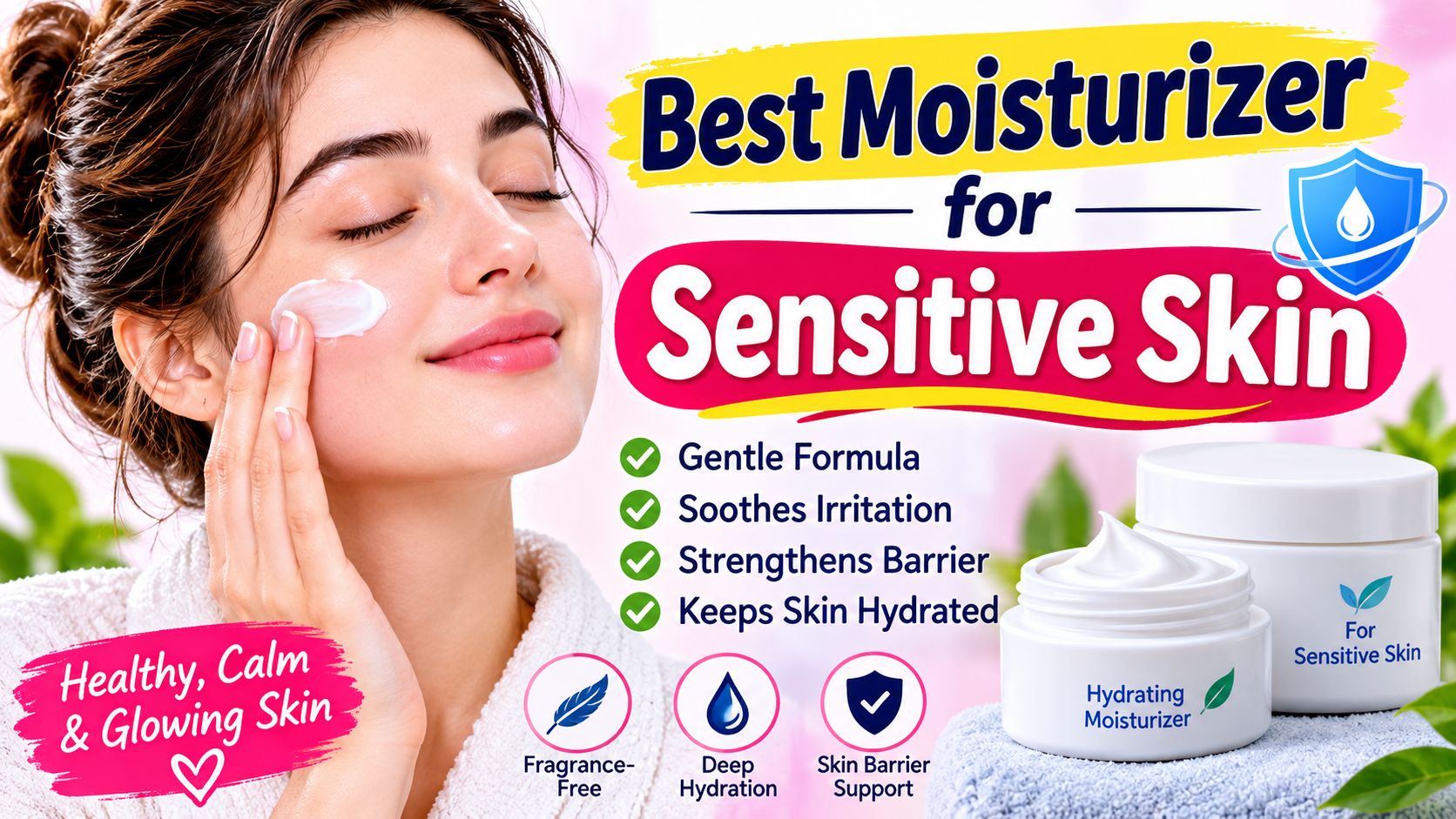
The best moisturizer for sensitive skin is usually a fragrance-free, simply formulated cream or lotion built around barrier-supporting ingredients such as ceramides, glycerin, and petrolatum or similar occlusives. It should feel comfortable on application, never sting, and keep your skin soft for hours without leaving a heavy film.
There is no single winner for everyone. Skin type, climate, and your personal triggers all matter. What does hold up across most people is a short list of traits:
- Fragrance-free (not just “unscented,” which can still contain masking scents)
- Short ingredient list with recognizable, soothing components
- Barrier support from ceramides, fatty acids, and humectants
- No harsh actives in the same product, such as strong acids or retinoids
What “Sensitive Skin” Actually Means
Sensitive skin is a description, not a medical diagnosis. It usually points to a skin barrier that loses water easily and lets irritants in, which leads to redness, stinging, tightness, or flaking.
Common Causes
- A weakened skin barrier from over-exfoliating, harsh cleansers, or too many active products.
- Skin conditions like eczema, rosacea, or contact dermatitis.
- Environmental triggers such as cold wind, dry indoor air, pollution, and strong sun.
- Fragrance and preservatives that irritate some people.
If your skin is constantly red, inflamed, or painful despite gentle products, see a dermatologist. Persistent symptoms may need medical treatment rather than a better moisturizer.
Ingredients That Usually Help
When you read a label, these are generally good signs for reactive skin.
Ceramides
Ceramides are fats that naturally occur in your skin barrier. Moisturizers containing them help reinforce that barrier and lock in water. Many dermatologist-recommended creams are built around them.
Glycerin
A common humectant, glycerin draws water into the skin. It is widely used, well tolerated by most people, and found in many gentle formulas.
Hyaluronic Acid
Another humectant, hyaluronic acid holds water and adds a light, hydrated feel. It works best when sealed in with a richer cream on top.
Petrolatum, Squalane, and Other Occlusives
Occlusives form a thin protective layer that slows water loss. Petrolatum has a long track record in sensitive and eczema-prone skin. Squalane is a lighter, non-greasy alternative many people like.
Colloidal Oatmeal
Often used in products for itchy, dry, or irritated skin, colloidal oatmeal has a soothing reputation and appears in many gentle formulas.
Panthenol and Allantoin
These calming ingredients support healing and comfort. They are common in products designed for irritated or post-procedure skin.
Niacinamide (With Care)
Niacinamide can help with redness and barrier function, and many people tolerate it well. Some sensitive skin reacts to higher concentrations, so start with a modest amount.
Ingredients to Approach With Caution
You do not need to fear every unfamiliar word on a label, but these are common culprits.
| Ingredient | Why it may bother sensitive skin |
| Fragrance (parfum) | A frequent cause of irritation and allergic reactions |
| Essential oils | Natural does not mean gentle; many are strong irritants |
| Denatured alcohol | Can feel drying and stripping in some formulas |
| Strong exfoliating acids | Can overwhelm a weakened barrier |
| Retinoids | Effective but often irritating when starting |
| Certain preservatives | Reaction varies by person; patch testing helps |
| Menthol and camphor | Create a cooling sensation that may irritate |
A product with a few of these is not automatically bad for you. The point is to avoid stacking many potential triggers in the same jar.
How to Choose by Skin Type and Situation
Sensitive does not mean one thing. Here is how to match texture to your needs.
Dry and Sensitive
Choose a rich cream rather than a thin lotion. Look for ceramides plus an occlusive like petrolatum or shea butter. These formulas feel thicker but protect better, especially in winter or air-conditioned spaces.
Oily or Combination and Sensitive
Pick a light gel-cream or lotion with humectants like glycerin and hyaluronic acid. Skipping moisturizer is a common mistake. Dehydrated, irritated skin can look shiny and still need hydration.
Eczema-Prone Skin
Thicker creams and ointments in fragrance-free formulas are typically preferred. Some products carry seals of acceptance from skin organizations such as the National Eczema Association, which can be a helpful extra signal. Always follow the advice of a doctor if you have diagnosed eczema.
Redness or Rosacea-Prone Skin
Prioritize soothing, minimal formulas and avoid heavy fragrances or menthol. A gentle mineral sunscreen worn every day is often as important as the moisturizer itself.
Hot and Humid Weather
Lighter textures often feel better, but sensitive skin still needs barrier support. A gel-cream or lightweight lotion with ceramides can work well without feeling sticky.
Examples of Well-Known Gentle Formulas
Several brands have built their reputations around sensitive skin. Names that dermatologists and skincare communities commonly mention include CeraVe, La Roche-Posay, Vanicream, Cetaphil, Eucerin, and Avène.
A few honest notes about using brand names as a guide:
- Formulas change. Always read the current ingredient list.
- Different products from one brand behave differently. A gentle cleanser does not guarantee a gentle night cream.
- Your skin is the final judge. A widely loved product can still sting you.
Treat these as starting points, not guarantees. If you want to read more practical health and skincare guides, our Health section covers everyday wellbeing topics.
How to Patch Test a New Moisturizer
This step takes a few days and can save you weeks of irritation.
- Pick a small, discreet area. The inside of your forearm or just behind the ear works well.
- Apply a small amount. Use it once or twice a day.
- Wait at least 24 to 48 hours, and longer if you have a history of delayed reactions.
- Watch for redness, itching, burning, or bumps.
- If the patch is clear, try a small amount on your face, ideally on one side or a limited area first.
- Introduce only one new product at a time. Otherwise you will not know which one caused trouble.
If you notice a reaction, wash the area gently with plain water and stop using the product.
A Simple Routine for Sensitive Skin
Fancy routines are the enemy of reactive skin. This is a good baseline.
Morning
- Gentle cleanse or a splash of water if your skin is dry.
- Moisturizer while the skin is still slightly damp.
- Broad-spectrum sunscreen (many people with sensitive skin prefer mineral formulas).
Evening
- Gentle, fragrance-free cleanser to remove sunscreen and dirt.
- Moisturizer to restore the barrier overnight.
Tips That Make a Difference
- Apply moisturizer to slightly damp skin to help lock in water.
- Use lukewarm water, not hot.
- Pat dry, do not rub.
- Use less product more often, instead of a thick layer once a day.
Common Mistakes That Make Sensitive Skin Worse
Even with a good product, habits can sabotage you.
- Switching products too often. Constant change keeps skin reactive.
- Over-exfoliating. Scrubs and strong acids strip the barrier.
- Layering too many actives. Vitamin C, retinol, and acids together can overwhelm skin.
- Choosing a product because it is “natural.” Plant extracts and essential oils can be irritants.
- Skipping sunscreen. UV exposure worsens redness and barrier damage.
- Ignoring symptoms. If a product stings every time, stop using it.
A Realistic Example
Imagine someone whose cheeks flare up every winter. They try a new vitamin C serum, a scrub, and a scented cream in the same week. Their skin burns and peels. The fix is not a miracle product. It is removing everything except a gentle cleanser, a fragrance-free moisturizer, and sunscreen for two weeks, then reintroducing one item at a time.
When to See a Professional
Moisturizers help dryness and mild irritation. They are not a treatment for every skin condition.
Consider seeing a dermatologist if you notice:
- Persistent redness, swelling, or burning
- Cracked, weeping, or very itchy patches
- Symptoms that spread or keep returning
- Flares that do not improve with gentle care
A professional can identify triggers, rule out conditions like eczema or rosacea, and recommend appropriate treatments.
Frequently Asked Questions
What should I look for in a moisturizer for sensitive skin?
Look for a fragrance-free formula with ceramides, glycerin, and a gentle occlusive like petrolatum or squalane. Keep the ingredient list short and avoid essential oils, strong acids, and menthol.
Can sensitive skin use hyaluronic acid?
Yes, most people tolerate it well. It works best layered under a cream that seals in moisture, since humectants alone can feel less effective in very dry air.
Is “hypoallergenic” a reliable label?
Not entirely. The term is not tightly regulated in many places, so it does not guarantee a product will suit you. Check the ingredient list and patch test.
How long does it take to know if a moisturizer works?
You will usually feel whether it is comfortable within minutes. Improvements in dryness and redness may take one to two weeks of consistent use.
Should I moisturize if my skin is oily and sensitive?
Yes. Oily skin can still be dehydrated, and skipping moisturizer may make irritation worse. Choose a light gel-cream instead of a heavy balm.