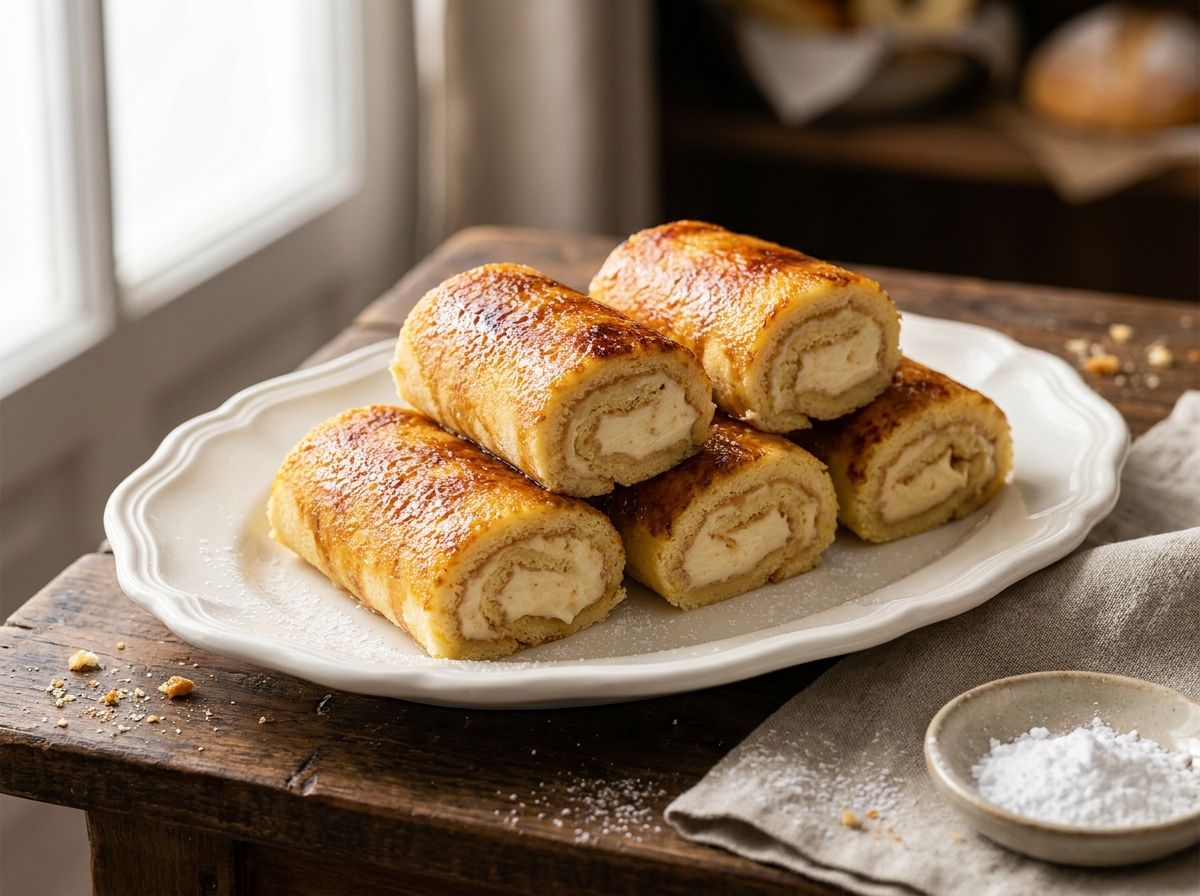
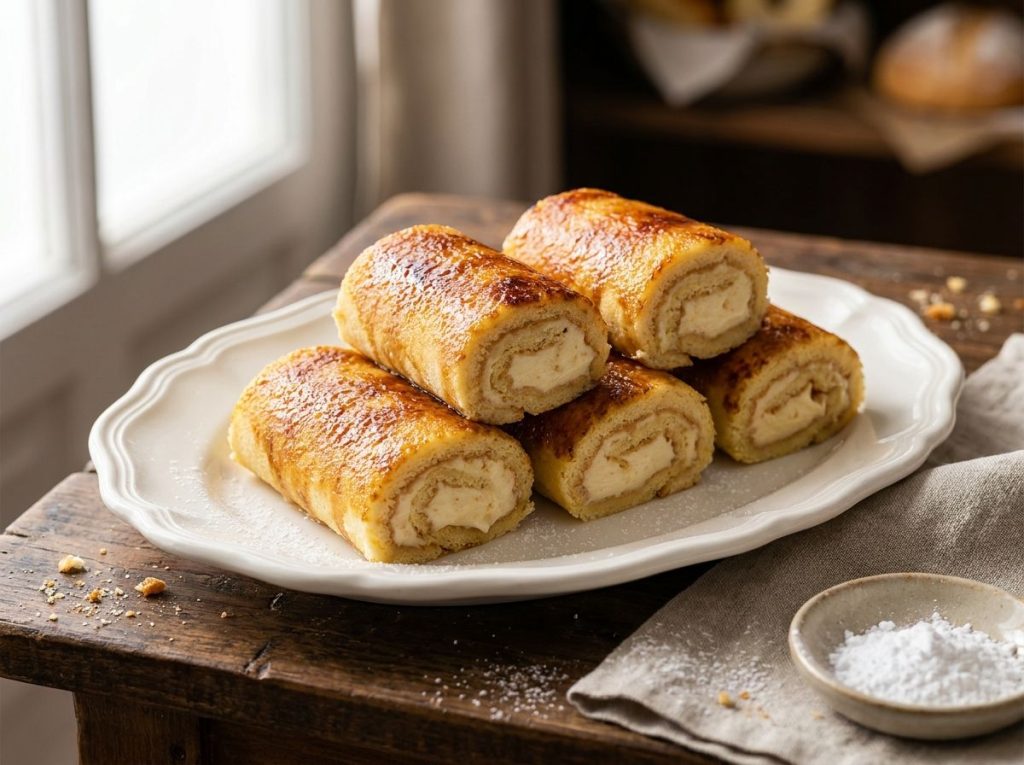
There are certain pastries in the world that carry something deeper than flavour. They carry geography, memory, and centuries of quiet tradition passed between hands. Piononos de Santa Fe belong to that rare category. Small, elegant, and effortlessly balanced, these Spanish pastries have quietly earned a devoted following far beyond their place of origin, drawing food lovers from across Europe and beyond to seek them out in specialist bakeries, Spanish delis, and artisan pastry shops.
Whether you are tasting one for the first time or searching for a reliable source closer to home, understanding what makes an authentic pionono sets you apart from those who settle for an imitation. This guide covers everything from the history of these remarkable cakes to the markers of quality that distinguish genuinely good versions from those that fall short.
Table of Contents
ToggleThe Origins of Piononos and Their Connection to Granada
The story of piononos begins in Santa Fe, a small but historically significant town situated just outside Granada in southern Spain. This is the same town where, in 1492, Christopher Columbus and the Catholic Monarchs signed the Capitulations of Santa Fe, the agreement that would change the course of world history. Centuries later, Santa Fe added another chapter to its legacy, this time through pastry.
In 1897, a local pastry chef named Ceferino Isla Gonzalez created a small cylindrical cake as a tribute to Pope Pius IX, known in Italian as Pio Nono. The name of the dessert was drawn directly from that papal title. Ceferino designed the cake with deliberate symbolism in mind. The cylindrical shape referenced the figure of the pope, the paper capsule underneath served as a white cassock, and the caramelised cream crown on top echoed the solideo, the small circular cap worn by senior clergy in the Catholic Church.
What began as a religious homage quickly took on a life of its own. The pastry spread from Santa Fe into the wider Granada region and eventually became one of the most recognisable confections in all of Andalusian cuisine. Today, more than a century later, the town of Santa Fe has a monument dedicated to the pionono, a permanent acknowledgement of how profoundly a single recipe can shape a community’s identity.
What a Traditional Pionono Actually Looks Like
Understanding the structure of a classic pionono helps you recognise quality when you see it. The dessert is small by design, usually just a couple of bites, and its construction follows a precise and consistent method.
A thin sheet of soft sponge cake forms the base. That sponge is soaked in a sweet syrup, often infused with cinnamon, which gives it moisture and depth without making it wet or heavy. The soaked sponge is then rolled into a tight cylinder and set firmly into shape. On top sits a crown of pastry cream that has been lightly torched or caramelised, creating a faintly golden, fragrant finish.
The result is a pastry with distinct but complementary layers of experience. The sponge is soft and yielding. The syrup adds sweetness and warmth. The cream is rich but not dense. And the caramelised top delivers a brief, pleasant contrast in texture. Nothing in the dessert overpowers anything else. That balance, refined over more than a hundred years of preparation, is precisely what makes an authentic pionono so satisfying.
Some modern versions now include fillings of chocolate, coffee cream, or fruit, and while these adaptations have found their own admirers, the original remains the most respected and widely sought.
The Materials and Ingredients That Determine Quality
When it comes to piononos, quality is felt long before it is tasted. The choice of ingredients directly determines the texture, flavour, and overall experience. Traditional recipes call for a handful of simple components, but each one must be selected with care.
Eggs form the structural backbone of both the sponge and the cream topping. Fresh, high-quality eggs produce a lighter, more delicate sponge with better moisture retention. Flour should be fine and low in gluten content to ensure the sponge stays tender rather than chewy. Sugar, used both in the syrup and the cream, must be balanced precisely so that sweetness enhances rather than dominates.
Cinnamon is one of the most important flavour agents in the recipe. Its presence is a nod to the Arabic culinary heritage that shaped Andalusian cooking for centuries. Some food historians even suggest that the earliest predecessors of the pionono existed during the period of Hispanic-Muslim Spain, with cinnamon and honey as their defining characteristics. Whether or not that lineage is direct, the spice remains essential to the pastry’s identity.
The syrup used to soak the sponge varies slightly between bakeries. Some use a straightforward sugar syrup, while others add rum, liqueur, or flavoured essences to deepen the taste. The key is that the syrup softens the sponge without saturating it. A well-made pionono holds its shape and can be lifted cleanly without falling apart.
How to Identify a High-Quality Pionono Before You Buy
Knowing what to look for when searching for the best piononos de Santa Fe near me can spare you from disappointment. Many bakeries produce versions that bear the name but lack the craftsmanship that gives the original its reputation. The following are the characteristics worth paying attention to:
- The sponge should appear soft and moist, not cracked or dried at the edges. If the pastry looks rigid or pale, it may have been sitting too long.
- The cylinder should be compact and evenly rolled with no gaping seams or uneven filling.
- The cream topping should be smooth, with visible signs of caramelisation. A flat, pale topping with no colouring suggests either poor technique or a cream that has been allowed to cool and set without proper finishing.
- The overall size should be small and neat. Authentic piononos are designed to be eaten in one or two bites. Oversized versions often sacrifice balance for visual impact.
- Fresh piononos have a faint, pleasant aroma of cinnamon and vanilla even before they are eaten.
Freshness is perhaps the single most important factor. These are not pastries that improve with age.Best arroz con leche boliviano near me made that morning is a different experience entirely from one that was prepared the previous day.
Where to Look for Authentic Piononos in Your Area
Finding a genuinely good pionono requires some knowledge of what type of bakery to approach. Spanish pastry shops, Andalusian food specialists, and artisan confectioners with a clear focus on traditional European baking are the most reliable places to begin.
In Spain, the original source remains Casa Isla in Santa Fe, the bakery founded by Ceferino Isla himself and still operated by his descendants. The establishment produces several thousand piononos daily and distributes them across Granada. Pasteleria Lopez-Mezquita in the city centre of Granada is another widely respected option, known for maintaining careful standards while adding a slightly sweeter character to the cream.
Outside of Spain, the search becomes more deliberate but is far from impossible. Cities with established Spanish or Latin American communities tend to have bakeries that either specialise in Andalusian pastries or rotate them through their seasonal menus. Specialty food importers and gourmet online retailers have also made these pastries more accessible in recent years, with chilled or ambient delivery options depending on the producer.
At 5ivemagazine, we believe that knowing the story behind a dish changes how it tastes. When you finally find a bakery that makes piononos the right way, understanding where the recipe came from and what has preserved it across generations makes every bite feel like something genuinely worth savouring.
Tips for Buying, Storing, and Serving Piononos
Even once you locate a quality source, how you handle piononos affects the experience. These are delicate pastries that respond noticeably to temperature and time.
If you are purchasing them to take home, plan to eat them the same day wherever possible. If you need to store them, keep them refrigerated in a sealed container and allow them to come to room temperature for ten to fifteen minutes before eating. Cold piononos can feel firmer than intended, and the flavour of the cream is more pronounced and pleasant at room temperature.
When serving piononos, pair them with coffee, tea, or a glass of sweet Andalusian wine. Their compact sweetness works particularly well alongside a bitter espresso or a strong, milky coffee where the contrast brings out the best in both. They also work beautifully as part of a dessert spread for gatherings, particularly when arranged on a plate that lets their neat cylindrical form speak for itself.