It is a cold evening, your nose is slightly blocked, and nothing sounds better than a steaming bowl with a serious kick. You type “spicy soup kitchen near me” into your phone and wait for the perfect answer.
What you get is a mixed bag: ramen bars, hot pot restaurants, a Thai place with one soup on the menu, and maybe a charity meal service that has nothing to do with chili at all.
This guide helps you sort through that. You will learn what kinds of spicy soups exist, how to search for them precisely, how to judge heat before you commit, what to check on the menu and in reviews, and how to get a good bowl home without turning it into mush.
Table of Contents
ToggleThe Short Answer: How Do You Find a Good Spicy Soup Place Nearby?
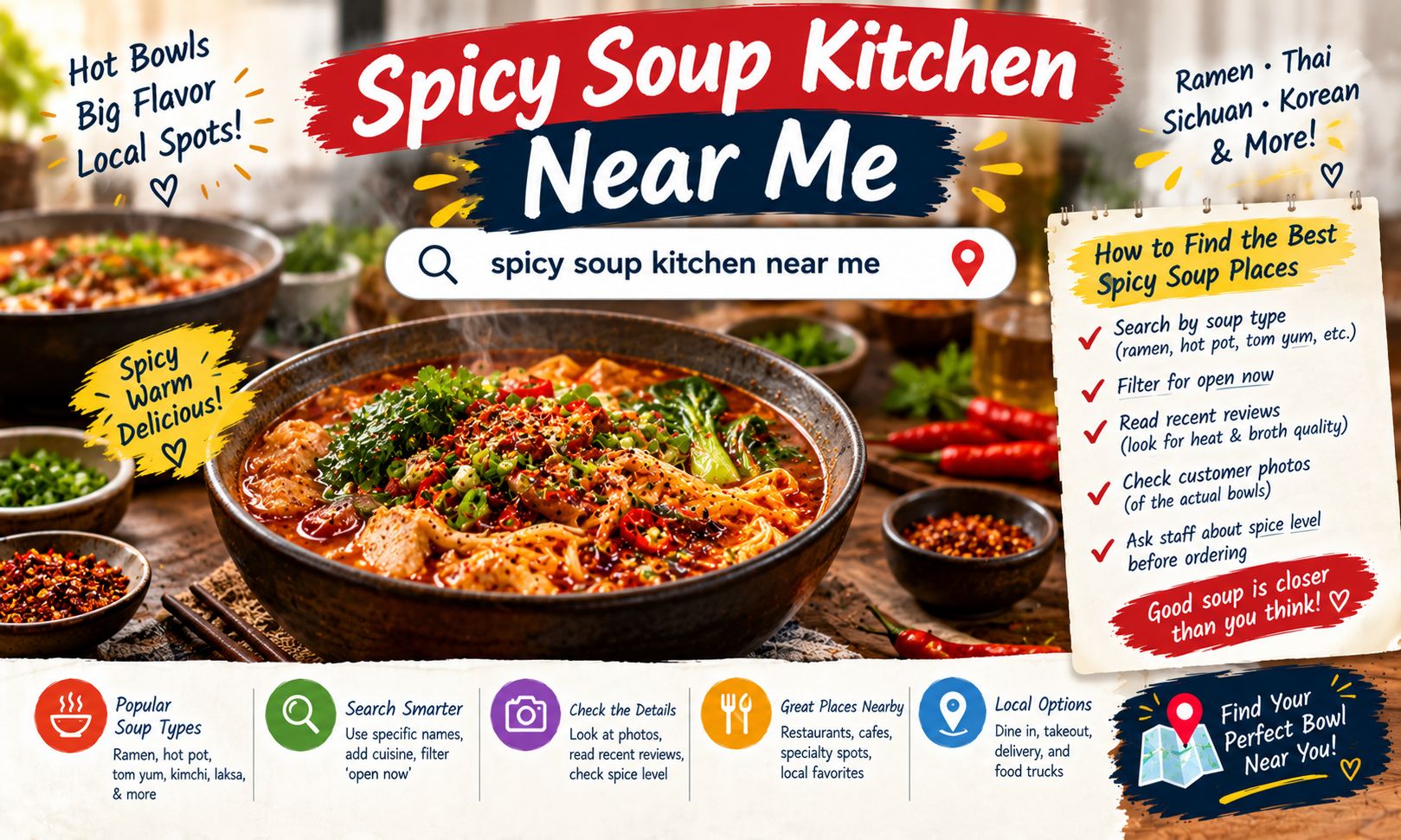
Search a map app for the specific soup you want, such as “ramen,” “hot pot,” “tom yum,” “laksa,” or “hot and sour soup,” instead of the vague phrase “spicy soup.” Then filter by open now, read the newest reviews for mentions of heat and broth quality, and look at customer photos of the actual bowls.
Specific searches work better because most restaurants do not call themselves a “spicy soup kitchen.” They call themselves a ramen shop, a Sichuan restaurant, or a Thai kitchen, and each of those names tells you more about what is in the bowl.
Quick checklist
- Search by soup type, not only by “spicy.”
- Check that the place is open and not about to close.
- Look at recent customer photos for broth color and toppings.
- Read reviews that mention heat level.
- Ask staff how spice is measured before ordering.
First, a Quick Clarification: Soup Kitchen vs Soup Restaurant
The phrase “soup kitchen” can mean two very different things.
In everyday use, a soup kitchen is a charity or community service that provides free or low-cost meals to people who need them. That is not what most people searching “spicy soup kitchen near me” are after. They want a restaurant or eatery that specializes in soup, ideally with some heat.
This guide focuses on the second meaning: places that serve spicy soups you can order and enjoy.
If you or someone you know actually needs a free meal, search for “free meals near me” or contact your local council, community center, or food bank network. Those services exist to help, and they are usually listed by local authorities and community organizations.
Spicy Soups Worth Searching For
Knowing the names of popular spicy soups helps you search better and order with confidence. Here are the most common ones.
Ramen With Chili
Japanese ramen comes in many styles, and several have spicy versions, including spicy miso and chili-oil-topped bowls. The broth can range from light to rich, with noodles, egg, and toppings floating on top. If you like a thick, savory base with a slow-building burn, this is a good place to start.
Mala Hot Pot and Sichuan Soups
Sichuan cooking is famous for a flavor called mala, a combination of chili heat and the tingling, numbing sensation from Sichuan peppercorns. Hot pot restaurants let you cook meat, vegetables, and noodles in a simmering broth at the table, and the spicy broths can be intense. If you are new to it, ask for a mild version or a split pot with one spicy side and one non-spicy side.
Tom Yum
This Thai soup is known for its hot-and-sour character. It typically uses lemongrass, galangal, lime leaves, and chili, giving it a bright, aromatic punch rather than just raw heat. It often comes with shrimp or chicken.
Kimchi Stew and Soft Tofu Stew
Korean restaurants serve bubbling stews made with fermented kimchi or soft tofu, often with a deep red, chili-based broth. They arrive piping hot, usually with rice on the side.
Laksa
Laksa is a noodle soup popular in Southeast Asia, commonly made with a spiced broth and often a coconut base in curry versions. It is rich, creamy, and warming, with heat that builds as you eat.
Hot and Sour Soup
This Chinese soup combines pepper, vinegar, and a thickened broth with mushrooms, tofu, and sometimes egg. It is a gentle introduction to spicy soup, since the heat is balanced by tang.
Shorba and Indo-Chinese Soups
In South Asian cooking, shorba is a spiced, brothy soup, and Indo-Chinese restaurants often serve chili-forward soups like manchow. These can be a great fit if you want familiar, warming spices.
Mexican-Style Soups
Dishes like pozole rojo, a hominy stew in a red chili broth, and other chili-based soups are popular at Mexican restaurants, especially in cooler weather.
If you enjoy exploring dishes like these, you will find more food guides on our site.
How to Search Smarter on a Map App
A little technique turns a messy search into a short list.
- Use the soup name. “Ramen near me” or “hot pot near me” beats “spicy soup.”
- Add a cuisine. Try “Sichuan restaurant,” “Thai restaurant,” or “Korean restaurant.”
- Switch to “open now.” This avoids disappointment.
- Open the photos tab. Look at customer photos for broth color, oil sheen, and toppings.
- Search inside reviews. Use the review search box and type “spicy” or “heat.”
- Check the menu online. A menu with a clear spice scale is a good sign.
What the Photos Tell You
A deep red or orange broth with visible chili oil usually points to real heat. A pale, clear broth often means a milder dish. Fresh herbs, bright vegetables, and well-cooked noodles are signs of care.
How to Judge the Heat Before You Order
Spice is subjective, and no two kitchens measure it the same way. Here is how to avoid a bad surprise.
Ask What the Scale Means
“Medium” at one restaurant can feel like “hot” at another. Ask how the spice levels are described, or what the staff recommend for someone who enjoys spice but is not extreme.
Start Lower Than You Think
You can usually add chili but you cannot remove it. Many restaurants will bring extra chili oil or paste on the side. Order a level below what you think you can handle, especially at a new place.
Know the Type of Heat
Not all spice feels the same. Chili heat comes from capsaicin and hits the tongue and throat. Sichuan peppercorns create numbness and tingling. Ginger and black pepper add a different kind of warmth. Understanding which type you are ordering helps you choose.
If You Overdo It
Water does not cool the burn effectively. Dairy products, such as milk or yogurt, usually help more, because the proteins in them bind to capsaicin. Rice and bread can also soften the sensation.
What to Look For in the Menu and Reviews
A strong spicy soup place usually shows a few clear signs.
- A focused menu. Restaurants that do a few soups well are often better than those that offer dozens.
- House-made broth. Reviews and menus may mention slow-cooked or simmered broths.
- A spice scale. This shows the kitchen takes heat seriously.
- Fresh toppings. Herbs, lime, scallions, and crisp vegetables lift a bowl.
- Honest reviews. Look for comments about flavor and balance, not just “so spicy.”
Red Flags
- Very long menus covering unrelated cuisines.
- Broths described as thin, greasy, or overly salty in several recent reviews.
- Frequent comments about inconsistent spice levels.
- Photos showing murky broth with soggy or overcooked noodles.
Allergies, Dietary Needs, and Health Considerations
Spicy soups often contain hidden ingredients, so it is worth asking questions.
- Common allergens. Soups may contain peanuts, shellfish, fish sauce, soy, sesame, eggs, or wheat noodles.
- Vegetarian and vegan options. Many broths are made with meat or fish stock, even when the dish looks vegetable-based. Ask directly.
- Gluten-free needs. Noodles, soy sauce, and some sauces often contain gluten.
- Sensitive stomachs. If spicy food tends to trigger heartburn or stomach discomfort, choose a milder level and eat slowly.
A restaurant that answers these questions clearly and confidently is usually one you can trust.
Dine-In, Takeaway, or Delivery?
Soup is one of the trickiest foods to enjoy away from the restaurant, but a few habits help.
Dine-In
This is the best option for noodle soups, because noodles keep absorbing broth and turn soft quickly. Eating at the table keeps texture and temperature at their best.
Takeaway
Ask for the broth and noodles to be packed separately if the restaurant offers it, then combine them at home. Reheat the broth until steaming hot before pouring it over the noodles.
Delivery
Choose soups that travel well, such as stews, hot and sour soup, and rich broths. Avoid delivering delicate noodle bowls with long travel times. Check reviews for comments on how well the food held up.
A Simple Tip for Takeout Soup
Bring your own bowl if you are collecting. Pouring the soup into a warm bowl keeps it hotter than eating from a plastic container.
Making the Most of Your Order
A few small choices make a big difference to your experience.
- Order sides that balance heat. Steamed rice, plain noodles, or cooling cucumber can soften the burn.
- Add acid. A squeeze of lime or a splash of vinegar brightens a heavy broth.
- Try sharing. Hot pot and large stews are fun to share, and sharing lets you try different heat levels.
- Take your time. Spicy soup is best sipped slowly, with water or a cool drink nearby.
Common Mistakes People Make
Even experienced soup fans slip up. Here are the most common mistakes.
- Ordering the hottest level first. It is tempting, but heat can overwhelm flavor.
- Ignoring the soup type. “Spicy” can mean very different things in different cuisines.
- Skipping reviews about broth. The base is the heart of the dish.
- Letting takeout sit. Soup loses texture quickly after it is packed.
- Forgetting to ask about ingredients. Allergens and dietary needs matter.
What If Nothing Good Is Nearby?
If your search turns up nothing you like, you can still get a warming, spicy bowl. A quick home version can be built from stock, ginger, garlic, chili, and whatever vegetables or noodles you have on hand. It will not match a restaurant’s long-simmered broth, but it can satisfy a craving on a cold night.
Frequently Asked Questions
What is the best spicy soup to try first?
Hot and sour soup or tom yum are good starting points, because their heat is balanced with tang and aroma. If you want something richer, try a spicy miso ramen at a mild level.
How do I find spicy soup near me?
Search a map app for the specific soup you want, such as ramen, hot pot, laksa, or tom yum. Then check open hours, recent reviews, customer photos, and the restaurant’s spice scale.
Is a soup kitchen the same as a spicy soup restaurant?
No. A soup kitchen is usually a charity or community service that provides free or low-cost meals. A spicy soup restaurant is a business that sells soups with chili or other heat.
How can I make a soup less spicy once it is served?
Add plain rice, a splash of milk or yogurt on the side, or extra broth if the restaurant provides it. Dairy tends to soothe the burn better than water.
Is spicy soup good for a cold?
Many people find a hot, spicy broth comforting when they are congested, because steam and warmth can feel soothing. It will not cure a cold, but it can make you feel more comfortable.